Showing posts with label Whitacre. Show all posts

Apr 15, 2026

Eric Whitacre: The Pacific Has No Memory (CD Review)

by Karl Nehring

Anne Akiko Meyers, violin; Orpheus Chamber Orchestra. AVIE AV2853

The American composer and conductor Eric Whitacre (b. 1970) is most widely known for his choral works, many of which we have reviewed here at Classical Candor, starting back in 2010, when John Puccio gave a listen to Whitacre’s first recording for the Decca label, Light & Gold (you can find that review here). A couple of years later, John reviewed another Decca release by Whitacre, Water Night (that review can be found here). Several years later, we reviewed a deeply personal and moving release titled The Sacred Veil, this time on the Signum label (that review can be found here). In 2023, Whitacre released another version of his composition the Sacred Veil, on a Decca release titled Home that featured Whitacre conducting the British vocal ensemble Voces8 (that review is here). Those recordings all featured choral compositions; however, this new AVIE recording is purely instrumental, an elegy for violin and chamber orchestra that Whitacre composed in response to a commission from violinist Anne Akiko Meyers (b. 1970), who lost her home, “a place alive with laughter, music, and the joyful chaos of my husband, our two young daughters and crazy rescue dog – never to return,”  to the tragic California Palisades wildfires of January 2025.

Meyers goes on to recount, “yet from the ash and destruction, something profoundly beautiful emerged – much like the glowing fairy at the end of Fantasia, rising from Stravinsky’s Firebird Suite. I commissioned Eric Whitacre to write a new work for violin and orchestra, and as the world changed, so did his composition. Little did I know that The Pacific Has No Memory would be born from these epic tragedies. This music has become a salve for the soul – a warm, healing embrace for my broken heart. Tender and profound, it radiates love, hope, and renewal.” In a strange twist of fate, Whitacre, who had himself lived in Los Angeles before moving to Antwerp with his family in 2024, flew back to Los Angeles on January 8, 2025, only to find, as he relates in the liner notes, “the sky over the Palisades was already smudged black, homes and histories evaporating into the quiet air… The Pacific Has No Memory takes its title from a line in one of my favorite films, The Shawshank Redemption. In it, Andy Dufresne (Tim Robbins) dreams of a life near the ocean his past is a memory of a memory, distant and liquid – a place where the blue of the Pacific will give him a chance to start new, reborn. I hope the same for all who lost so much in those terrible fires.” What Whitacre went on to compose is a moving elegy for violin and chamber orchestra, lovingly performed here by violinist Meyers and the Orpheus Chamber Orchestra, who per custom and design perform sans conductor. Although the overall tone is one of sadness, it is not one of anguish. There is a feeling of calm, of peace, of resolve. Brief though it may be, this is a compellingly beautiful composition available both as a CD or via streaming. Either way, it’s well worth seeking out. 

Dec 17, 2023

KN's Favorite Recordings of 2023

by Karl Nehring

In looking back over the releases that I reviewed during this past year, it strikes me that there were fewer of the symphonic works that I usually enjoy. I’m not sure whether that is the result of fewer symphony recordings being released or my lack of enthusiasm for reviewing yet another recording of Mahler or Bruckner (I dread 2024, Bruckner’s bicentennial year, which will no doubt herald no end of both rereleases and new recordings of his symphonies – of every edition and her sister by all manner of conductors and orchestras). Whatever the reason, my list of favorites strikes me as a bit unusual this year; however, there’s some darn good music to be found in this list of a dozen of my favorite recordings from 2023, which I present to you just in time for your last-minute holiday shopping. 

Beethoven: The Late Quartets. Calidore String Quartet. Signum Classics SIGCD733. It is certainly natural to be skeptical when encountering yet another boxed set of the late Beethoven quartets; however, this is a fine set indeed, one worthy in both musical and sonic terms to be a first choice for someone looking to acquire a set of these incomparable string quartets. Sonically, in fact, this may well be the finest set of all the many I have ever heard. The natural warmth of the recorded string tone combined with the realistic sense of space makes it especially easy to be drawn into the fascinating music. To be skeptical means to be inclined to look -- or in this case, listen -- quite closely. Those who listen closely to this set will be well rewarded both musically and sonically. 


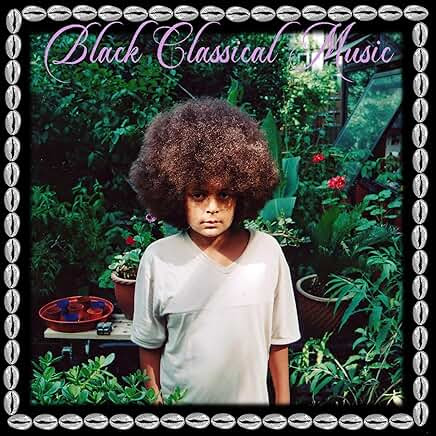
Yussef Dayes: Black Classical Music.  Ravenswood Recordings (UK) – Nonesuch (USA). As evidenced by the title of his new album, London-born drummer and composer Yussef Dayes (b. 1993) has a high regard for the history and heritage of jazz. "What is jazz?” asks the young drummer. “Birthed in New Orleans, born in the belly of the Mississippi River, rooted in the gumbo pot of the Caribbean, South American culture, and African rituals. Continuing a lineage of Miles Davis, Rahsaan Roland Kirk, Nina Simone, John Coltrane, Louis Armstrong -- music that is forever evolving limitless in its potential… Chasing the rhythm of drums that imitated one's heartbeat, the melodies for the mind and spirit, the bass for the core. A regal sound for this body of music." And that is what you hear throughout the 74 minutes of this eclectic, energetic, enthusiastic album. This is optimistic music that can’t help but lift your spirits. Even if you don’t consider yourself a jazz fan, you just might want to give Black Classical Music a listen.


Fauré: Nocturnes and Barcarolles. Marc-Andre Hamelin, piano. Hyperion CDA 68331/2. The French composer Gabriel Fauré (1845-1924) is a composer who, although relatively well known to most classical music lovers, nevertheless seems to be under-appreciated. Perhaps he needed to write some symphonies; whatever the reason, he certainly was a marvelous composer who created music of great beauty and refinement. The piano music of Fauré is certainly far less frequently recorded than that of Beethoven, Chopin, or some of the other usual suspects, so I think we can applaud Hamelin and Hyperion for bringing us such a fine collection. As we have come to expect from Hyperion, everything about this release is first class. The cover features some beautiful art by Monet, the booklet presents useful information about every individual track on the two CDs as well as some biographical information about the artists, and the engineering is excellent. For those who enjoy piano music, this new release is one that you really ought to hear, especially if you have not yet experienced the magical music of that underappreciated master, Gabriel Fauré.   


Nitai Hershkovits: Call on the Old Wise. Nitai Hershkovits, piano. ECM 2779 551 5448

The music on Call on the Old Wise has for the most part a low-key, almost conversational feel to it. There is no banging on the keys, no breakneck tempi, no dissonant tone clusters. That said, the improvisatory nature of much of the music is always evident, but comes across to the listener more as directed and creative, a balanced combination of preparation and inspiration. Hershkovits draws from influences, ranging from his work in jazz contexts to his background in classical music. From track to track, the music varies, but never loses its listenable, playful, charming, quality. Hershkovits credits inspirations as seemingly disparate as the late jazz piano jazz legend Chick Corea and Russian composers Rachmaninoff and Scriabin as prominent influences. With no liner notes but beautiful ECM sound, Call on the Old Wise is an unexpected jewel of a piano recording.


Stephan Micus: Thunder. ECM 2757. German-born Stephan Micus (b. 1953) is a unique musician and composer who has recorded nearly 30 albums, and on all but one of those recordings he played every instrument. He collects and studies instruments from all around the world. On Thunder, the sound is dominated by the four-meter-long Tibetan dung chen trumpet, an instrument he has recently learned and is using for the first time. It was the thunderous sound of this instrument that led to the album’s name and its nine tracks celebrating deities around the globe. The opening cut, A Song for Thor, evokes the thunderous power of a Norse god. As the album proceeds, it is fascinating to hear the sounds of the instruments – all played by Micus, through the miracle of overdubbing – instruments from Tibet, India, Burma, Borneo, Siberia, Japan, South America, Gambia, Namibia, Sweden, and Bavaria. Thunder sounds like powerful chamber music with a world music twist. Engineered to ECM’s usual high standard, it’s quite an impressive show as well.


Federico Mompou: Música callada (“Silent Music”): Book One [1959]; Book Two [1962]; Book Three [1962]; Book Four [1967]. Stephen Hough, piano. Hyperion CDA68362. In his fascinating collection of essays titled Rough Ideas (reviewed here), the British pianist Sir Stephen Hough wrote of the Spanish composer Federico Mompou (1893-1967): “The music of Federico Mompou is the music of evaporation. The printed page seems to have faded, as if the bar lines, time signatures, key signatures, and even the notes themselves have disappeared over a timeless number of years. There is no development of material, little counterpoint, no drama nor climaxes to speak of; and this simplicity of expression – elusive, evasive and shy – is strangely disarming. There is nowhere for the sophisticate to hide with Mompou. We are in a glasshouse, and the resulting transparency is unnerving, for it creates a reflection in which our face and soul can be seen.” Hough also observed that of his musical education, “I knew Mompou before I knew Mozart,” which perhaps give him something of a different perspective on the composer’s output. Some listeners will find the lack of hummable melodies a minus, while, others will find themselves entranced by the unique musical atmosphere evoked by Mompou’s writing and Hough’s performance, which has been captured in full, rich sound by the Hyperion engineering team. The customary top-quality liner notes and cover art that we have come to expect from Hyperion are the frosting on the cake.


Mozart: Piano Concerto No. 9 in E-flat major, “Jeunehomme,” K. 271Piano Concerto No. 24 in C minor K. 491. Lars Vogt, piano and conductor; Orchestre de Chambre de Paris. Ondine  ODE 1414-2. This is one of the final recordings made by the late German pianist Lars Vogt (1970-2022). The CD booklet includes an interview with the recording producer Christophe Franke, a good friend of Vogt’s who points out that at the time Vogt recorded this album, he was already undergoing chemotherapy. “He came to Paris with noticeably less hair, with grey skin, a pale complexion. And yet, or precisely for this reason, Lars absolutely wanted to record this album. For all the unshakable optimism that Lars radiated at all times, he knew that he probably had no chance. But he believed that a miracle perhaps would occur. This ambivalence was in the air the whole time: the hope in the impossible and at the same time the knowledge that it probably would be futile.” Is there any better capsule description of the music on this program? These two concertos manage to intermingle feelings of hope and hopelessness while expressing both with deft artistry, both in their composition (thanks to Mozart) and their performance (thanks to Vogt and the Chamber Orchestra of Paris). The engineers and producers also deserve special mention for the pleasing sound quality and touching liner notes, which combine to make this a remarkable release in every way. 


Arvo Pärt: Tractus.  Maria Listra, soprano; Estonian Philharmonic Chamber Choir; Tallinn Chamber Orchestra; Tönu Kaljuste, conductor. ECM New Series 2800 485 9166. Recorded in Tallinn’s Methodist Church last year, Tractus extends the line of Arvo Pärt albums on the ECM label that began with Tabula rasa in 1984, the recording which first brought Pärt’s music to widespread awareness.. This latest Pärt album features an emphasis on works for choir and chamber orchestra, although there are also compositions for the orchestra alone as well as one for soprano and orchestra. The texts are all based on scriptural, liturgical, or other traditional Christian texts. Although there are passages where the music exhibits some drama, it is for the most part reflective and inward-looking, very much in keeping with the spiritual focus of the texts. The sound quality is warm, spacious, and inviting. This is an album to treasure.


Bobo Stenson Trio: Sphere. ECM 2775 487 3808. The Swedish pianist Bobo Stenson (b. 1944) is probably unfamiliar to most classical music fans, but perhaps this latest album, which features a generous dollop of music by classical composers, will pique some interest, at least among classical fans who also have an interest in other forms of music – as I hope most who follow this blog do. On this new release, his trio open and close the album with a piece by the Swedish composer Per Nørgård (b. 1932) titled You Shall Plant a Tree. The trio’s bassist, Anders Jormin, contributes a couple of pieces, one of them (Unquestioned Answer – Charles Ives in Memoriam) inspired by Charles Ives, with a similar feeling of ambiguity; the other (Kingdom of Coldness) tending toward a more familiar jazz sound. Even more of a familiar type of jazz tune is Jung-Hee Woo’s The Red Flower, which swings gently along. Sven-Erik Bäck (1919-1994) was a Swedish classical composer. His Communion Psalm is an expressive piece that communicates a sense of reverence and ritual. From the late Norwegian pianist and composer Alfred Janson (1937-2019) comes Ky and Beautiful Madame Ky, restless and percussive. And then there is the Sibelius Valsette, his brief original piece for solo piano here stretched out by the trio more than five times its original length, improvised, given a whole new meaning and feeling. Beautiful recorded sound making this a highly recommendable release for both jazz and classical fans.


Veljo Tormis: Reminiscentiae.  Estonian Philharmonic Chamber Choir; Tallinn Chamber Orchestra; Tõnu Kaljuste, conductor. ECM New Series ECM 2783. Partly because the album covers such a long period of time, partly because Kaljuste has taken some music originally written for choir and arranged it for orchestra, and partly because Tormis wrote music of varying styles and moods, there is an impressive variety of music to be found in this collection. Kaljuste and his players have an intimate connection with Tormis’s sound world; in fact, the oldest composition on the album, the opening The Tower Bell in My Village, resulted from a 1978 commission from Kaljuste. “I went to his door holding in my hands the text by Fernando Pessoa and asked him to create a piece for a concert tour with my choir,” Kaljuste writes. “This album reflects upon our collaboration over the years. It is the first album that I have recorded since Veljo Tormis passed away.” This album is a labor of love, a lovingly performed and beautifully recorded labor of love.


Whitacre: Home. Voces8; Emma Denton, cello; Christopher Glenn, piano; Eric Whitacre, conductor. Decca 483 3970. The album begins with four brief pieces, beginning with Go, Lovely Rose, Whitacre’s first composition, followed by one of his most frequently performed pieces, The Seal Lullaby. The next song, Sing Gently, was composed during COVID-19 lockdown specially for Whitacre’s Virtual Choir, made up of more than 17,500 singers from 124 different countries. The fourth work on the album is Whitacre’s most recent composition, All Seems Beautiful to Me, based on a poem by Walt Whitman (from Song of the Open Road) celebrating the human spirit’s capacity for generosity and growth. It was commissioned by the United States Air Force Band and here receives its world premiere recording. We then arrive at the album’s main attraction, The Sacred Veil, which Whitacre composed along with his friend and frequent collaborator Charles Anthony Silvestri, who wrote most of the lyrics, which revolve around the death from cancer of his late wife, Julia Lawrence Silvestri (the remainder of the lyrics were written by Whitacre and Ms. Silvestri before her passing). As you might surmise from those circumstances, The Sacred Veil is an intensely personal, deeply moving composition. The Sacred Veil was originally conceived for a larger choir. In fact, the first recording of it, which Whitacre himself conducted (reviewed here), featured the larger forces of the Los Angeles Master Chorale. So what we have here in this Decca release is in essence a chamber version of the work. That is not to diminish its value, for VOCES8 does a beautiful job. In all honesty, I find The Sacred Veil to be one of the most moving musical works of the 21st century, and I highly recommend this new recording. 


Vaughan Williams: Symphony No. 7 (“Sinfonia Antartica”); Symphony No. 9 in E minor. Elizabeth Watts, soprano, BBC Symphony Chorus; BBC Symphony Orchestra, Martyn Brabbins, conductor. Hyperion CDA68405. Many classical music fans, or at least those conversant with the music of the composer Ralph Vaughan Williams, know that his Symphony No. 7 (“Sinfonia Antartica”) grew out of music that he had composed for the film Scott of the Antarctic, which portrayed the ill-fated South Pole expedition of Royal Navy officer Captain Robert Scott. Intrigued by the story, RVW decided to write a symphony based upon some of the themes from the music he had composed for the film. It is a grand and stirring composition full of spectacular sounds, featuring a large orchestra augmented by an organ, a wordless choir, a wordless soprano, gong, bells, glockenspiel, xylophone, piano, celesta, and if that’s not enough to test your stereo system, a wind machine (which on this recording is replaced by the recorded sounds of actual wind – a first in my experience). The engineering team on  this Hyperion release has met the challenge of capturing the power of the assembled forces. RVW’s Symphony No. 9 seems to be greatly underappreciated, which is a shame, for it is a marvelous work. Brabbins and his BBC forces make a strong case for this final symphony, in a performance that stands right up there with previous favorites such as Manze and Slatkin. If you are one of those casual RVW fans who might have overlooked his Symphony No. 9, this new Hyperion recording would be an excellent opportunity for you to make your acquaintance with something quite special indeed.

Apr 26, 2023

Home. Eric Whitacre/VOCES8 (CD Review)

by Karl Nehring

Whitacre: Go, Lovely RoseThe Seal LullabySing GentlyAll Seems Beautiful to MeThe Sacred Veil. VOCES8 (Andrea Haines, Molly Noon, soprano; Katie Jeffries-Harris, Barnaby Smith [Artistic Director], alto; Blake Morgan, Evan Williamson, tenor; Sam Poppleton - except [*], Christopher Moore, baritone; Jonathan Pacey, bass); Emma Denton, cello; Christopher Glenn, piano; Eric Whitacre, conductor. Decca 483 3970


The American composer and conductor Eric Whitacre (b. 1970) is one of those musicians whose work always seems to be overflowing with energy, imagination, and beauty. His style is a blending of the simple and the complex, with melodies and harmonies that are often beguiling and straightforward on the surface but then as the music continues, reveal depth and breadth express of both harmony and melody that extend deep, wide, and high. His energy does not confine itself to his composing, as he also is active as a conductor. With the advent of the internet and technologies for interacting electronically, he has been active in assembling “virtual choirs” that feature singers from throughout the world joyfully blending their voices under his direction and stewardship, an effort that paid has great artistic and cultural dividends by creating new friendships as well as beautiful music. VOCES8 is an English vocal octet originally founded in 2003. They have had numerous personnel changes over the years, but have remained consistent in their overall sound. They have appeared on numerous recordings over the past couple of decades, not only in supporting roles, as on composer Christopher Tin’s The Lost Birds (reviewed here), but also as featured performers, such as their 2021 Decca release, Infinity (reviewed here). 


On this new Decca release, Whitacre and VOCES8 have joined together to present several of the composer’s works. Their mutual admiration is evident in the liner notes. “It is one thing to spend years savoring the immaculate recordings of one of your all-time favorite vocal groups. It is quite another thin g to be standing in. front of them, making music together in the same room. There is, of course, that legendary VOCES8 sound. Glassy and pure, like spun honey. It’s overwhelming at first, because the way they sing together is so beautiful, so blended,” writes Whitacre. “We are delighted we had the chance to work with Eric on this album,” writes Barnaby Smith (Artistic Director of VOCES8). “To welcome him to the VOCES8 Centre in London to direct his music in what was both a relaxed, but intensely artistically and emotionally charged atmosphere was something very special.” 


The album begins with four brief pieces, all of which are under five minutes in length, beginning with Go, Lovely Rose, Whitacre’s first composition, followed by one of his most frequently performed pieces, The Seal Lullaby, which was written to accompany an animated film that never actually got produced – but the lovely music lives on. The next song, Sing Gently was composed during COVID-19 lockdown specially for Whitacre’s Virtual Choir, made up of more than 17,500 singers from 124 different countries. The fourth work on the album is Whitacre’s most recent composition, All Seems Beautiful to Me, based on a poem by Walt Whitman (from Song of the Open Road) celebrating the human spirit’s capacity for generosity and growth. It was commissioned by the United States Air Force Band and here receives its world premiere recording. We then arrive at the album’s main attraction, The Sacred Veil, which Whitacre composed along with his friend and frequent collaborator Charles Anthony Silvestri, who wrote most of the lyrics, which revolve around the death from cancer of his late wife, Julia Lawrence Silvestri (the remainder of the lyrics were written by Whitacre and Ms. Silvestri before her passing). As you might surmise from those circumstances, The Sacred Veil is an intensely personal, deeply moving composition. 

One of the interesting qualities of The Sacred Veil is the way it balances intimacy with expression. The lyrics focus on the deeply private and personal story of Julia’s passing, told from the perspective of her husband, Charles. At the same time, the lyrics are used to evoke Silvestri’s concept of a thin veil that separates the past from the future, the living from the dead, the temporal from the eternal. This idea of the veil may be a fairly straightforward concept intellectually, but as a central part of a lived experience, it is complex and mysterious. Whitacre’s musical setting of the lyrics uses simple melodies played by the piano and the cello to provide a ground for the sometimes straightforward, sometimes highly complex choral parts. Just listen to the opening measures, with a simple melody on the piano soon joined by a tone from the cello, the voices then joining in with some exquisite harmonizing that draws the listener right into the lyrics and thus into the story. By the time the final movements arrive, the vocal harmonies have become more layered, more complex, but the piano and cello still are there to provide a solid foundation for the harmonic structure of the voices. A particularly moving choral device that Whitacre uses to great effect is sliding harmonies in the voices as the lyrics reflect Silvestri’s thoughts and emotions in the immediate aftermath of his wife’s passing in the penultimate movement, “You Rise, I Fall,” an incredibly moving portrait of grief, built upon love and hope.


The liner notes reveal a wrinkle about this recording that is worth noting. “Much of Eric’s music had been conceived for larger forces than an eight-voiced vocal group,” notes Barnaby Smith, “so to work with the composer to find the best way to present the scores in this chamber environment was an engaging and invigorating part of our process.” And there you have it – The Sacred Veil was originally conceived for a larger choir. In fact, the first recording of it, which Whitacre himself conducted (reviewed here), featured the larger forces of the Los Angeles Master Chorale. So what we have here in this Decca release is in essence a chamber version of the work. That is not to diminish its value, for VOCES8 does a beautiful job. Comparing the two versions directly, I enjoy the greater warmth and humanity that comes through in the earlier (Los Angeles) version, but there is something to be said for the intimacy and purity of sound of the VOCES8 version, although the voices of the sopranos can be overpowering at times (something I have noted on previous VOCES8 recordings). Both are very well recorded. In all honesty, I find The Sacred Veil to be one of the most moving musical works of the 21st century, and I highly recommend this new recording. Indeed, I highly recommend both of Whitacre’s recordings of The Sacred Veil.


Oct 21, 2020

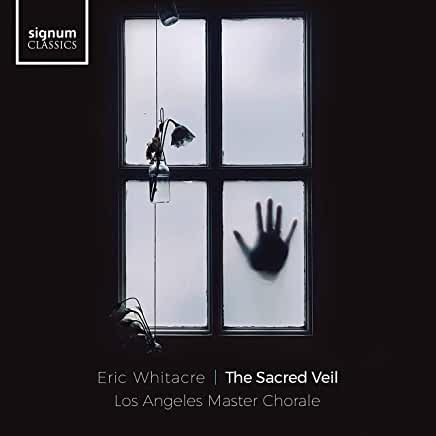
Whitacre: The Sacred Veil (CD Review)

Los Angeles Master Chorale, Grant Gershon, Artistic Director; Eric Whitacre, conductor; Lisa Edwards, piano; Jeffrey Zeigler, cello. Signum SIGCD630.

Composer Eric Whitacre (b. 1970) is a gifted composer and choral conductor whose work always seems to be bursting with energy, imagination, and beauty. His style is a mixture of the simple and the complex, with melodies that are beguiling and straightforward on the surface but often expressed in harmonies that can stretch, soar, and bedazzle. His energy does not confine itself to his composing, as he also is active as a conductor. With the rise of the internet and technologies for interacting electronically, he has recently been active in assembling “virtual choirs” that feature singers from throughout the world joyfully blending their voices under his direction and stewardship.

Whitacre composed The Sacred Veil in with his friend and frequent collaborator Charles Anthony Silvestri, who wrote the lyrics, which revolve around the death from cancer of his late wife, Julia Lawrence Silvestri. As you might surmise from those circumstances, The Sacred Veil is an intensely personal, deeply moving work of art; moreover, this Signum CD is rewarding in many different ways.

One of the interesting qualities of The Sacred Veil is the way it balances intimacy with expression. The lyrics focus on the really private story of Julia’s passing, told from the perspective of her husband, Charles. At the same time, the lyrics are used to evoke Silvestri’s concept of a thin veil that separates the past from the future, the living from the dead, the temporal from the eternal. A simple concept intellectually, but packed with mystery and complexity as a lived experience. Whitacre’s musical setting of the lyrics uses simple melodies played by the piano and the cello to provide a ground for the sometimes straightforward, sometimes soaringly complex choral parts.

Just listen to the opening measures, with a simple melody on the piano soon joined by a tone from the cello, the choir then joining in with some exquisite harmonizing that draws the listener right into the lyrics and thus into the story. By the time the final movements arrive, the vocal harmonies have become more layered, more complex, but the piano and cello still are there to provide a solid foundation for the harmonic structure of the voices. A particularly moving choral device that Whitacre uses to great effect are sliding harmonies in the voices as the lyrics reflect Silvestri’s thoughts and emotions in the immediate aftermath of his wife’s passing in the penultimate movement, “You Rise, I Fall,” an incredibly moving portrait of grief built upon love and hope.

Following the music there is a recorded interview with Silvestri and Whitacre. Such appendices to a musical performance can be annoying, but Silvestri and Whitacre offer an explanation of the meaning of the work and the creative process that the two of them used to bring the piece to fruition. The interview provides insights into The Sacred Veil that makes the listener want to listen to the music again, and again, and again.

Insight into the recording is also provided by the liner notes, which include a brief foreword by Grant Gershon, an introduction to the background story underlying the lyrics by Silvestri, and a movement-by-movement essay on the music by Whitacre. The liner notes also include background information and photographs for not only Whitacre and Silvestri, but also for the Los Angeles Master Chorale, pianist Lisa Edwards, and cellist Jeffrey Ziegler. Seeing information provided for all involved just seems to add to the cooperative, supportive, intimate, indeed loving feeling engendered by both the music and the interview contained in this generously filled (nearly 80 minutes) compact disc. Even the austere but expressive black-and-white cover art feels perfectly appropriate for this release.

Last but not least, the recorded sound is of such excellent quality (Fred Vogler was the recording engineer) that the listener is not likely to really even think about it. The music is just there, sounding utterly natural and unstrained. This is a magnificent CD that I cannot recommend too highly. I hope you find it as moving and inspiring as I do.

Bonus Recommendations: Whitacre has several commercial CD recordings available, notably Light and Gold (2010) and Water Night (2012) on the Decca label. The former is all-choral, while the latter also feature some orchestral compositions. Another fine all-choral collection is Cloudburst and Other Choral Works (2007) on Hyperion. A release easy to overlook but wonderful to hear is The Complete A Cappella Works 1991-2001 (2007) performed by the Brigham Young University Singers on the Arsis label. They may be an amateur group, but both the performances and the engineering are first-class. Finally, a work by Whitacre that is a must-hear is Deep Field, orchestral music that Whitacre composed based on images of deep space from the Hubble space telescope. It is not available on CD as of this writing, but you can find links at Whitacre’s website, ericwhitacre.com.

To listen to a brief excerpt from this album, click below:

May 1, 2012

Whitacre: Water Night (CD review)

Hila Plitmann, soprano; Julian Lloyd Webber, cello; Eric Whitacre Singers; London Symphony Orchestra. Decca B0016636-02.

Eric Whitacre (b. 1970) is an American composer, conductor, and lecturer who has enjoyed a remarkable spike in popularity these past seven or eight years, thanks in large part to several best-selling record albums of his mostly choral music, like his Light & Gold CD from 2010, and to his "Virtual Choir" projects on YouTube. In 2010 he signed a long-term record contract with Decca, the present disc his second release for the company.

You may have heard the aforementioned, GRAMMY-winning album Light & Gold. This one, Water Night, from 2012 is in much the same crossover-classical vein, the music sung and played by various groups including his own Eric Whitacre Singers and the London Symphony Orchestra, with a couple of well-known soloists thrown in and occasional Latin texts, which Whitacre, a student of the Juilliard School, seems to enjoy. I have no doubt that Water Night will enjoy the same kind of success that Light & Gold did, and it certainly deserves attention.

The question we have to ask, though, is, Why? Why does Whitacre get all the praise, glory, adulation, and profit that probably a thousand other talented classical composers don't get? I would propose several reasons: First, Whitacre strikes a central chord in listeners' hearts; his music is spiritually uplifting in the manner of Arvo Part's, with inspiring messages of hope and salvation for everyone. Second, Whitacre seems to be an old-fashioned Romantic at heart, his music sweet, amiable, and elegant; the tone tranquil; the tempos calm and soothing; the style straightforward, sometimes sentimental; the voices uniformly reassuring. Who wouldn't respond to that? Third, he has attracted some of the biggest and best names in the business to perform and promote his music, in this case the Decca record label, the LSO, soprano Hila Plitmann, and cellist Julian Lloyd Webber. Then, fourth, there is the man's pure sex appeal. OK, maybe you weren't expecting that one. But it's true. Just as record companies favor beautiful, young, female musicians who are not only talented but make attractive cover art, so does Whitacre himself ooze sex appeal. Just glance at his pictures: He's relatively young, with the rugged good looks of a movie star, trendy long hair, and a stubble beard so chic these days. He could have stepped off the front page of any voguish men's fashion magazine. So, yeah, he's got it all, and I'm sure he's deserving of every bit of it.

OK, I think we've established that Whitacre writes beautiful music. Can we truly call it "classical"? Of course, we can, and, besides, it doesn't matter how much it crosses over into pop. Music is music, and if you enjoy it, who cares what you call it. Will any of Whitacre's music become "classic," that is, lasting? That we won't know for forty or fifty years. Right now, I'd call his material pleasurable but not necessarily memorable. I can appreciate it while I'm listening to it, but I doubt I could whistle any of it five minutes from now. We'll have to wait and see on the "classic" end.

The program begins with what is one of the best numbers on the program, "Alleluia" ("Praise the Lord") sung by the Eric Whitacre Singers. The composer says in a booklet note that he's neither an atheist nor a Christian, but he finds this particular liturgical word enchanting. Although the hymn is little more than the repetition of the word "Alleluia," it conveys a wealth of feeling.

"Equus," with the LSO, one of the only purely orchestral tracks in the album, is an example of what Whitacre calls "dynamic minimalism." However, it is far more than that and sounds at times as though John Williams had written it for a Spielberg epic.

Another favorite among the nine selections is "The River Cam," with cello and string accompaniment. It is a piece of music in the British "pastoral" school, reminiscent of Arnold Bax, Frederick Delius, Frank Bridge, or Ralph Vaughan Williams. It's quite lovely, and, for me, the best piece of pure "classical" music on the disc. I hope this one has a real lasting power.

The title tune, "Water Night," is one we heard on the Light & Gold album in choral form. Here, the LSO strings perform an orchestral version that I found even more affecting. Again, it follows a lightly meandering pastoral course, inspired by the poetry of Octavio Paz.

Then, Whitacre set some of the words from author Margaret Wise Brown's "Goodnight Moon" to music, here sung by Whitacre's wife, soprano Hila Plitmann with an accompaniment from the LSO. It's a charming lullaby and can almost bring tears to one's eyes.

And so it goes.

Recorded at St. Albans the Martyr Church, Holborn, London, and Henry Wood Hall, London, the sound is uniformly smooth and expansive, with an enormous dynamic range and solid impact. You won't find a lot of depth or air in the presentation, nor will you probably care. There are too many other things going on, like the superwide stereo spread and the extended frequency response. In other words, it is sound that matches and complements the music.

JJP

Dec 17, 2010

Whitacre: Light & Gold (CD review)

The Eric Whitacre Singers; Laudibus; The King's Singers; Pavao Quartet; Hila Plitmann, spoken Hebrew; Christopher Glynn, piano. Decca B001 4850-02.

American composer, conductor, and lecturer Eric Whitacre (b. 1970) has enjoyed a relatively sudden spurt of popularity in the past half dozen years or so, thanks in large part to several best-selling record albums of his mostly choral music, as well as to his "Virtual Choir" projects on YouTube. In 2010 he signed a long-term record contract with Decca, the present disc apparently his first release for the company.

You may have heard his Hyperion recording Cloudburst several years ago; it earned him a Grammy nomination. Light & Gold is much in the same vein, the music sung and played by various groups, including his own Eric Whitacre Singers, the choir Laudibus, the King's Singers, and the instrumental Pavao Quartet, with assorted soloists thrown in. Light & Gold roughly follows a path from morning till evening, with texts running high to Latin, which Whitacre, a student of the Juilliard School, seems to favor.

The program begins with one of Whitacre's most-popular pieces, the title work "Lux Aurumque" ("Light and Gold"), written in 2000 and sung by Whitacre's choir. The work is sweet, pure, amiable, and elegant, an appropriate representative of the remaining music on the disc. It is quite accessible, quite lilting and lovely, the singers' voices floating over the listener in angelic tones. The composer based "Lux Aurumque" on a poem by Edward Esch, translated into Latin: "Lux, Calida gravisque pura velut aurum Et canunt angeli molliter modo natum: Light, warm and heavy as pure gold and angels sing softly to the new-born babe."

The other pieces on the program follow suit. There are sixteen brief choral works altogether, the next being "Five Hebrew Love Songs" from 1996, which Whitacre describes as "troubadour songs for piano, violin and soprano," here adapted for choir and quartet. Each song is a little "postcard" capturing a specific moment that he and his girlfriend at the time (and now his wife) Hila Plitmann shared, she writing the lyrics and he doing the music.

"The Seal Lullaby" is especially fetching, written in 2004 for a movie that never happened. Like the other melodies, it is appealingly simple and direct. "Leonardo Dreams of His Flying Machine," composed in 2001 to a poem by Whitacre's friend Charles Anthony Silvestri, appears more animated than the others, with a stronger female choir. And so it goes unto the last track on the disc, "Sleep," which Whitacre originally intended as music for the Robert Frost poem "Stopping by Woods on a Snowy Evening." Unfortunately for the composer, Frost's estate had shut down any use of the poem, so Whitacre asked his friend, the aforementioned Silvestri, to write new words to the music, which we have here.

Now, there is a "however." While I doubt that any listener would not respond to the gentle honesty and often ravishing beauty of Whitacre's music, I couldn't help thinking as I listened that a lot of it seems alike: the soft, tranquil tone; the calm, soothing tempos; the straightforward, sometimes sentimental style; the uniformly reassuring voices. It all tends to make the individual pieces merge into one indistinguishable mass. A lovely mass, to be sure, but a lightweight, cushy, more-than-comfortable mass as well.

One can hardly fault Decca's sound, recorded at St. Silas Church, London, in August, 2010. Voices are clean and smooth; the stereo spread is extensive; and midrange transparency is ideal, without being in any way bright or abrasive. In other words, the disc's audio qualities complement the pleasurable nature of the music.

JJP

Meet the Staff

Meet the Staff
John J. Puccio, Founder and Contributor

Understand, I'm just an everyday guy reacting to something I love. And I've been doing it for a very long time, my appreciation for classical music starting with the musical excerpts on the Big Jon and Sparkie radio show in the early Fifties and the purchase of my first recording, The 101 Strings Play the Classics, around 1956. In the late Sixties I began teaching high school English and Film Studies as well as becoming interested in hi-fi, my audio ambitions graduating me from a pair of AR-3 speakers to the Fulton J's recommended by The Stereophile's J. Gordon Holt. In the early Seventies, I began writing for a number of audio magazines, including Audio Excellence, Audio Forum, The Boston Audio Society Speaker, The American Record Guide, and from 1976 until 2008, The $ensible Sound, for which I served as Classical Music Editor.

Today, I'm retired from teaching and use a pair of bi-amped VMPS RM40s loudspeakers for my listening. In addition to writing for the Classical Candor blog, I served as the Movie Review Editor for the Web site Movie Metropolis (formerly DVDTown) from 1997-2013. Music and movies. Life couldn't be better.

Karl Nehring, Editor and Contributor

For nearly 30 years I was the editor of The $ensible Sound magazine and a regular contributor to both its equipment and recordings review pages. I would not presume to present myself as some sort of expert on music, but I have a deep love for and appreciation of many types of music, "classical" especially, and have listened to thousands of recordings over the years, many of which still line the walls of my listening room (and occasionally spill onto the furniture and floor, much to the chagrin of my long-suffering wife). I have always taken the approach as a reviewer that what I am trying to do is simply to point out to readers that I have come across a recording that I have found of interest, a recording that I think they might appreciate my having pointed out to them. I suppose that sounds a bit simple-minded, but I know I appreciate reading reviews by others that do the same for me — point out recordings that they think I might enjoy.

For readers who might be wondering about what kind of system I am using to do my listening, I should probably point out that I do a LOT of music listening and employ a variety of means to do so in a variety of environments, as I would imagine many music lovers also do. Starting at the more grandiose end of the scale, the system in which I do my most serious listening comprises Marantz CD 6007 and Onkyo CD 7030 CD players, NAD C 658 streaming preamp/DAC, Legacy Audio PowerBloc2 amplifier, and a pair of Legacy Audio Focus SE loudspeakers. I occasionally do some listening through pair of Sennheiser 560S headphones. I miss the excellent ELS Studio sound system in our 2016 Acura RDX (now my wife's daily driver) on which I had ripped more than a hundred favorite CDs to the hard drive, so now when driving my 2024 Honda CRV Sport L Hybrid, I stream music from my phone through its adequate but hardly outstanding factory system. For more casual listening at home when I am not in my listening room, I often stream music through a Roku Streambar Pro system (soundbar plus four surround speakers and a 10" sealed subwoofer) that has surprisingly nice sound for such a diminutive physical presence and reasonable price. Finally, at the least grandiose end of the scale, I have an Ultimate Ears Wonderboom II Bluetooth speaker and a pair of Google Pro Earbuds for those occasions where I am somewhere by myself without a sound system but in desperate need of a musical fix. I just can’t imagine life without music and I am humbly grateful for the technologies that enable us to enjoy it in so many wonderful ways.

William (Bill) Heck, Webmaster and Contributor

Among my early childhood memories are those of listening to my mother playing records (some even 78 rpm ones!) of both classical music and jazz tunes. I suppose that her love of music was transmitted genetically, and my interest was sustained by years of playing in rock bands – until I realized that this was no way to make a living. The interest in classical music was rekindled in grad school when the university FM station serving as background music for studying happened to play the Brahms First Symphony. As the work came to an end, it struck me forcibly that this was the most beautiful thing I had ever heard, and from that point on, I never looked back. This revelation was to the detriment of my studies, as I subsequently spent way too much time simply listening, but music has remained a significant part of my life. These days, although I still can tell a trumpet from a bassoon and a quarter note from a treble clef, I have to admit that I remain a nonexpert. But I do love music in general and classical music in particular, and I enjoy sharing both information and opinions about it.

The audiophile bug bit about the same time that I returned to classical music. I’ve gone through plenty of equipment, brands from Audio Research to Yamaha, and the best of it has opened new audio insights. Along the way, I reviewed components, and occasionally recordings, for The $ensible Sound magazine. Most recently I’ve moved to my “ultimate system” consisting of a BlueSound Node streamer, an ancient Toshiba multi-format disk player serving as a CD transport, Legacy Wavelet II DAC/preamp/crossover, dual Legacy PowerBloc2 amps, and Legacy Signature SE speakers (biamped), all connected with decently made, no-frills cables. With the arrival of CD and higher resolution streaming, that is now the source for most of my listening.

Ryan Ross, Contributor

I started listening to and studying classical music in earnest nearly three decades ago. This interest grew naturally out of my training as a pianist. I am now a musicologist by profession, specializing in British and other symphonic music of the 19th and 20th centuries. My scholarly work has been published in major music journals, as well as in other outlets. Current research focuses include twentieth-century symphonic historiography, and the music of Jean Sibelius, Ralph Vaughan Williams, and Malcolm Arnold.

I am honored to contribute writings to Classical Candor. In an age where the classical recording industry is being subjected to such profound pressures and changes, it is more important than ever for those of us steeped in this cultural tradition to continue to foster its love and exposure. I hope that my readers can find value, no matter how modest, in what I offer here.


Bryan Geyer, Technical Analyst

I initially embraced classical music in 1954 when I mistuned my car radio and heard the Heifetz recording of Mendelssohn's Violin Concerto. That inspired me to board the new "hi-fi" DIY bandwagon. In 1957 I joined one of the pioneer semiconductor makers and spent the next 32 years marketing transistors and microcircuits to military contractors. Home audio DIY projects remained a personal passion until 1989 when we created our own new photography equipment company. I later (2012) revived my interest in two channel audio when we "downsized" our life and determined that mini-monitors + paired subwoofers were a great way to mate fine music with the space constraints of condo living.

Visitors that view my technical papers on this site may wonder why they appear here, rather than on a site that features audio equipment reviews. My reason is that I tried the latter, and prefer to publish for people who actually want to listen to music; not to equipment. My focus is in describing what's technically beneficial to assure that the sound of the system will accurately replicate the source input signal (i. e. exhibit high accuracy) without inordinate cost and complexity. Conversely, most of the audiophiles of today strive to achieve sound that's euphonic, i.e. be personally satisfying. In essence, audiophiles seek sound that's consistent with their desire; the music is simply a test signal.

Mission Statement

It is the goal of Classical Candor to promote the enjoyment of classical music. Other forms of music come and go--minuets, waltzes, ragtime, blues, jazz, bebop, country-western, rock-'n'-roll, heavy metal, rap, and the rest--but classical music has been around for hundreds of years and will continue to be around for hundreds more. It's no accident that every major city in the world has one or more symphony orchestras.

When I was young, I heard it said that only intellectuals could appreciate classical music, that it required dedicated concentration to appreciate. Nonsense. I'm no intellectual, and I've always loved classical music. Anyone who's ever seen and enjoyed Disney's Fantasia or a Looney Tunes cartoon playing Rossini's William Tell Overture or Liszt's Hungarian Rhapsody No. 2 can attest to the power and joy of classical music, and that's just about everybody.

So, if Classical Candor can expand one's awareness of classical music and bring more joy to one's life, more power to it. It's done its job. --John J. Puccio

Contact Information

Readers with polite, courteous, helpful letters may send them to classicalcandor@gmail.com

Readers with impolite, discourteous, bitchy, whining, complaining, nasty, mean-spirited, unhelpful letters may send them to classicalcandor@recycle.bin.

"Their Master's Voice" by Michael Sowa

"Their Master's Voice" by Michael Sowa