Showing posts with label Mozart. Show all posts

May 30, 2025

Keith Jarrett: A Tribute

by Karl Nehring

Earlier this month, American pianist and composer Keith Jarrett celebrated his 80th birthday. Although best known as a jazz pianist, his body of work extends far beyond jazz – and beyond the piano. We have reviewed a few of his recordings in the past; you can find those reviews here (Budapest Concert)here, (Bourdeaux Concert), and here (C.P.E. Bach Sonatas). Like many people, my first encounter with his playing was from listening to Forest Flower, on which Jarrett played piano as a member of the Charles Lloyd Quartet in a live set at the 1966 Monterey Jazz Festival that was released on Atlantic Records in 1967. In 1971, Jarrett, who was then touring with Miles Davis, had a fateful meeting with producer Manfred Eicher that resulted in Jarrett recording a solo piano album, Facing You, which was released in 1972 on Eicher’s ECM label. In 1973, had released Solo Concerts: Bremen/Lausanne, the first of what would become a series of concert recordings during which Jarrett played improvised music. Popular music critic Rick Beato has posted a YouTube video (which you can see here) describing a segment of this recording as “two of the most beautiful minutes in music.” 

While in the Army in 1974, I picked up both of his “American” quartet albums – Fort Yawuh and Treasure Island – on the Impulse! label, the latter of which featured Jarrett picking up the soprano saxophone on one of the cuts. As a side note, his “American” quartet included the late Dewey Redman, father of Joshua Redman (whose recent performance we mentioned here), on tenor saxophone, along with Charlie Haden on bass and Paul Motian on drums). 1974 also saw the release of the album Belonging on the ECM label, this by Jarrett’s “European” quartet, with Jan Garbarek on tenor saxophone, Palle Danielsson on bass, and Jon Christensen on drums. It’s a beautiful recording, highlighting Jarrett’s skill as a composer as well as a pianist. Then in 1975, ECM released what would become the best-selling piano recording in history, Jarrett’s The Köln Concert. It’s a spellbinding album that still sounds fresh and new 50 years after its initial release.

In 1976, Jarrett received a commission from the Deutsche Grammophon to compose a piece for the Boston Symphony Orchestra. It was to be conducted by Seiji Ozawa and feature Jarrett on piano. Jarrett completed his 200-page, 40-minute score for The Celestial Hawk in 1978. The BSO had been expecting a jazzy piece with Jarrett doing a lot of improvising, apparently thinking that would guarantee box-office success; when they saw it was a serious classical composition, they lost interest, and the project was dropped. Instead, Eicher decided to record the work for his ECM label, with Jarrett on piano accompanied by the Syracuse Symphony Orchestra conducted by Christopher Keene. It was released in 1980.


In 1984, Eicher decided to expand ECM into the classical realm and brought a new sound into the musical world with the release of Arvo Pärt’s Tabula rasa, the first album on the label’s New Series imprint. This recording also marked the intersection of some of the most longstanding, significant musical collaborators in the label’s history: Arvo Pärt, Gidon Kremer, and Keith Jarrett. I was quite familiar with Jarrett, somewhat familiar with Kremer, but my familiarity with Pärt extended only as far as having heard his name but not his music when, late at night in 1984 while sitting in my car having just finished a shift as a security guard while I was still in grad school, over the radio came music that immediately held me under its spell. The late-night host on WOSU-FM announced that he was playing some tracks from a new album of music by the Estonian composer Arvo Pärt, and that we had just heard his composition Fratres, performed by violinist Gidon Kremer and pianist Keith Jarrett. Keith Jarrett?! Although the music sold itself, Jarrett’s endorsement made me even more eager to run out and purchase the CD just as soon as I could find it; I have been an enthusiastic Arvo Pärt fan ever since.

Jarrett went on to release many, many recordings over the ensuing decades, both as a soloist and as part of an ensemble. Many of these were jazz, of course, but there were also many classical efforts, in music of Bach Handel, Mozart, Shostakovich, Bartók, Barber, Harrison, and Hovhaness. (If I may be permitted another personal aside, it was Jarrett who introduced me to the 24 Preludes and Fugues for Piano by Shostakovich – I had many recordings of DSCH’s symphonies and was somewhat familiar with his concertos and chamber music but had no idea this marvelous piano music even existed until ECM released Jarrett’s recording in 1992. I now own several versions and continue to delight in this music that Jarrett first revealed to me.) 


In 1994, Jarrett’s Bridge of Light album appeared on the ECM New Series label, containing four classical compositions by Jarrett: Elegy for Violin and String OrchestraAdagio for Oboe and String OrchestraSonata for Violin and Piano, and Bridge of Light for Viola and Orchestra. Jarrett said of these works, “Actually, all of these pieces are born of a desire to praise and contemplate rather than a desire to "make" or "show" or "demonstrate" something unique. They are, in a certain way, prayers that beauty may remain perceptible despite fashions, intellect, analysis, progress, technology, distractions, "burning issues" of the day, the un-hipness of belief or faith, concert programming, and the unnatural "scene" of "art", the market, lifestyles, etc., etc., etc. I am not attempting to be "clever" in these pieces (or in these notes), I am not attempting to be a composer. I am trying to reveal a state I think is missing in today's world (except, perhaps, in private): a certain state of surrender: surrender to an ongoing harmony in the universe that exists with or without us. Let us let it in.” It is a charming album, pastoral and serene. If you were to listen to it today without being told who the composer is, your guess might well be a British composer such as, say. Butterworth. 

Tragically enough, in 2018 Jarrett suffered the first of several strokes that robbed him of the use of his left hand, thus leaving him unable to continue his career at the piano. However, ECM has since released several albums of past concert performances; in fact, there is a release of a recording he made in Vienna that we will be reviewing in a forthcoming post. For more insight into this fascinating musician, whose music blurred the boundaries between classical and jazz, between composed and improvised, there is a an in-depth interview that the notoriously press-shy Jarrett granted to Rick Beato; that fascinating video can be seen here.

Mar 3, 2024

Mozart: Complete Piano Sonatas Volumes 5 & 6 (CD Review)

by Karl Nehring

Vol. 5 (CD1): No. 7 in C Major K.309; No. 8 in D Major K.311; No. 10 in C Major K.330; Vol. 6 (CD2): No. 14 in C minor K.457; No. 15 in F Major K.533/494. Orli Shaham, piano. Canary Classics CC21.

The Israeli-born American pianist Orli Shaham (b. 1975) is a well-traveled musician who has performed with many of the major orchestras around the world and has appeared in recital in venues ranging from Carnegie Hall to the Sydney Opera House. She is also a busy musician, serving as Artistic Director of the Pacific Symphony’s chamber series and of the interactive children's concert series, Orli Shaham’s Bach Yard. She is also a co-host of the national radio program From the Top and serves on the faculty at The Juilliard School. We have reviewed several previous releases by Ms. Shaham in Classical Candor – all featuring music by Mozart. John Puccio reviewed a disc of piano concertos (you can read his review here), I reviewed Volumes 1-3 of her traversal of the sonatas in a review you can read here, followed by my subsequent review of Volume 4. This latest two-CD release signals the completion of the set, and a remarkable set it has turned out to be.


Regarding the question of why we need yet another recorded cycle of the Mozart piano sonatas, Shaham recognizes “that is the key question of the whole project… Part of the answer lies in the personal journey of discovery; part of it is in wanting to share with as many people as possible the results of what could so easily be a selfish process. I’ve found some very cool things along the way… I believe that most of us have understood during the Covid pandemic what performers have known for a long time: that there is no substitute for live music. Although these are recordings, I am trying here to capture the spontaneous feeling of live performance… I believe that contemplating things from the perspective of the voice is crucial for Mozart – very few of his lines in the piano sonatas and other instrumental works are not vocally inspired. Everything is singable; it’s rare to find intervals in Mozart’s music that are not. In so many ways, Mozart taught the keyboard to sing.” There is indeed a fluid, singing quality to Shaham’s playing that is engaging and pleasurable. The shorter sonatas on Vol. 5 highlight more of her playful side, while the final volume of the set shows Shaham bringing out more complex aspects of Mozart’ music – still with an underlying singing quality of expression, but with a wider and deeper range of feeling. 


Although the dark COVID-19 pandemic onset year 2020 is now finally starting to recede into the paat (although the virus is still among us, and precautions – especially vaccinations – are still particularly prudent), it is worth noting that this recording project is yet another that was undertaken under lockdown precautions. Shaham recorded alone onstage in Mechanics Hall in Worcester, MA, on a modern Steinway piano. The recording producer and editor for the series is the veteran Erica Brenner, who worked remotely from Cleveland, OH. The recording engineer for the beginning of the sessions was the late Michael Bishop (1951-2021), whom audiophiles may recognize as the engineer responsible for many of those spectacular Telarc recordings of days gone by. Following the loss of Bishop, engineering duties were taken over by Robert Friedrich, himself a top-rate engineer. Rest assured that Ms. Shaham – and your ears – have been afforded some truly excellent sonics.

Jan 24, 2024

Recent Releases No. 69 (CD Reviews)

by Karl Nehring

Mozart: Piano Concertos Nos. 19 and 25 (orchestra parts transcribed for string quartet and double bass by Ignaz Lachner). Alon Goldstein, piano; Fine Arts Quartet (Ralph Evans, violin I; Efim Boico, violin II; Gil Sharon, viola; Niklas Schmidt, cello); Lizzie Burns, double bass. Naxos 8.574477

Pianist Alon Goldstein remarks of these two particular pieces that they are his personal favorites from among all of Mozart’s piano concertos, then goes on to explain about the arrangements in which they appear on this recording: “Rearrangement of music was very common in the 18th and 19th centuries. The composer and conductor Ignaz Lachner rearranged 19 Mozart concertos, including the two featured on this recording for piano and string quartet with double bass, most likely for the simple pleasure of domestic use m—having the opportunity to play these beloved works without the need of a full orchestra.” Surely the vast majority of those reading this review are much more likely to be playing this music in their homes through loudspeakers rather than by assembling a group of their chamber music friends to perform it themselves on the appropriate instruments. Those who do listen to this release either by CD (which is how I auditioned it) or through streaming will be rewarded by some richly melodic music abounding in expression, energy, and emotion. What started out as a piano concerto reduces well to a chamber work. Goldstein’s piano part carrying over unchanged. If anything, the work becomes more intimate, more intense, if not quite so rich in color and texture. For those who love the Mozart piano concertos – and I doubt there are many classical music lovers who do not – this recording will not only prove rewarding in its own right, but it will complement and enhance other recordings of these concertos. Highly recommended.


Mozart’s Jazz Requiem: The Queen’s Cartoonists (Joel Pierson, piano, arrangements;

Rossen Nedelchev, drums; Mark Phillips, clarinet, alto sax, flute, soprano sax; Greg Hammontree, trumpet, trombone; Drew Pitcher, tenor sax, bass clarinet; Steve Whipple, bass); Special Guests – Jon Singer, xylophone, marimba;; Samantha Lake, tuba (3, 6); Jen Wharton, bass trombone; Tatum Greenblatt, trumpet; Wayne Tucker, trumpet. 7 Train Records (digital release)


Well, there are arrangements and then there are arrangements. Ignaz Lachner’s arrangements of Mozart’s piano concertos, for example, kept the piano part intact but reduced the wind and string parts down so they could be played by a small ensemble such as string quartet augmented by a double bass. But what we have here is something completely different. Joel Pierson’s arrangement of Mozart’s unfinished Requiem into Mozart’s Jazz Requiem is meant not as a meticulous downsizing of the score for performing by smaller forces, as was Lachner’s; rather,  it is meant as a kind of jazz tribute to what the musicians of the Queen’s Cartoonist’s esteem as one of the greatest pieces ever written. The entire piece has been re-composed in a boisterous jazz style. Using Mozart’s renowned sense of humor as their guide, the band presents a wildly original take on Vienna’s greatest export. The record is being released as a visual album, with the tracks synchronized to old cartoons, which will be screened at performances of the work. It’s wildly irreverent, enthusiastically energetic – not exactly the characteristics we normally associate with a requiem, n’cest-pas? Obviously, to enjoy this piece, you have to be willing to enter into the spirit of the thing. Some listeners will find this sort of thing sacrilege, others will find it good-natured fun and admire the skill and enthusiasm that the Queen’s Cartoonists bring to their project. For a taste of what they are up to, you can check out this video. Have fun! 

Dec 17, 2023

KN's Favorite Recordings of 2023

by Karl Nehring

In looking back over the releases that I reviewed during this past year, it strikes me that there were fewer of the symphonic works that I usually enjoy. I’m not sure whether that is the result of fewer symphony recordings being released or my lack of enthusiasm for reviewing yet another recording of Mahler or Bruckner (I dread 2024, Bruckner’s bicentennial year, which will no doubt herald no end of both rereleases and new recordings of his symphonies – of every edition and her sister by all manner of conductors and orchestras). Whatever the reason, my list of favorites strikes me as a bit unusual this year; however, there’s some darn good music to be found in this list of a dozen of my favorite recordings from 2023, which I present to you just in time for your last-minute holiday shopping. 

Beethoven: The Late Quartets. Calidore String Quartet. Signum Classics SIGCD733. It is certainly natural to be skeptical when encountering yet another boxed set of the late Beethoven quartets; however, this is a fine set indeed, one worthy in both musical and sonic terms to be a first choice for someone looking to acquire a set of these incomparable string quartets. Sonically, in fact, this may well be the finest set of all the many I have ever heard. The natural warmth of the recorded string tone combined with the realistic sense of space makes it especially easy to be drawn into the fascinating music. To be skeptical means to be inclined to look -- or in this case, listen -- quite closely. Those who listen closely to this set will be well rewarded both musically and sonically. 


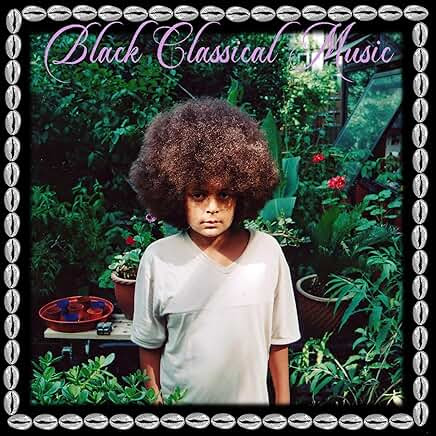
Yussef Dayes: Black Classical Music.  Ravenswood Recordings (UK) – Nonesuch (USA). As evidenced by the title of his new album, London-born drummer and composer Yussef Dayes (b. 1993) has a high regard for the history and heritage of jazz. "What is jazz?” asks the young drummer. “Birthed in New Orleans, born in the belly of the Mississippi River, rooted in the gumbo pot of the Caribbean, South American culture, and African rituals. Continuing a lineage of Miles Davis, Rahsaan Roland Kirk, Nina Simone, John Coltrane, Louis Armstrong -- music that is forever evolving limitless in its potential… Chasing the rhythm of drums that imitated one's heartbeat, the melodies for the mind and spirit, the bass for the core. A regal sound for this body of music." And that is what you hear throughout the 74 minutes of this eclectic, energetic, enthusiastic album. This is optimistic music that can’t help but lift your spirits. Even if you don’t consider yourself a jazz fan, you just might want to give Black Classical Music a listen.


Fauré: Nocturnes and Barcarolles. Marc-Andre Hamelin, piano. Hyperion CDA 68331/2. The French composer Gabriel Fauré (1845-1924) is a composer who, although relatively well known to most classical music lovers, nevertheless seems to be under-appreciated. Perhaps he needed to write some symphonies; whatever the reason, he certainly was a marvelous composer who created music of great beauty and refinement. The piano music of Fauré is certainly far less frequently recorded than that of Beethoven, Chopin, or some of the other usual suspects, so I think we can applaud Hamelin and Hyperion for bringing us such a fine collection. As we have come to expect from Hyperion, everything about this release is first class. The cover features some beautiful art by Monet, the booklet presents useful information about every individual track on the two CDs as well as some biographical information about the artists, and the engineering is excellent. For those who enjoy piano music, this new release is one that you really ought to hear, especially if you have not yet experienced the magical music of that underappreciated master, Gabriel Fauré.   


Nitai Hershkovits: Call on the Old Wise. Nitai Hershkovits, piano. ECM 2779 551 5448

The music on Call on the Old Wise has for the most part a low-key, almost conversational feel to it. There is no banging on the keys, no breakneck tempi, no dissonant tone clusters. That said, the improvisatory nature of much of the music is always evident, but comes across to the listener more as directed and creative, a balanced combination of preparation and inspiration. Hershkovits draws from influences, ranging from his work in jazz contexts to his background in classical music. From track to track, the music varies, but never loses its listenable, playful, charming, quality. Hershkovits credits inspirations as seemingly disparate as the late jazz piano jazz legend Chick Corea and Russian composers Rachmaninoff and Scriabin as prominent influences. With no liner notes but beautiful ECM sound, Call on the Old Wise is an unexpected jewel of a piano recording.


Stephan Micus: Thunder. ECM 2757. German-born Stephan Micus (b. 1953) is a unique musician and composer who has recorded nearly 30 albums, and on all but one of those recordings he played every instrument. He collects and studies instruments from all around the world. On Thunder, the sound is dominated by the four-meter-long Tibetan dung chen trumpet, an instrument he has recently learned and is using for the first time. It was the thunderous sound of this instrument that led to the album’s name and its nine tracks celebrating deities around the globe. The opening cut, A Song for Thor, evokes the thunderous power of a Norse god. As the album proceeds, it is fascinating to hear the sounds of the instruments – all played by Micus, through the miracle of overdubbing – instruments from Tibet, India, Burma, Borneo, Siberia, Japan, South America, Gambia, Namibia, Sweden, and Bavaria. Thunder sounds like powerful chamber music with a world music twist. Engineered to ECM’s usual high standard, it’s quite an impressive show as well.


Federico Mompou: Música callada (“Silent Music”): Book One [1959]; Book Two [1962]; Book Three [1962]; Book Four [1967]. Stephen Hough, piano. Hyperion CDA68362. In his fascinating collection of essays titled Rough Ideas (reviewed here), the British pianist Sir Stephen Hough wrote of the Spanish composer Federico Mompou (1893-1967): “The music of Federico Mompou is the music of evaporation. The printed page seems to have faded, as if the bar lines, time signatures, key signatures, and even the notes themselves have disappeared over a timeless number of years. There is no development of material, little counterpoint, no drama nor climaxes to speak of; and this simplicity of expression – elusive, evasive and shy – is strangely disarming. There is nowhere for the sophisticate to hide with Mompou. We are in a glasshouse, and the resulting transparency is unnerving, for it creates a reflection in which our face and soul can be seen.” Hough also observed that of his musical education, “I knew Mompou before I knew Mozart,” which perhaps give him something of a different perspective on the composer’s output. Some listeners will find the lack of hummable melodies a minus, while, others will find themselves entranced by the unique musical atmosphere evoked by Mompou’s writing and Hough’s performance, which has been captured in full, rich sound by the Hyperion engineering team. The customary top-quality liner notes and cover art that we have come to expect from Hyperion are the frosting on the cake.


Mozart: Piano Concerto No. 9 in E-flat major, “Jeunehomme,” K. 271Piano Concerto No. 24 in C minor K. 491. Lars Vogt, piano and conductor; Orchestre de Chambre de Paris. Ondine  ODE 1414-2. This is one of the final recordings made by the late German pianist Lars Vogt (1970-2022). The CD booklet includes an interview with the recording producer Christophe Franke, a good friend of Vogt’s who points out that at the time Vogt recorded this album, he was already undergoing chemotherapy. “He came to Paris with noticeably less hair, with grey skin, a pale complexion. And yet, or precisely for this reason, Lars absolutely wanted to record this album. For all the unshakable optimism that Lars radiated at all times, he knew that he probably had no chance. But he believed that a miracle perhaps would occur. This ambivalence was in the air the whole time: the hope in the impossible and at the same time the knowledge that it probably would be futile.” Is there any better capsule description of the music on this program? These two concertos manage to intermingle feelings of hope and hopelessness while expressing both with deft artistry, both in their composition (thanks to Mozart) and their performance (thanks to Vogt and the Chamber Orchestra of Paris). The engineers and producers also deserve special mention for the pleasing sound quality and touching liner notes, which combine to make this a remarkable release in every way. 


Arvo Pärt: Tractus.  Maria Listra, soprano; Estonian Philharmonic Chamber Choir; Tallinn Chamber Orchestra; Tönu Kaljuste, conductor. ECM New Series 2800 485 9166. Recorded in Tallinn’s Methodist Church last year, Tractus extends the line of Arvo Pärt albums on the ECM label that began with Tabula rasa in 1984, the recording which first brought Pärt’s music to widespread awareness.. This latest Pärt album features an emphasis on works for choir and chamber orchestra, although there are also compositions for the orchestra alone as well as one for soprano and orchestra. The texts are all based on scriptural, liturgical, or other traditional Christian texts. Although there are passages where the music exhibits some drama, it is for the most part reflective and inward-looking, very much in keeping with the spiritual focus of the texts. The sound quality is warm, spacious, and inviting. This is an album to treasure.


Bobo Stenson Trio: Sphere. ECM 2775 487 3808. The Swedish pianist Bobo Stenson (b. 1944) is probably unfamiliar to most classical music fans, but perhaps this latest album, which features a generous dollop of music by classical composers, will pique some interest, at least among classical fans who also have an interest in other forms of music – as I hope most who follow this blog do. On this new release, his trio open and close the album with a piece by the Swedish composer Per Nørgård (b. 1932) titled You Shall Plant a Tree. The trio’s bassist, Anders Jormin, contributes a couple of pieces, one of them (Unquestioned Answer – Charles Ives in Memoriam) inspired by Charles Ives, with a similar feeling of ambiguity; the other (Kingdom of Coldness) tending toward a more familiar jazz sound. Even more of a familiar type of jazz tune is Jung-Hee Woo’s The Red Flower, which swings gently along. Sven-Erik Bäck (1919-1994) was a Swedish classical composer. His Communion Psalm is an expressive piece that communicates a sense of reverence and ritual. From the late Norwegian pianist and composer Alfred Janson (1937-2019) comes Ky and Beautiful Madame Ky, restless and percussive. And then there is the Sibelius Valsette, his brief original piece for solo piano here stretched out by the trio more than five times its original length, improvised, given a whole new meaning and feeling. Beautiful recorded sound making this a highly recommendable release for both jazz and classical fans.


Veljo Tormis: Reminiscentiae.  Estonian Philharmonic Chamber Choir; Tallinn Chamber Orchestra; Tõnu Kaljuste, conductor. ECM New Series ECM 2783. Partly because the album covers such a long period of time, partly because Kaljuste has taken some music originally written for choir and arranged it for orchestra, and partly because Tormis wrote music of varying styles and moods, there is an impressive variety of music to be found in this collection. Kaljuste and his players have an intimate connection with Tormis’s sound world; in fact, the oldest composition on the album, the opening The Tower Bell in My Village, resulted from a 1978 commission from Kaljuste. “I went to his door holding in my hands the text by Fernando Pessoa and asked him to create a piece for a concert tour with my choir,” Kaljuste writes. “This album reflects upon our collaboration over the years. It is the first album that I have recorded since Veljo Tormis passed away.” This album is a labor of love, a lovingly performed and beautifully recorded labor of love.


Whitacre: Home. Voces8; Emma Denton, cello; Christopher Glenn, piano; Eric Whitacre, conductor. Decca 483 3970. The album begins with four brief pieces, beginning with Go, Lovely Rose, Whitacre’s first composition, followed by one of his most frequently performed pieces, The Seal Lullaby. The next song, Sing Gently, was composed during COVID-19 lockdown specially for Whitacre’s Virtual Choir, made up of more than 17,500 singers from 124 different countries. The fourth work on the album is Whitacre’s most recent composition, All Seems Beautiful to Me, based on a poem by Walt Whitman (from Song of the Open Road) celebrating the human spirit’s capacity for generosity and growth. It was commissioned by the United States Air Force Band and here receives its world premiere recording. We then arrive at the album’s main attraction, The Sacred Veil, which Whitacre composed along with his friend and frequent collaborator Charles Anthony Silvestri, who wrote most of the lyrics, which revolve around the death from cancer of his late wife, Julia Lawrence Silvestri (the remainder of the lyrics were written by Whitacre and Ms. Silvestri before her passing). As you might surmise from those circumstances, The Sacred Veil is an intensely personal, deeply moving composition. The Sacred Veil was originally conceived for a larger choir. In fact, the first recording of it, which Whitacre himself conducted (reviewed here), featured the larger forces of the Los Angeles Master Chorale. So what we have here in this Decca release is in essence a chamber version of the work. That is not to diminish its value, for VOCES8 does a beautiful job. In all honesty, I find The Sacred Veil to be one of the most moving musical works of the 21st century, and I highly recommend this new recording. 


Vaughan Williams: Symphony No. 7 (“Sinfonia Antartica”); Symphony No. 9 in E minor. Elizabeth Watts, soprano, BBC Symphony Chorus; BBC Symphony Orchestra, Martyn Brabbins, conductor. Hyperion CDA68405. Many classical music fans, or at least those conversant with the music of the composer Ralph Vaughan Williams, know that his Symphony No. 7 (“Sinfonia Antartica”) grew out of music that he had composed for the film Scott of the Antarctic, which portrayed the ill-fated South Pole expedition of Royal Navy officer Captain Robert Scott. Intrigued by the story, RVW decided to write a symphony based upon some of the themes from the music he had composed for the film. It is a grand and stirring composition full of spectacular sounds, featuring a large orchestra augmented by an organ, a wordless choir, a wordless soprano, gong, bells, glockenspiel, xylophone, piano, celesta, and if that’s not enough to test your stereo system, a wind machine (which on this recording is replaced by the recorded sounds of actual wind – a first in my experience). The engineering team on  this Hyperion release has met the challenge of capturing the power of the assembled forces. RVW’s Symphony No. 9 seems to be greatly underappreciated, which is a shame, for it is a marvelous work. Brabbins and his BBC forces make a strong case for this final symphony, in a performance that stands right up there with previous favorites such as Manze and Slatkin. If you are one of those casual RVW fans who might have overlooked his Symphony No. 9, this new Hyperion recording would be an excellent opportunity for you to make your acquaintance with something quite special indeed.

Oct 22, 2023

Recent Releases No. 62 (CD Reviews)

by Karl Nehring 

Something that these three releases all have in common is they all boast audiophile-quality sound. Two of them, in fact, are from labels with audiophile credentials: Reference Recordings and Sono Luminus. The third is from Hyperion, a small label from the UK that although not necessarily known as an audiophile label, has produced some superbly engineered recordings. To be honest, recording technology and practices have come a long way over the past 50 years. Many labels almost routinely release recordings that would have been considered “audiophile-quality” back in the 1970s when the underground audio magazines started touting such things. That said, we sometimes come across recordings that just seem to have something special about their sound quality. Note also that these three are not the stereotypical audiophile spectaculars featuring booming bass drums or huge brass choirs; no, these are recordings of chamber music. Enjoy! 

Spanish Impressions. Enrique Fernandez Arbos: Trois Pièces originales dans le genre Espagnol (Three Spanish Dances), Op. 1; Joaquin Turina: Piano Trio No. 2 in B Minor, Op. 76; Gaspar Cassado: Piano Trio in C Major; Mariano Perello: Tres Impresiones para violin, violincello y piano. Hermitage Piano Trio (Ilya Kazantsev, piano; Sergey Antonov, cello; Misha Keylin, violin). Reference Recordings RR-151 


As the three musicians of the Hermitage Piano Trio remind us with their new recording of Spanish trios, it does not always take an orchestra of 100+ musicians playing a symphony by Mahler to generate musical excitement. Chamber music can be powerful, too, especially the richly expressive music of Spain. On this new release from Reference Recordings, the program includes music by composers both familiar and unfamiliar. As the album’s producers explain it, “For the last several years we have been exchanging scores, ideas and developing programs. The trio had been performing two extraordinary Spanish trios by Turina and Cassado—romantic, exotic and lush works. Using these two works as anchor points, we built around them “bookends”—three Spanish dances by Arbos and three Spanish impressions by Perello. All four composers are interconnected to one another through their relationships to each other. Arbos was a celebrated conductor who also orchestrated Albeniz’s Iberia and Perello was a violinist who studied with Albeniz and performed with Granados—both of these gentlemen had close ties to Turina (Arbos conducted many of his works) and Cassado (a celebrated cellist, and next to Casals, among the greatest cellists of Spain).” 

The album draws the listener in immediately from the opening measures of Arbos’s 
Three Spanish Dances, which are ripe with rhythmic zest. And thus it continues throughout the program – a musical voyage through the Spanish imagination, presented in remarkably realistic sound by the engineering team at Reference Recordings, led by the veteran audio wizard  Keith O. Johnson, a prominent figure in audiophile circles about whom you can learn more here. You can gain some more insight into Spanish Impressions by watching this brief YouTube video in which the musicians discuss the album. This is a recording that will bring a smile to your face and a spring to your step.


Mozart: (CD1) Piano Sonata in D Major K311Piano Sonata in A Minor K310Piano Sonata in C Major K330Fantasia in C Minor K396 (completed by Maximilian Stadler)Fantasia in D Minor K397; (CD2) Piano Sonata in A Major K331Piano Sonata in F Major K332Piano Sonata in B Flat Major K333. Angela Hewitt, piano. Hyperion CDA6841/2


The Canadian-born pianist Angela Hewitt (b. 1958), who now resides in London, was the one of pianists whose album I included in my very first “Piano Potpourri” post, which you can see here. Immediately following the recording sessions for that album, Hewitt received the shocking news that the piano movers who had come to transport her $200,000 Fazioli piano with its custom-installed fourth pedal had somehow managed to drop the instrument, which turned out to be irreparably damaged. Hewitt had made recordings and even played some concerts in Europe with her beloved piano for 17 years, so this was a real blow. However, things have a way of working out; the mover’s insurers covered the replacement expense and Hewitt was eventually offered her choice of five new Fazioli concert grands, from which she chose her new best musical friend. Thus settled, Hewitt has undertaken a project to record the complete Mozart piano sonatas, to be released on three two-CD sets. The first of these sets, containing the first seven sonatas (K279-284 and K309), was released by Hyperion in November, 2022. This new Hyperion release marks the second installment of Hewitt's chronological survey. These works date from Mozart's twenties and include his first masterpieces in the genre (K331, with its famous 'Alla turca' finale, for example). 


These middle sonatas of Mozart are simply marvels of melody. Not too simple, not too complex – just right. Bill Heck and I recently talked about the piano music of Mozart, about how it so seamlessly integrates structure and melody. Hewitt’s playing brings out every little nuance, drawing the listener into the music. She has a delicate touch, making the music seem to flow naturally and inevitably from note to note, phrase to phrase, measure to measure. Hewitt has a reputation as a Bach specialist; perhaps her precision in mastering that music formed the basis for her mastery of the music of Mozart. Moreover, the beauty of her playing is highlighted by the recorded sound, which captures the sound of her Fazioli in rich, natural, lifelike tones. With CD1 clocking in at 80 minutes and CD2 at 75 plus informative notes about the music by the pianist herself, there is plenty to like about this production. There are plenty of excellent Mozart sonata recordings out there, several of which I have reviewed in the past, but I’ve never heard better than this one, which of course earns my highest recommendation.

Sonic Alchemy. Vasks: Balta Ainava (White Scenery); Pärt: Fratres; Mozart: Fantasia in D minor, K. 397; Pärt: Mozart-Adagio (after Sonata K. 280); Mozart: Fantasia in C minor, K. 475; Vasks: Castillo Interior (Interior Castle); Pärt: Spiegel im Spiegel. YuEun Kim, violin; Mina Gajić, piano; Coleman Itzkoff, cello. Sono Luminus DSL-92261


Pianist Mina Gajić says of this album that it was “inspired by the transformation and fluidity of life, represented by the seasons in nature, and in humankind in the way people connect through religion and spirituality.” In its own way, Sonic Alchemy is something of a spiritual album, but not in the way that a mass or other liturgically-oriented composition would be. The program is a fascinating one, spanning two centuries  to bring together the music of Mozart with that of two contemporary composers, Arvo Pärt and Pēteris Vasks. Icelandic composer Páll Ragnar Pálsson, who contributed the album’s liner notes, writes “Despite the roughly 200 years that separate Mozart from Vasks and Pärt, there are elements that connect them. Similarly to Pärt and Vasks who needed to find a way to deal with the oppressive rule of the Soviet Union, Mozart also made a well-known declaration of independence. He left the archbishop in Salzburg and the financial security that followed and embarked on a path of what we would call freelance composing today. Mozart, Pärt and Vasks all share a deep sense of clarity that crystalizes in music that comforts and elevates your spirit.” 

The program is centered around Mozart. The centerpiece is Pärt’s Mozart-Adagio (after Sonata K. 280), which is actually the only piece on the album in which all three players combine as a trio. It is framed on the program by the two Mozart Fantasias, played by pianist Mina Gajić, who is also featured on the opening track, the peaceful and reflective Balta Ainava (White Scenery). Gajić is joined by cellist  Coleman Itzkoff both for the second track, Pärt’s Fratres, and in a bit of symmetry, in the sixth (and next-to-last) track, Vasks’s Castillo Interior.  On the final track, Pärt’s simply constructed but nonetheless haunting Spiegel im Spiegel, Gajić is joined by violinist YuEun Kim.  Contributing to the deep beauty of the album is the purity of its sound, which was engineered by Daniel Shore and Erica Brenner at the Sono Luminus Studios in Boyce, Virginia, where it was mixed and mastered using Legacy Audio speakers (the same speakers Bill Heck and I use for reviews). Sonic Alchemy is a marvelous album of chamber music, an appealing blend of old and new, familiar and unfamiliar, impeccably performed and recorded.


Oct 15, 2023

Recent Releases No. 61 (CD Reviews)

by Karl Nehring

Mozart: Piano Concerto No. 9 in E-flat major, “Jeunehomme,” K. 271Piano Concerto No. 24 in C minor K. 491. Lars Vogt, piano and conductor; Orchestre de Chambre de Paris. Ondine  ODE 1414-2

Many music lovers already know that this release is one of the few final recordings made by the late German pianist Lars Vogt (1970-2022). The CD booklet includes an interview with the recording producer Christophe Franke, who was a good friend of Vogt’s. Franke points out that at the time Vogt recorded the album, he was already undergoing chemotherapy. “He came to Paris with noticeably less hair, with grey skin, a pale complexion. And yet, or precisely for this reason, Lars absolutely wanted to record this album. For all the unshakable optimism that Lars radiated at all times, he knew that he probably had no chance. But he believed that a miracle perhaps would occur. This ambivalence was in the air the whole time: the hope in the impossible and at the same time the knowledge that it probably would be futile.” Is there any better capsule description of the music on this program? These two concertos manage to intermingle feelings of hope and hopelessness while expressing both with deft artistry, both in their composition (thanks to Mozart) and their performance (thanks to Vogt and the Chamber Orchestra of Paris). The engineers and producers also deserve special mention for the pleasing sound quality and touching liner notes, which combine to make this a remarkable release in every way. 


Yussef Dayes: Black Classical MusicBlack Classical MusicAfro Cubanism;  Raisins Under the SunRustTurquoise GalaxyThe LightPon di PlazaMagnolia SymphonyEarly DayesChasing the DrumBirds of ParadiseGelatoMarching BandCrystal Palace ParkPresidentialJukeboxWoman's TouchTioga PassCowrie Charms. Yussef Dayes, drums, vocals; Charlie Stacey, piano, keyboards, synthesizers; Venna, saxophone; Rocco Palladino, bass; Alexander Bourt, congas, percussion; Rory Cashmere Pagan, live Fx; Shabaka Hutchings, bass clarinet; Miles James, guitar, synthesizers; Sheila Maurice Grey, trumpet; Nathaniel Cross, tuba; Tom Misch, guitar, bass, keyboards, vocals; Paris Fabienne, vocals; Chronixx, vocals, guitar, bass; Adrian “Jerks” Henry, bass; Chineke! Orchestra; Dave Dayes, vocals; Luzinho do Jêfé, percussion, vocals; Tito Oliveira De Souza, drums; Masego, vocals; Elijah Fox, keyboards, synthesizers; Maxwell Hunter, bass; Jahaan Sweet, keyboards, vocals, production; Alex Bonfanti, bass; Laurie Blundell, Percussion; Jamilah Barry, Vocals; Barbara Hicks, savasana; Leon Thomas, vocals. Ravenswood Recordings (UK) – Nonesuch (USA)


As evidenced by the title of his new album, London-born drummer and composer Yussef Dayes (b. 1993) has a high regard for the history and heritage of jazz. "What is jazz?” asks the young drummer. “Where did the word derive from? Birthed in New Orleans, born in the belly of the Mississippi River, rooted in the gumbo pot of the Caribbean, South American culture, and African rituals. Continuing a lineage of Miles Davis, Rahsaan Roland Kirk, Nina Simone, John Coltrane, Louis Armstrong -- music that is forever evolving limitless in its potential. The groove, its feeling, the compositions, the spontaneity, with a love for family, the discipline and dedication in maintaining the very high bar set by the pantheon of Black Classical Musicians. Chasing the rhythm of drums that imitated one's heartbeat, the melodies for the mind and spirit, the bass for the core. A regal sound for this body of music." And that is what you hear throughout the 74 minutes of this eclectic, energetic, enthusiastic album. Don’t let the long list of credits mislead you; not everyone plays at once. Instead, various combinations play in a variety of styles, usually anchored by Dayes’s exuberant drumming. This is optimistic music that can’t help but lift your spirits, as you can see from this video of a live performance of the title cut. Even if you don’t consider yourself a jazz fan, you just might want to give Black Classical Music a listen.

Sep 13, 2023

Recent Releases No. 57 (CD Reviews)

by Karl Nehring


Chen Gang and He Zhanhao: Butterfly Lovers Violin Concerto (arr. Yan Huichang and Ku Lap-Man); Saint-Saëns: Introduction et Ronde Capriccioso in A minor, op. 28; Massenet: “Méditation” from Thaïs; Sarasate: Zigeunerweisen. Joshua Bell, violin; Singapore Chinese Orchestra conducted by Tsung Yeh


Those looking for something different  but not too far “out there” might well find themselves fascinated by this recording, one that mixes East and West in an unusual way. The Butterfly Lovers Violin Concerto, which was inspired by a romantic Chinese legend, was written in 1959 by the Chinese composers Chen Gang (b. 1935) and He Zhanhao (b. 1933). Their original version, which they richly scored for a full Western symphonic orchestra, has achieved global popularity. For this recording, however, violinist Joshua Bell has chosen to perform an adaptation of the work by Yang Hui Chang and Ku Lap-Man for an orchestra of mostly traditional Chinese instruments. As the liner notes explain, “the sound world of the concerto becomes more vivid , arresting, and visceral in this arrangement. For instance, instead of violin and viola sections echoing the sounds of the gaohu, the erhu, and the zhonghu – the Chinese bowed string instruments in various ranges – the Singapore Chinese Orchestra employs whole sections of skilled players of these as well as other traditional Chinese instruments. To anchor the ensemble sound, the orchestra includes Western cellos and double-basses. Aside from these, the percussion section and a guest harpist, however, all the other instruments are traditionally Chinese. The concerto is in seven short movements, with the solo violin, so expressively played here by Bell, weaving a tale of great passion throughout. The Chinese orchestra does not sound as exotic as the notes might lead the listener to expect; just not as full and soaring as a Western orchestra. It’s an interesting sound, to be sure, which carries over into the more familiar chestnuts that fill out this interesting-sounding album. 


Mozart Recital. Mozart: Gigue in G minor, K 574 “Eine kleine Gigue”12 Contredanses for Count Czernin, K 269b - Nos. 1, 2, 3, 12Sonata No. 9 in D major, K 311Allegro in G minor, K 512Adagio in B minor, K 540Variation on “Unser dummer Pöbel meint”, K 455Sonata No. 12 in F major, K 332Ave verum corpus, K 518 (arr. Franz Liszt). Su Yeon Kim, piano. Steinway & Sons 30211 


This all-Mozart recital is the first recording by the Korean pianist Su Yeon Kim (b. 1994), 2021 Grand Laureate of the Concours musical international de Montréal. The young artist has spent much of her career delving deep into Mozart’s music, having studied at the Mozarteum University in Salzburg and competed successfully at the Mozart International Competition. Although this background gave her a good foundation, to record an album of Mozart’s music still presented a formidable challenge to the young pianist: “Even after 10 years of diligent studies, I still felt like there were a few steps left before I fully understood Mozart’s music and the spirit behind it,” she explains. “His music is full of life and power, encompassing the full spectrum of human emotions and transcending all eras and cultural boundaries. I feel that I also learned, through Mozart's music, how to face myself in unfiltered way, how to accept and express from painful sadness to sheer joy.” On the album, she presents a variety of music of different styles, from the quirky opening Gigue, the rollicking Contredanses, and of course a couple of more substantial pieces, the Sonatas Nos. 9 & 12. Of course, even within the sonatas, Mozart gives us a variety of emotions, and Su Yeon Kim brings a deft touch to the keyboard that brings balance to the proceedings. Between the two sonatas are three standalone pieces – an Allegro, a heartfelt Adagio, and the energetic and playful Variations on “Unser dummer Pöbel meint.” She then closes her recital with the meltingly beautiful Franz Liszt arrangement of Mozart’s  Ave verum corpus. As usual, Steinway & Sons has done an excellent job of capturing the sound of the piano. 


Per Nørgård: Three Nocturnal MovementsSymphony No. 8Lysning. Peter Herresthal, violin; Jakob Kullberg, cello; Bergen Philharmonic Orchestra; John Storgårds, conductor BIS-2502 SACD


Per Nørgård (b. 1932, pronounced “Per Ner-Gore”) is generally regarded to be one of the most the most important Danish composers since Nielsen. Long ago I had heard some orchestral music of his that I had found intriguing; this memory led me last year to acquire a boxed set of his symphonies, eight in number, which had been released on BIS. I found the set challenging but fascinating and even included it in a supplemental post of some more of my favorite releases of 2022, which you can read here. In that set, Symphony No. 8 was by the Vienna Philharmonic conducted by Finnish conductor Sakari Oramu (b. 1965). There is also a YouTube video of Finnish conductor John Storgårds (b. 1965) conducting the Helsinki Philharmonic in 2012, in what was I believe was the work’s premier (you can find that video here). At the end of the performance, Nørgård comes forward to acknowledge the applause of the concertgoers along with conductor Storgårds, to whom the work was dedicated. (For those who might be interested, there is also a video made at about the same time in which Nørgård and Storgårds discuss the symphony (and Sibelius), which you can watch here


Fast-forward a decade, and Storgårds is now the conductor for this 2023 release (the symphony was actually recorded in 2022, the other works in 2019), this time with the Bergen Philharmonic. The program opens with Three Nocturnal Movements for violin, cello, and orchestra. Violinist Peter Herresthal and cellist Jakob Kullberg are two of Nørgård’s long-term collaborators; Kullberg in particular had significant input into the creation of the work, which is three movements that evoke confusion and calm, mystery in the darkness, random points of light. Nocturnal, yes… The symphony is also in three movements, with the first, marked Tempo giusto, being significantly longer than the other two (11:28 in this performance, compared to the nearly identical 6:50 Andante molto and 6:49 for the final movement, which is marked simply as ♩ = 90. The work is bold, busy (lots of notes), and although probably not to everyone’s taste (what is?), intriguing. It is one of those works that seems to get better as it goes along, until by the last few minutes you realize that you are enthralled – the final movement has won you over – and you want to listen to it again. But before you do, you can spend a little relaxing time (4:43) in the glade, which is the term Nørgård uses to characterize Lysning, a soothing piece for string orchestra. As we have come to expect from BIS, the sonics are first-rate. For the record, I did my listening to the CD layer of this hybrid SACD, which also includes stereo SACD and 5.0 surround layers.

Jul 12, 2023

Mozart: Complete Piano Sonatas Vol. 4 (CD Review)

by Karl Nehring

Piano Sonata in F Major, No. 2, K.280Piano Sonata in C Major, No. 1, K.279Piano Sonata in D Major, No. 6, K.284,”Dürnitz.” Orli Shaham, piano. Canary Classics CC23

The Israeli-born American pianist Orli Shaham has performed with many of the major orchestras around the world, and has appeared in recital from Carnegie Hall to the Sydney Opera House. She is Artistic Director of Pacific Symphony’s chamber series and Artistic Director of the interactive children's concert series, Orli Shaham’s Bach Yard. She is also a co-host of the national radio program From the Top and is on faculty at The Juilliard School. We have reviewed several previous releases by Ms. Shaham in Classical Candor – all featuring music by Mozart – including a disc of piano concertos reviewed here by John Puccio and Volumes Nos. 1-3 of the piano sonatas, which I reviewed here. Although I had found those first three volumes to enjoyable, I was not quite prepared for what I heard when I auditioned this release, which feature three of Mozart’s earliest sonatas.  


These three works have a freshness and sparkle that are captivating from start to finish. From the very first notes, the music just draws you right in. The liner notes offer an explanation of why this is so: “Mozart didn’t start out a household name. As a young musician, he traveled widely and — like any good traveling salesman — needed samples to show off to prospective patrons. So, during a journey to Munich in 1774–1775, he wrote six ‘calling cards’ to play at the homes of potential benefactors. Three of these calling cards — the sonatas K. 280, K. 279, and K. 284 — form this disc. What Mozart could do was in many ways the cutting edge of composition and keyboard technique. He was an early adopter of technology, writing for newly invented instruments and experimenting with any innovation that could be used to artistic effect… Even on a standard keyboard, he never stopped exploring: How many different kinds of sounds — rich and plaintive, loud and soft, long and short, question and answer, excitement and heartbreak — can I make on this keyboard? Can I make a piece sound improvised? Can I draw people in with pauses (Sonata in F, K. 280)? Can I write a theme that isn’t really a melody (Sonata in C, K. 279)? Why not try a final movement of variations, instead of a rondo (Sonata in D, K. 284, ‘Dürnitz’)?”


Where Mozart’s later sonatas sometimes seem to must flow along elegantly and serenely, these have a nervous energy about them, a invoking a feeling of unpredictability that makes them seem more original and involving than some of his later music. You can close your eyes and imagine Mozart at the keyboard being a bit of a showman. No, these are not the keyboard pyrotechnics of a Liszt or Rachmaninoff, but within the constraints of the classical idiom in which he was working, Mozart wrote himself some music that really does grab the listener’s attention. Orli Shaham is certainly up to the demands of playing the music with finesse and flair, and as usual with this series, the engineering is excellent. Volume 5 should be released later in 2023 to complete the project. 

Meet the Staff

Meet the Staff
John J. Puccio, Founder and Contributor

Understand, I'm just an everyday guy reacting to something I love. And I've been doing it for a very long time, my appreciation for classical music starting with the musical excerpts on the Big Jon and Sparkie radio show in the early Fifties and the purchase of my first recording, The 101 Strings Play the Classics, around 1956. In the late Sixties I began teaching high school English and Film Studies as well as becoming interested in hi-fi, my audio ambitions graduating me from a pair of AR-3 speakers to the Fulton J's recommended by The Stereophile's J. Gordon Holt. In the early Seventies, I began writing for a number of audio magazines, including Audio Excellence, Audio Forum, The Boston Audio Society Speaker, The American Record Guide, and from 1976 until 2008, The $ensible Sound, for which I served as Classical Music Editor.

Today, I'm retired from teaching and use a pair of bi-amped VMPS RM40s loudspeakers for my listening. In addition to writing for the Classical Candor blog, I served as the Movie Review Editor for the Web site Movie Metropolis (formerly DVDTown) from 1997-2013. Music and movies. Life couldn't be better.

Karl Nehring, Editor and Contributor

For nearly 30 years I was the editor of The $ensible Sound magazine and a regular contributor to both its equipment and recordings review pages. I would not presume to present myself as some sort of expert on music, but I have a deep love for and appreciation of many types of music, "classical" especially, and have listened to thousands of recordings over the years, many of which still line the walls of my listening room (and occasionally spill onto the furniture and floor, much to the chagrin of my long-suffering wife). I have always taken the approach as a reviewer that what I am trying to do is simply to point out to readers that I have come across a recording that I have found of interest, a recording that I think they might appreciate my having pointed out to them. I suppose that sounds a bit simple-minded, but I know I appreciate reading reviews by others that do the same for me — point out recordings that they think I might enjoy.

For readers who might be wondering about what kind of system I am using to do my listening, I should probably point out that I do a LOT of music listening and employ a variety of means to do so in a variety of environments, as I would imagine many music lovers also do. Starting at the more grandiose end of the scale, the system in which I do my most serious listening comprises Marantz CD 6007 and Onkyo CD 7030 CD players, NAD C 658 streaming preamp/DAC, Legacy Audio PowerBloc2 amplifier, and a pair of Legacy Audio Focus SE loudspeakers. I occasionally do some listening through pair of Sennheiser 560S headphones. I miss the excellent ELS Studio sound system in our 2016 Acura RDX (now my wife's daily driver) on which I had ripped more than a hundred favorite CDs to the hard drive, so now when driving my 2024 Honda CRV Sport L Hybrid, I stream music from my phone through its adequate but hardly outstanding factory system. For more casual listening at home when I am not in my listening room, I often stream music through a Roku Streambar Pro system (soundbar plus four surround speakers and a 10" sealed subwoofer) that has surprisingly nice sound for such a diminutive physical presence and reasonable price. Finally, at the least grandiose end of the scale, I have an Ultimate Ears Wonderboom II Bluetooth speaker and a pair of Google Pro Earbuds for those occasions where I am somewhere by myself without a sound system but in desperate need of a musical fix. I just can’t imagine life without music and I am humbly grateful for the technologies that enable us to enjoy it in so many wonderful ways.

William (Bill) Heck, Webmaster and Contributor

Among my early childhood memories are those of listening to my mother playing records (some even 78 rpm ones!) of both classical music and jazz tunes. I suppose that her love of music was transmitted genetically, and my interest was sustained by years of playing in rock bands – until I realized that this was no way to make a living. The interest in classical music was rekindled in grad school when the university FM station serving as background music for studying happened to play the Brahms First Symphony. As the work came to an end, it struck me forcibly that this was the most beautiful thing I had ever heard, and from that point on, I never looked back. This revelation was to the detriment of my studies, as I subsequently spent way too much time simply listening, but music has remained a significant part of my life. These days, although I still can tell a trumpet from a bassoon and a quarter note from a treble clef, I have to admit that I remain a nonexpert. But I do love music in general and classical music in particular, and I enjoy sharing both information and opinions about it.

The audiophile bug bit about the same time that I returned to classical music. I’ve gone through plenty of equipment, brands from Audio Research to Yamaha, and the best of it has opened new audio insights. Along the way, I reviewed components, and occasionally recordings, for The $ensible Sound magazine. Most recently I’ve moved to my “ultimate system” consisting of a BlueSound Node streamer, an ancient Toshiba multi-format disk player serving as a CD transport, Legacy Wavelet II DAC/preamp/crossover, dual Legacy PowerBloc2 amps, and Legacy Signature SE speakers (biamped), all connected with decently made, no-frills cables. With the arrival of CD and higher resolution streaming, that is now the source for most of my listening.

Ryan Ross, Contributor

I started listening to and studying classical music in earnest nearly three decades ago. This interest grew naturally out of my training as a pianist. I am now a musicologist by profession, specializing in British and other symphonic music of the 19th and 20th centuries. My scholarly work has been published in major music journals, as well as in other outlets. Current research focuses include twentieth-century symphonic historiography, and the music of Jean Sibelius, Ralph Vaughan Williams, and Malcolm Arnold.

I am honored to contribute writings to Classical Candor. In an age where the classical recording industry is being subjected to such profound pressures and changes, it is more important than ever for those of us steeped in this cultural tradition to continue to foster its love and exposure. I hope that my readers can find value, no matter how modest, in what I offer here.


Bryan Geyer, Technical Analyst

I initially embraced classical music in 1954 when I mistuned my car radio and heard the Heifetz recording of Mendelssohn's Violin Concerto. That inspired me to board the new "hi-fi" DIY bandwagon. In 1957 I joined one of the pioneer semiconductor makers and spent the next 32 years marketing transistors and microcircuits to military contractors. Home audio DIY projects remained a personal passion until 1989 when we created our own new photography equipment company. I later (2012) revived my interest in two channel audio when we "downsized" our life and determined that mini-monitors + paired subwoofers were a great way to mate fine music with the space constraints of condo living.

Visitors that view my technical papers on this site may wonder why they appear here, rather than on a site that features audio equipment reviews. My reason is that I tried the latter, and prefer to publish for people who actually want to listen to music; not to equipment. My focus is in describing what's technically beneficial to assure that the sound of the system will accurately replicate the source input signal (i. e. exhibit high accuracy) without inordinate cost and complexity. Conversely, most of the audiophiles of today strive to achieve sound that's euphonic, i.e. be personally satisfying. In essence, audiophiles seek sound that's consistent with their desire; the music is simply a test signal.

Mission Statement

It is the goal of Classical Candor to promote the enjoyment of classical music. Other forms of music come and go--minuets, waltzes, ragtime, blues, jazz, bebop, country-western, rock-'n'-roll, heavy metal, rap, and the rest--but classical music has been around for hundreds of years and will continue to be around for hundreds more. It's no accident that every major city in the world has one or more symphony orchestras.

When I was young, I heard it said that only intellectuals could appreciate classical music, that it required dedicated concentration to appreciate. Nonsense. I'm no intellectual, and I've always loved classical music. Anyone who's ever seen and enjoyed Disney's Fantasia or a Looney Tunes cartoon playing Rossini's William Tell Overture or Liszt's Hungarian Rhapsody No. 2 can attest to the power and joy of classical music, and that's just about everybody.

So, if Classical Candor can expand one's awareness of classical music and bring more joy to one's life, more power to it. It's done its job. --John J. Puccio

Contact Information

Readers with polite, courteous, helpful letters may send them to classicalcandor@gmail.com

Readers with impolite, discourteous, bitchy, whining, complaining, nasty, mean-spirited, unhelpful letters may send them to classicalcandor@recycle.bin.

"Their Master's Voice" by Michael Sowa

"Their Master's Voice" by Michael Sowa