Showing posts with label Telemann. Show all posts

Jul 17, 2022

Telemann: Viola Concertos (CD review)

Overtures-Fantasias. Antoine Tamestit, viola; Sabine Fehlandt, viola; Bernhard Forck, Akademie fur Alte Musik Berlin. Harmonia Mundi HMM 902342.

By John J. Puccio

If you’re like me, you will immediately recognize the name of German Baroque composer Georg Philipp Telemann (1681-1767) but probably have trouble remembering anything he wrote. Alas, it is sometimes the fate of famous people who are perhaps more famous for their name alone than anything they actually did. The fact is, however, that Telemann was one of the most prolific composers of the Baroque age, maybe in all history, having written hundreds, if not thousands, of works. What’s more, he was a close friend of both J.S. Bach and Handel, and today he has a whole museum in Hamburg dedicated to him.

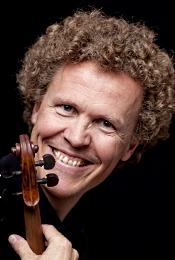
On the present disc, violist Antoine Tamestit with the Academy for Ancient Music Berlin under the direction of Bernhard Forck (and alongside violist Sabine Fehlandt in a couple of duets) present a survey of Telemann’s music for viola and orchestra, a survey that doesn’t begin to cover all of the composer’s work but gives us a pretty good idea of the man’s creative breadth and style. This effect is greatly heightened by the period instruments played by the Academy and the 1672 Stradivarius viola Temestit uses.

The secret, of course, is making anyone care. I mean, Telemann’s music can kind of run all together, much of it sounding alike, unless the performer is up to the task of making it come to life. It’s here that Mr. Tamestit comes into his own. The French violist (b. 1979) studied at the Paris Constervatory, won a string of international competitions, performed in a number of the world’s most prestigious concert halls, and is heading toward two dozen recordings. Yes, he breathes new life into Telemann.

It helps, too, that the viola itself has such a distinctive sound. It sometimes gets a bit lost between the deeper, mellower, more sonorous sound of its big brothers--the cellos and basses--and the sweeter, brighter sound of its more plentiful little brothers, the violins. Smaller than a cello but bigger than a violin, the viola has taken a number of different sizes and shapes (as well as a number of different names) over the years. Yet it has always made a joyful noise, and Telemann was among the first composers to popularize it and bring it to the attention of the world.

The first selection on the program is one of two Overtures, orchestral dance suites much like those of Bach and Handel. It’s the Overture burlesque for strings and continuo in B-flat major, TWV 55:B8 in seven brief movements. The numbers dance across the stage in various shapes and rhythms, and they provide a good, lively introduction to the set.

This leads us into the Concerto for viola, strings and continuo in G major, TWV 51:G9, which is where Tamestit really gets to strut his stuff. After a rousing finish to the Overture,  the Concerto’s opening Largo sounds an especially solemn note. Fortunately, Tamestit brings it to life with some vibrant phrasing, leading cheerfully, and artfully, into the succeeding Allegro. It is an altogether delightful little piece and is well worth the price of the whole disc by itself.

You get the idea. The ensemble play with authority and precision, and Tamestet performs with a skillful gusto, the players generating some wholly listenable tunes. My only regret was that there wasn’t more of it. Although the disc contains almost seventy minutes of music, it goes by more quickly than you want.

Anyway, the other items on the agenda are another Overture (where the percussionist comes into his own), the Canonic sonata for 2 violas, two Fantasias for solo viola (wonderfully inventive), ending with the enchanting Concerto for 2 violas, strings and continuo. All of them are little gems, prompting one to see clearly why Bach and Handel and most of the classical world of the Baroque period so admired Telemann’s music.

Producer Martin Sauer and engineers Tobias Lehman and Rene Moller recorded the music at Teldex Studio Berlin in July 2020. Harmonia Mundi has been recording period instruments for quite some time, and their practice pays off. The sound is smooth and natural, while providing plenty of detail. It’s perhaps a tad closer than I’d like, compressing a lot of the instruments into the center of the stage, but it’s a minor quibble that one quickly forgets. Besides, the solo viola parts benefit from the miking, giving full rein to the beauty and richness of the instrument’s sound. It’s quite a pleasant and lifelike presentation.

JJP

Mar 27, 2022

Musica Barocca (CD review)

Music of Albinoni, J.S. Bach, Handel, Marcello, Pachelbel, Purcell, Telemann, and Vivaldi. Giovanni Antonini, Il Giardino Armonico. Warner Classics 0190296455322.

By John J. Puccio

Il Giardino Armonico (“The Garden of Harmony”) is a period-instrument ensemble co-founded in 1985 by its leader Giovanni Antonini. Like most such bands, its primary purpose is to play music in a historically accurate style and on original instruments appropriate to the era (mainly the late seventeenth to early nineteenth centuries). In other words, to play music that the composers of such music would easily recognize if they were alive today. The 1980’s saw a number of such HIP (historically informed performance) orchestras pop up, many of which are gone now and many of which have stuck around. Il Giardino Armonico is one that stuck around.

Although Il Giardino Armonico is still performing and still recording, they recorded the present album in 2001 for Teldec Das Alte Werk, and Warner Classics is just re-releasing it 2022. So you might say it’s something of a relic itself. Still, it’s a good and welcome relic, filled with an abundance of good tunes by Baroque composers like Albinoni, J.S. Bach, Handel, Marcello, Pachelbel, Purcell, Telemann, and Vivaldi. It’s not quite a golden oldies collection of Baroque favorites, but it’s close. The main thing is that it’s well played and enjoyable to hear. The composers couldn’t have wanted more.

Here’s the program:

J.S. Bach: Suite No. 3 in D major
Albinoni: Oboe Concerto in D minor
Vivaldi: Flautino Concerto in C major
Albinoni: Adagio for solo violin and strings
Marcello: Oboe Concerto in D minor
Telemann: Concerto for two flutes in B minor
Pachelbel: Canon and Gigue in D major
Traditional: “Greensleeves”
Purcell: Chaconne in G minor
Handel: Solomon, “The Arrival of the Queen of Sheba”
Albinoni: Sinfonia a quattro in F major

So, some things familiar, some things not so familiar, but all things baroque. Il Giardino Armonico play with elegance and precision. This leads to technically well executed but not always the most exciting presentations. For me, they tend to suck a little of the life out of the music in the process of being so well-mannered. Take, for instance, the opening selection, the familiar Suite No. 3 in D major, BWV 1068. While it comes to life in the Gavottes, it’s generally polite in the extreme. Now, compare it to Jordi Savall’s account with La Concert des Nations on Alia Vox. Antonini and his crew may provide the greater degree of contrasts in style and tempo, but it’s Savall who delivers the most fun. He and his players simply sound as though they’re having a better time playing the music. Of course, this is hardly a slam against Antonini, who does a splendid job getting the music across with a minimum of fuss. It’s just a matter of taste in the long run, and many listeners will prefer the refinement of Il Giardino Armonico over the comparatively scruffy qualities of Savall’s group.

Il Giardino Armonico appear more in their element with Albinoni’s Oboe Concerto, which they render beautifully, with grace, ease, and polish. That’s followed by a zippy treatment of Vivaldi’s Flautino Concerto, and so on. One thing you can’t say about Antonini, though, is that he’s predictable. He tends to go from one extreme to another not only in his choice of material but in his choice of manners to play them. With the exception of several Albinoni pieces, you never quite know what he’s going to do with the music. Some of it comes off with strength and vigor (the Handel “Arrival of the Queen of Sheba” is especially lively); others sound rushed or overworked.

Producer Christoph Classen and engineer Michael Brammen recorded the music at Chiesa di San Giorgio, Morbio Inferiore, Switzerland in 2001. There is the feeling here of a very large space, with good orchestral depth and a fairly reverberant but not objectionable hall resonance. The image comes across coherently, with instruments well spaced. However, the dynamics seem all over the place, sometimes strong, sometimes a bit lifeless; lucidity sometimes transparent, sometimes soft and dusky; and the frequency balance sometimes tending to favor the upper register. All of this is perhaps a result of the various combinations of players and instruments involved, so like the performances, you never quite know what to expect.

JJP

To listen to a brief excerpt from this album, click below:

Jan 9, 2022

Concerti All’Arrabbiata (CD review)

Music of Telemann, Platti, Vivaldi, and Geminiani. Gottfried von der Goltz, Freiburger Barockorchester. Aparte Music AP262.

By John J. Puccio

Although period-instrument bands have been around for a very long time (for example, Nikolaus Harnoncourt founded the Concentus Musicus Wien some seventy-odd years ago). But it wasn’t until the 1980’s or so that they really took off and proliferated. Today, a lot of them are gone, yet those that remain are still going strong. My own favorites for a long time have been the Philharmonia Baroque, La Petite Bande, and the subject of today’s review, the Freiburg Baroque Orchestra. Why those three? Because they seem to be having the most fun playing the music, enjoying what they are doing. They may not always be the richest-sounding or most-precise ensembles I’ve heard, but they are among the most enjoyable to listen to. Certainly, the Freiburg group appears to be enthusiastically embracing the music on the present album.

The current disc amply demonstrates the ensemble’s aforesaid ebullience, the appropriately titled Concerti All’Arrabbiata (“spicy hot concerts”). Gottfried von der Goltz and the Freiburg Baroque Orchestra have chosen music by four seventeenth and eighteenth-century composers--Telemann, Platti, Vivaldi, and Geminiani--that show their hotter, saucier side, and the orchestra play the pieces just that way--hot and saucy.

First up is the Concerto in D major for 2 horns, strings and continuo by the German composer and instrumentalist Georg Philipp Telemann (1681-1767). So, you might expect from the foregoing description of “all’arrabbiata” that the Freiburgers would be attacking the score all out at raucous speeds, but no. The tempos are sensible and gratifying, and the playing is delicately elegant. They take the hunting motif at the end sensibly as well, making for an enjoyable experience all the way around.

Next is the Concerto in G minor for oboe, strings and continuo by the Italian composer and oboist Giovanni Platti (1690?-1763). The Platti selection is less restrained than the Telemann, and Maestro van der Goltz and his players add a touch more zest to the proceedings. Yet they retain the work’s refinement, especially in the sensitive Largo.

After that we have the Concerto in E flat major for bassoon, strings and continuo by the ubiquitous (could we have a Baroque album without him?) Italian composer, violinist, impresario, and Catholic priest Antonio Vivaldi (1678-1741). The Freiburg ensemble maintain a good feeling of equilibrium as they balance tonal and rhythmic differences within the score.

For the penultimate selection, it’s the Concerto Grosso in D minor “la Folia” by the Italian composer, violinist, and music theorist Francesco Geminiani (1687-1772). This concerto grosso is a spirited set of follia dances (the Germans referred to them as “rowdy amusement,” and some countries enacted laws against them). Today we wonder what the fuss was about. Whatever, under Maestro von der Goltz’s direction, the dances come off as tasteful entertainment, with some splendidly handsome embellishments. It was the highlight of the program for me.

The program concludes with a bookend: the Sinfonia in G major “Grillen-Symphonie” by Telemann. Its dignified yet vibrant sophistication make a fine summing up of the all’arrabbiata flavor, the Freiburg Baroque Orchestra keeping everything on a prudently even keel.

I have only two minor qualms: First, the album is too brief. Not only is the timing rather short (a little over 49 minutes), but the music is so engaging it goes by too quickly. Second, the packaging is one of those fold-out cardboard affairs that expands to three sections, with the CD buried in a center compartment. The disc doesn’t just slide out; you have to help it along and hope you don’t get too many fingerprints on the playing surface in the process.

Producer Nicolas Bartholomee and engineers Nicolas Bartholomee and Ignace Hauville recorded the music for Little Tribeca at the Freiburg Ensemblehaus, Germany in October 2020. The first thing that struck me about the sound was the excellent depth to the orchestra. Now, understand, the ensemble is not all that big, around two dozen players and about three deep, but there is space around the instruments and a lifelike feeling of front-to-back dimensionality to the music. At the same time, the overall effect is smooth, round, and natural. It’s quite pleasing, with just a touch of hall resonance to enhance the realism.

JJP

To listen to a brief excerpt from this album, click below:

May 16, 2021

The Suite (CD review)

Music of Telemann, Bach, Elizondo, and Green. Orlando Cela, The Lowell Chamber Orchestra. Navona NV6324.

By John J. Puccio

“Suite: Music
a. An instrumental composition, especially of the 1600s or 1700s, consisting of a succession of dances in the same or related keys.
b. An instrumental composition consisting of a series of varying movements or pieces.” --American Heritage Dictionary of the English Language

Apparently, the folks at Navona Records want to let you know that the dance suite of the seventeenth and eighteenth centuries is still alive and well today, and on the current disc they include four composers of dance suites from the past and present. Maestro Orlando Cela conducts The Lowell Chamber Orchestra in suites by Georg Philipp Telemann (1681-1767), Johann Sebastian Bach (1685-1750), Jose Elizondo (b. 1972), and Anthony R. Green (b. 1984).

In the event you are unfamiliar with Mr. Cela, he is both a flutist and conductor, premiering over 200 new works. He currently serves as the Music Director of the Arlington Philharmonic Orchestra and the Orchestra of the North Carolina Governor’s School. He has also guest conducted the Manchester Symphony Orchestra and Chorale, the London Classical Soloists, the Marquette Symphony Orchestra, and others. He created the Ningbo Symphony Orchestra during his year as visiting professor at Ningbo University in China.

As for The Lowell Chamber Orchestra, they are the first and only professional orchestra in the city of Lowell, Massachusetts. Their Web site explains that they “provide the area with an ensemble that presents music at a very high level, of all styles and time periods, entirely free to the general population.”

Anyway, the selections on the disc are ordered chronologically, so things begin with the six-movement Overture Suite in E minor by Telemann. A booklet note tells us that Telemann composed some 138 known overture suites, and they are probably only a fraction of the number he actually wrote. So now you know why the album begins with Telemann. The Lowell Chamber Orchestra play all the pieces with a graceful affection, and Maestro Cela leads them with a deft and lively touch.

Next is probably the most-famous item on the program, the seven-movement Orchestral Suite No. 2 in B minor by Bach. As the Second Suite has the least orchestration of the four that Bach wrote, it suits the Lowell players well. They present a lean, trim account of the music, stylish without being stuffy. I was particularly struck by the Polonaise and Minuett, which sound splendidly regal, yet not overly sedate. They offer excellent poise and symmetry.

Then we come to the modern pieces, starting with Recuerdos Estivos (“Summer Memories”), a three-movement work by Elizondo. The nice thing here is that the pieces don’t sound entirely out of place with the rest of the program of early music. In fact, Elizondo’s suite is light, relaxed, and tuneful, a kind of throwback to more Romantic times. Well, I suppose the title should have told us that; we get suggestions of Frederick Delius here, maybe “Summer Night on the River,” although not quite so meandering. Then the work ends with a movement that sounds as if we were back with Telemann. While the whole thing may appear insubstantial, it’s altogether delightful, and the orchestra appears to be enjoying the playfulness of the music as much as the listener.

The disc ends with a three-movement work called The Green Double: a historical dance suite by Anthony R. Green. Here, the composer draws on black history and classical music to create his dances. Like Elizondo, Green makes no attempt to be “modern” in the sense of being experimental, atonal, or eccentric. There are no sounds involved for the sake of sound alone. Every note is calculated to create a mood, a feeling, a longing, a fear, or a consoling, Probably the best way to describe the piece is hopeful and comforting. I wasn’t sure what to expect when we came to the disc’s contemporary music, and I was happy with the creative, listenable diversity I found.

Executive Producer Bob Lord and Session Engineer John Weston recorded the album at Futura Productions in Roslindale, MA in 2019-2020. The sound is quite good, neither too bright nor too dull. The frequency spectrum is clear and well balanced, with good transparency, extended highs, and convincing lows. Moreover, dynamics are more than adequate for the type of music it is, and because of the relatively small size of the ensemble and the success of the engineering, we get a fine sense of depth and space among the players. All is well.

JJP

To listen to a brief excerpt from this album, click below:

Mar 21, 2021

Telemann: Polonoise (SACD review)

Aisslinn Nosky, violin; Holland Baroque. Pentatone PTC 5186 878.

By John J. Puccio

Georg Philipp Telemann (1681-1767) was the German composer who played practically every instrument in the band yet was largely self-taught. He originally wanted to be a lawyer, a course his family favored, but he turned to music while at university. He went on to become one of the most prolific composers the music world has ever known (his output numbers over 3,000 compositions), and he became friends with the likes of Bach and Handel, both of whom admired his work and considered him among the leading composers of the day.

Obviously, a man with such productive musical talents experimented in a number of genres and fashions of the time. Among these was the Polish style, inspired by a short stay in Poland and the dance music he heard there. What we have in the current album is a survey of some of Telemann’s more notable examples in the Polish style as performed by the period-instrument ensemble Holland Baroque.

Founded in 2006, Holland Baroque describe themselves as “an original and innovative baroque orchestra. The musicians use their instruments to sing, dance, cry, and laugh through tradition, innovation, surprise, and a dash of entertainment.” The players include Aisslinn Nosky, violin; Judith Steenbrink, violin; Chloe Prendergast, violin; Filip Rekiec, viola; Tomasz Pokrzywinski, cello; Christoph Sommer, lute; and Tineke Steenbrink, harpsichord. Judith and Tineke Steenbrink are the Artistic Leaders.

So, what exactly is the “Polish style”? According to the booklet notes it would be the style of a polonaise, which is a slow dance of Polish origin, in triple meter, consisting chiefly of a march or promenade in couples. Holland Baroque studied a number of such dances from Telemann and chose a representative sampling for our enlightenment and enjoyment. And for further illumination, they have arranged them into six suites and a chamber-music setting. There are thirty-three selections in all, each brief but entirely engaging.

The collection of tunes Holland Baroque provide is broad enough to encompass a number of varied tempos, from slow dances to quicker ones. The slower ones, like the Polonie 2 that opens the program, can be downright solemn, while others are stately and fashionable. The faster ones offer everything from a delightful lilt to a full-on romp.

Equally important, Holland Baroque play the music with vigor, enthusiasm, and sure-handed precision. Yet their precision does not rob the music of its joy. The sound of their historical instruments lends a distinct flavor to the scores, not as rich, smooth, or mellifluous as modern instruments but pleasing in its own way. It’s all quite captivating. 

Recording producer Carl Schuurbiers and engineer Jean-Marie Geijsen made the hybrid SACD at Musis Arnhem, the Netherland, in August 2020. It plays in two-channel stereo and multichannel on an SACD player and in regular two-channel stereo on a regular CD player. I listened in two-channel SACD stereo using a Sony SACD player. Although the sound is a tad close, the instruments are realistically placed between the two speakers, neither clumped too closely together nor strung out in a line. The sound is natural, not at all bright or edgy, with a sweet but not too reverberant ambient glow. It’s quite attractive sound.

JJP

To listen to a brief excerpt from this album, click below:

Sep 20, 2020

Telemann: The Colourful Telemann (CD review)

Barthold Kuijken, Indianapolis Baroque Orchestra. Naxos 8.573900.

This is only a guess, but I’d say if you asked almost any casual classical-music listeners to name their favorite Baroque composers, they’d probably respond with Bach, Handel, or Vivaldi. So why does the German Baroque composer Georg Philipp Telemann (1681-1767) get less love than these other fellows? Maybe it’s because he didn’t write a set of Brandenburg Concertos or Water Music or Messiah or 800 variations on “The Four Seasons.” People tend to remember someone’s greatest hits, and, face it, Telemann didn’t have a lot of greatest hits.

Nevertheless, Telemann was among the most prominent composers of his day and was at least as famous in his time as his personal friends Bach and Handel. What’s more, he was at least as prolific, if not more so, than his celebrated contemporaries. The album under review, “The Colourful Telemann,” contains five of his more vibrant, spirited yet relaxed, picturesque, and convivial tunes.

The performers are a comparatively recent period-instruments orchestra, the Indianapolis Baroque (or IndyBaroque), formed in 1997 and led by flautist and recorder player Barthold Kuijken, whom you may know from his work with brothers Wieland and Sigiswald Kuijken in La Petite Bande. The Indy ensemble are good and serve the music with skill and high spirits.

First up is the Ouverture in C minor. Here we find Telemann at his most unhurried, and Kuijken seems perfectly content with playing it that way. There is nothing forced, rushed, or driven about the performance. Instead, it’s a little like a Frederick Delius piece, maybe a casual boat ride one summer evening. Still, Kuijken moves it along at a graceful, stately gait, ensurng it doesn’t become stodgy.

Next is the three-movement Concerto for Two Flutes in G major, where Kuijken shares the baroque transverse flute solos with Leela Breithaupt. Again, we get a relaxed Telemann, his inspirations French, Italian, and even Polish in the final presto. The playing is refined and elegant.

After that is the five-movement Sonata in E minor, which is perhaps a shade more solemn than the previous selections. Nevertheless, Kuijken moves it along at a fluid, gracious pace, the concluding movement, marked “Gay” a special delight.

Then, there is the four-movement Concerto for Two Flutes, Violin and Cello in D major, which seems to include parts for just about everyone in the ensemble. You may notice here a certain degree of similarity with Bach’s Brandenburgs, partly in the layout of instruments and multiple soloists and partly in the tunes themselves. Kuijken leads the players with a slightly yet subdued tone.

The program ends with the seven-movement Sinfonia Melodica in C major, which may have been among Telemann’s final compositions before he died. If so, he went out in style. It’s a delightful, affable, and courtly farewell.

Producer, engineer, and editor Malcolm Bruno made the recording at Ruth Lilly Performance Hall, Christel DeHaan Fine Arts Center, University of Indianapolis in February 2019. The sound is a tad sharper and clearer than we usually hear from Naxos. For the most part, it’s quite natural, with a smooth, rounded midrange and a nicely extended high end. The lower treble is sometimes prominent, but it is never distractingly bright. The lower end of the musical spectrum is somewhat wanting, however, and dynamics are average at best.

JJP

To listen to a brief except from this album, click below:

Feb 2, 2020

Alison Balsom: Royal Fireworks (CD review)

Music of Handel, Purcell, Bach, and Telemann. Alison Balsom, natural trumpet; Balsom Ensemble. Warner Classics 0190295370060.

For those few people who may not know her by now, British trumpet soloist, producer, arranger, and music educator Alison Balsom has been playing trumpet professionally since 2001. She is now a multiple award winner with over a dozen recordings to her credit; she was the former principal trumpet of the London Chamber Orchestra; she is a Visiting Professor of Trumpet at the Guildhall School of Music and Drama; she was the artistic director of the 2019 Cheltenham Music Festival; and she is an Officer of the Order of the British Empire (OBE). What's more important, though, as I've said before, she is a darn fine trumpet player.

On the present album, "Royal Fireworks," she presents a collection of six virtuosic works from the Baroque age, featuring the music of Handel, Purcell, Bach, and Telemann. The pieces are all done up in new arrangements for solo trumpet (Ms. Balsom, as usual, playing a natural, valveless trumpet) and a small baroque ensemble (natural trumpets, sackbut, theorbo, strings, timpani, organ, harpsichord, and vocals). The results are unique and, as always from Ms. Balsom, delightful.

First up is George Frideric Handel's Music for the Royal Fireworks. Listeners used to hearing the suite played by a modern orchestra or by a big ensemble of period instruments (Handel originally scored it for around sixty players, and some in attendance at the original event reported seeing about a hundred players in the band) may find Ms. Balsom's recording with but a handful of musicians a bit undernourished. However, with a vibrant recording and an enthusiastic performance, one may not notice such quibbles. Ms. Balsom carries the day, to be sure, but her accompaniment is splendid, too. No, I would not recommend her reading as a first choice with so many other fine recordings available, but it makes an interesting alternative interpretation with Ms. Balsom's trumpet in the forefront of the presentation.

Alison Balsom
Next is Henry Purcell's Sonata in D. Here we have another virtuosic vehicle for displaying Ms. Balsom's skills. Still, the accompanying players hold up their end with an accomplished élan, and the piece, brief as it may be, comes off with elegance and refinement.

Following that is Johann Sebastian Bach's "Jesu, Joy of Man's Desiring" in an endearing arrangement that again highlights Ms. Balsom's excellent execution. It moves along at a healthy but never rushed gait and marks a pleasant few minutes.

Then, there is George Philip Telemann's Trumpet Concerto in D. It's in four very short movements and represents a good change of pace from Purcell's sonata. It begins, perhaps unusually, with a stately Adagio and then alternates more vigorous sections bookending a solemn one. So, it's slow, fast, slow, fast. Unusual, as I say, but fascinating in its contrasts.

After the Telemann is another of J.S. Bach's pieces, a suite from the Christmas Oratorio. This and the Handel that opens the show are the longest works on the program and the centerpieces of the album. Ms. Balsom's trumpet stands out strongly in these new arrangements, while the other trumpets add a richness to the proceedings.

The music ends with Purcell's Music for the Funeral of Queen Mary II. Here, we find even more percussion work, plus a vocal quartet, so it adds to the variety of the album. It's appropriately grave, yet evocatively charming and makes a fine conclusion to the program.

Producers Simon Kiln and Alison Balsom and engineer Arne Akselberg recorded the music at St. Jude-on-the-Hill, Hampstead, London in August 2019. Big sonics here: wide and resonant, with a good depth of image. It isn't the most transparent of recordings, but it is realistic in its sense of place--the natural warmth and bloom of the venue--and it captures the Purcell vocals realistically. So, while ultimate clarity may not be its long suit, its hall ambience and strong dynamics help to compensate.

JJP

To listen to a brief excerpt from this album, click below:

Dec 12, 2018

Bach's Circle (CD review)

Music of J.S. & J.C.F. Bach, Telemann, and Couperin. Allan Vogel, oboe; Janice Tipton, flute; Patricia Mabee, harpsichord, Mark Chatfield, viola da gamba; Nancy Sartain, continuo harpsichord. Delos DE 3214.

Oboist Allan Vogel reminds us in his booklet essay that, "In his mature years, Johann Sebastian Bach's circle of family, friends, students and colleagues was a large one. Bach was known to be a hospitable man who would often have concerts for this extended family in his home. Such a concert is the inspiration for this recording."

Of course, Bach may not have had Couperin in his own house, but his influence on Bach's work would have been considerable. Telemann, on the other hand, was the godfather to one of Bach's sons, so his impact was both personal and musical.

Anyway, the present disc begins with Telemann's Trio Sonata in E-flat Major and then goes on to Bach's Sonata in G Minor, BWV 1020, and Sonata in G Minor, BWV 1030b, the former much simpler and shorter than the more elaborate later work. The centerpiece of the program is Couperin's Concert Royal No. 4 in E Minor, an elegant set of dances; and the concluding work is son J.C.F. Bach's Sonata in C Major, the blithest and merriest of the sonatas, which makes a fitting conclusion to the agenda.

Allan Vogel
Allan Vogel is among the country's leading oboe players (and former Principal Oboe of the Los Angeles Chamber Orchestra). Here, he amply demonstrates his skills with delicate and graceful solo passages, particularly charming in the C Major Sonata where he plays a lighter, sweeter-sounding oboe d'amore. The small ensemble--Vogel, oboe; Janice Tipton, flute; Patricia Mabee, harpsichord, Mark Chatfield, viola da gamba; and Nancy Sartain, continuo harpsichord--play with ease and precision, always displaying a charming interaction and an effortless control.

I had not heard a Delos recording of chamber music before this one, released in 1998, and I was impressed by the clarity and definition the engineers brought to the sound, without sacrificing much in the way of natural room acoustics. They recorded the group a bit close for my taste, it's true, and the imaging does not allow for much front-to-back perspective (not that that matters so much with so few players), but other than that it is fairly realistic.

This is the kind of album that makes for either undivided primary listening or relaxing background music. Seems almost a shame, though, to waste it on background alone.

JJP

To listen to a brief excerpt from this album, click below:


Nov 11, 2015

Trumpet Concertos (CD review)

Music of Haydn, Handel, Hummel, Albinoni, Hertel, and Telemann. Maurice Andre, trumpet. Riccardo Muti, Philharmonia Orchestra; Sir Charles Mackerras, English Chamber Orchestra; Herbert von Karajan, Berlin Philharmonic Orchestra. EMI Classics 7243-5-62947-2-1.

Maurice Andre has been playing and recording the trumpet for about as long as anybody, and his many recordings point up one thing in common: the man's unflagging refinement. The various concertos on this "Great Artists of the Century" CD from EMI confirm the notion.

The star of the show is the Haydn Trumpet Concerto, which Andre has recorded perhaps a half a dozen times. The performance in this collection dates from 1984, with Riccardo Muti and the Philharmonia Orchestra. I'm not sure why EMI chose the Muti when there was an even newer one available, but it suffices. Andre seems poised and relaxed, presenting the music in a most temperate manner, and the result appears the utmost in polish and repose. Not that it doesn't show its high spirits in the final movement, Vivace, but it basically maintains its grace under fire.

Maurice Andre
I would personally not buy Andre's performance of the Haydn as a first choice in this repertory, mind you, but in this collection it does nicely. For stronger recommendations in the Haydn alone, I would go with Hardenberger, Marriner, and the Academy (Philips); Schwarz and the Y CO (Delos); Marsalis, Leppard, and the National Philharmonic (Sony); or, maybe best of all, Berinbaum, Somary, and the English Chamber Orchestra (Vanguard).

The other works on Andre's album are similarly elegant: Trumpet concertos from Albinoni, Handel, and Hertal (with Mackerras and the ECO); and Telemann and Hummel (with Karajan and the BPO). I have to admit that I find some of the material here a little mundane, a little less than scintillating, but there is no questioning the vitality of the Haydn and Hummel, which open and close the collection. Nor is there any question about Andre's dignified way of handling all of it with equal aplomb.

EMI released the present collection in 2005, with most of the recordings remastered in 1999. The overall tonal balance is remarkably similar in the six different recordings, warm and clear, with a touch of reverberation to lend a semblance of reality to the occasion. I did, however, find the position of Andre's trumpet varying a bit, from well left of center to center. I enjoyed the sound of the Berlin Philharmonic best of all for its integration of soloist and orchestra, but one should find pleasure throughout the disc.

JJP

To listen to a brief excerpt from this album, click here:


Jun 21, 2015

Totally Telemann (CD review)

Music for Orchestra. Barokkanerne, Kati Debretzeni, Ingeborg Christophersen, Alfredo Bernardini, Torun Kirby Torbo. LAWQ Classics LWC1074.

Being unfamiliar with the group Barokkanerne, I looked them up at our friends from Wikipedia, who inform us that "Barokkanerne is a Norwegian baroque ensemble based in Oslo, Norway. The ensemble was founded in 1989, playing on period instruments and gives concerts both as a chamber music group and orchestra. The ensemble has toured in Israel and Lithuania, participated in the Oslo Chamber Music Festival, the Oslo International Church Music Festival and has done productions for NRK TV and radio. Barokkanerne has its own concert series, called Cafebarokk, at Cafe Teatret in Oslo.

"The ensemble consists of professional musicians, permanent employees in the Oslo Philharmonic and the Radio Orchestra, as well as freelance musicians." Thank you, Wiki folk. Barokkanerne have made a small number of recordings over the past quarter century, so it seems odd that I've never run into them before. Nevertheless, better late than never, and I'm glad I found them.

Here, Barokkanerne are playing Telemann. That would be German Baroque composer and instrumentalist Georg Philipp Telemann (1681-1767), one of the most-prolific composers of all time and considered by his contemporaries the leading German composer of his day. On the present album, Barokkanerne accompany soloists Kati Debretzeni, violin, Ingeborg Christophersen, recorder, Alfredo Bernardini, oboe, and Torun Kirby Torbo, flute on four brief concertos by Telemann, along with the orchestral suite La Bourse.

The concertos, which dominate the program, are the Concerto in E minor for Flute, Violin, Strings and Basso Continuo, TWV52:33; the Concerto in C Minor for Oboe, Strings and Basso Continuo, TWV 51:c1; the Concerto in B-flat Major for Violin, Strings and Basso Continuo, TWV 51:B1, and the Concerto in E Minor for Flute, Recorder, Strings and Basso Continuo, TWV 52:e1. In addition, there is La Bourse, Suite in B-flat Major, TWV 55:B11.

As far as period-instrument bands go, Barokkanerne are quite good. They never sound rough or raggedy as can sometimes be the case with such ensembles. Indeed, if anything, they sound too polished, too precise. They apparently play without a conductor, but it doesn't seem to have any effect on the sophistication of their performances. I have to admit, however, that I've gotten rather used to the lighter, more buoyant style of a period-instrument group like Philharmonia Baroque than the more sedate, more straightlaced approach usually taken by Barokkanerne. Still, there is much one can praise about Barokkanerne's interpretations of Baroque music. After all, people nowadays call the late-seventeenth and eighteenth centuries "The Age of Reason," so there is good cause for Barokkanerne to perform Telemann in a somewhat analytical fashion.

Barokkanerne
In any case, Barokkanerne and the various soloists do a splendid job playing as one, supporting each other, and creating a rich tapestry of musical colors. Among my favorite items were the opening piece for flute and violin solos and the later orchestral suite, both of them vibrant and fun, even if they don't exactly bubble over with mirth. Barokkanerne, as I say, go after elegance and refinement above all; and here they succeed. The Adagio of the B-flat Concerto for Violin and Strings is also quite lovely and alone should win the album a flock of fans, as should the final movement of the E minor Concerto for Flute and Recorder for its virtuoso playing.

Producer Jorn Pedersen and engineer Thomas Wolden recorded the album at Jar Church, Baerum, Norway in March 2014. They made it for playback via hybrid SACD, two-channel stereo (CD and SACD) and, I assume, multichannel (SACD). I say that "I assume" there's a multichannel SACD layer because nowhere on the packaging or within the booklet insert could I find any word about the disc's playback capabilities, and since I only have my SACD player hooked up in two-channel, I was unable to determine for myself the disc's multichannel functions.

Anyway, I listened in two-channel SACD and thought the sound was fine. Barokkanerne is a pretty small group, so you would expect the sound to appear fairly transparent, which is the case. Although they seem a little too up-close for my taste, the sound is both warm and natural, with a pleasantly mild room resonance to add further to the lifelike effect. Instruments show up clearly separated and cleanly delineated, with a wide stereo spread. It's a good listen.

JJP

To listen to a brief excerpt from this album, click here:


Meet the Staff

Meet the Staff
John J. Puccio, Founder and Contributor

Understand, I'm just an everyday guy reacting to something I love. And I've been doing it for a very long time, my appreciation for classical music starting with the musical excerpts on the Big Jon and Sparkie radio show in the early Fifties and the purchase of my first recording, The 101 Strings Play the Classics, around 1956. In the late Sixties I began teaching high school English and Film Studies as well as becoming interested in hi-fi, my audio ambitions graduating me from a pair of AR-3 speakers to the Fulton J's recommended by The Stereophile's J. Gordon Holt. In the early Seventies, I began writing for a number of audio magazines, including Audio Excellence, Audio Forum, The Boston Audio Society Speaker, The American Record Guide, and from 1976 until 2008, The $ensible Sound, for which I served as Classical Music Editor.

Today, I'm retired from teaching and use a pair of bi-amped VMPS RM40s loudspeakers for my listening. In addition to writing for the Classical Candor blog, I served as the Movie Review Editor for the Web site Movie Metropolis (formerly DVDTown) from 1997-2013. Music and movies. Life couldn't be better.

Karl Nehring, Editor and Contributor

For nearly 30 years I was the editor of The $ensible Sound magazine and a regular contributor to both its equipment and recordings review pages. I would not presume to present myself as some sort of expert on music, but I have a deep love for and appreciation of many types of music, "classical" especially, and have listened to thousands of recordings over the years, many of which still line the walls of my listening room (and occasionally spill onto the furniture and floor, much to the chagrin of my long-suffering wife). I have always taken the approach as a reviewer that what I am trying to do is simply to point out to readers that I have come across a recording that I have found of interest, a recording that I think they might appreciate my having pointed out to them. I suppose that sounds a bit simple-minded, but I know I appreciate reading reviews by others that do the same for me — point out recordings that they think I might enjoy.

For readers who might be wondering about what kind of system I am using to do my listening, I should probably point out that I do a LOT of music listening and employ a variety of means to do so in a variety of environments, as I would imagine many music lovers also do. Starting at the more grandiose end of the scale, the system in which I do my most serious listening comprises Marantz CD 6007 and Onkyo CD 7030 CD players, NAD C 658 streaming preamp/DAC, Legacy Audio PowerBloc2 amplifier, and a pair of Legacy Audio Focus SE loudspeakers. I occasionally do some listening through pair of Sennheiser 560S headphones. I miss the excellent ELS Studio sound system in our 2016 Acura RDX (now my wife's daily driver) on which I had ripped more than a hundred favorite CDs to the hard drive, so now when driving my 2024 Honda CRV Sport L Hybrid, I stream music from my phone through its adequate but hardly outstanding factory system. For more casual listening at home when I am not in my listening room, I often stream music through a Roku Streambar Pro system (soundbar plus four surround speakers and a 10" sealed subwoofer) that has surprisingly nice sound for such a diminutive physical presence and reasonable price. Finally, at the least grandiose end of the scale, I have an Ultimate Ears Wonderboom II Bluetooth speaker and a pair of Google Pro Earbuds for those occasions where I am somewhere by myself without a sound system but in desperate need of a musical fix. I just can’t imagine life without music and I am humbly grateful for the technologies that enable us to enjoy it in so many wonderful ways.

William (Bill) Heck, Webmaster and Contributor

Among my early childhood memories are those of listening to my mother playing records (some even 78 rpm ones!) of both classical music and jazz tunes. I suppose that her love of music was transmitted genetically, and my interest was sustained by years of playing in rock bands – until I realized that this was no way to make a living. The interest in classical music was rekindled in grad school when the university FM station serving as background music for studying happened to play the Brahms First Symphony. As the work came to an end, it struck me forcibly that this was the most beautiful thing I had ever heard, and from that point on, I never looked back. This revelation was to the detriment of my studies, as I subsequently spent way too much time simply listening, but music has remained a significant part of my life. These days, although I still can tell a trumpet from a bassoon and a quarter note from a treble clef, I have to admit that I remain a nonexpert. But I do love music in general and classical music in particular, and I enjoy sharing both information and opinions about it.

The audiophile bug bit about the same time that I returned to classical music. I’ve gone through plenty of equipment, brands from Audio Research to Yamaha, and the best of it has opened new audio insights. Along the way, I reviewed components, and occasionally recordings, for The $ensible Sound magazine. Most recently I’ve moved to my “ultimate system” consisting of a BlueSound Node streamer, an ancient Toshiba multi-format disk player serving as a CD transport, Legacy Wavelet II DAC/preamp/crossover, dual Legacy PowerBloc2 amps, and Legacy Signature SE speakers (biamped), all connected with decently made, no-frills cables. With the arrival of CD and higher resolution streaming, that is now the source for most of my listening.

Ryan Ross, Contributor

I started listening to and studying classical music in earnest nearly three decades ago. This interest grew naturally out of my training as a pianist. I am now a musicologist by profession, specializing in British and other symphonic music of the 19th and 20th centuries. My scholarly work has been published in major music journals, as well as in other outlets. Current research focuses include twentieth-century symphonic historiography, and the music of Jean Sibelius, Ralph Vaughan Williams, and Malcolm Arnold.

I am honored to contribute writings to Classical Candor. In an age where the classical recording industry is being subjected to such profound pressures and changes, it is more important than ever for those of us steeped in this cultural tradition to continue to foster its love and exposure. I hope that my readers can find value, no matter how modest, in what I offer here.


Bryan Geyer, Technical Analyst

I initially embraced classical music in 1954 when I mistuned my car radio and heard the Heifetz recording of Mendelssohn's Violin Concerto. That inspired me to board the new "hi-fi" DIY bandwagon. In 1957 I joined one of the pioneer semiconductor makers and spent the next 32 years marketing transistors and microcircuits to military contractors. Home audio DIY projects remained a personal passion until 1989 when we created our own new photography equipment company. I later (2012) revived my interest in two channel audio when we "downsized" our life and determined that mini-monitors + paired subwoofers were a great way to mate fine music with the space constraints of condo living.

Visitors that view my technical papers on this site may wonder why they appear here, rather than on a site that features audio equipment reviews. My reason is that I tried the latter, and prefer to publish for people who actually want to listen to music; not to equipment. My focus is in describing what's technically beneficial to assure that the sound of the system will accurately replicate the source input signal (i. e. exhibit high accuracy) without inordinate cost and complexity. Conversely, most of the audiophiles of today strive to achieve sound that's euphonic, i.e. be personally satisfying. In essence, audiophiles seek sound that's consistent with their desire; the music is simply a test signal.

Mission Statement

It is the goal of Classical Candor to promote the enjoyment of classical music. Other forms of music come and go--minuets, waltzes, ragtime, blues, jazz, bebop, country-western, rock-'n'-roll, heavy metal, rap, and the rest--but classical music has been around for hundreds of years and will continue to be around for hundreds more. It's no accident that every major city in the world has one or more symphony orchestras.

When I was young, I heard it said that only intellectuals could appreciate classical music, that it required dedicated concentration to appreciate. Nonsense. I'm no intellectual, and I've always loved classical music. Anyone who's ever seen and enjoyed Disney's Fantasia or a Looney Tunes cartoon playing Rossini's William Tell Overture or Liszt's Hungarian Rhapsody No. 2 can attest to the power and joy of classical music, and that's just about everybody.

So, if Classical Candor can expand one's awareness of classical music and bring more joy to one's life, more power to it. It's done its job. --John J. Puccio

Contact Information

Readers with polite, courteous, helpful letters may send them to classicalcandor@gmail.com

Readers with impolite, discourteous, bitchy, whining, complaining, nasty, mean-spirited, unhelpful letters may send them to classicalcandor@recycle.bin.

"Their Master's Voice" by Michael Sowa

"Their Master's Voice" by Michael Sowa