Showing posts with label Guitar. Show all posts

Feb 8, 2026

Recent Releases No. 80 (CD Reviews)

by Karl Nehring


Víkingur Ólafsson: Opus 109. Bach: Prelude in E Major, BWV 854; Beethoven: Piano Sonata No. 27 in E Minor, Op. 90; Bach: Partita No. 6 in E minor, BWV 830; Schubert: Piano Sonata in E minor, D566; Beethoven: Piano Sonata No. 30 in E Major, Op. 109; Bach: French Suite No. 6 in E, BWV 817: Sarabande. Víkingur Ólafsson, piano. Deutsche Grammophon 486 7411


We have reviewed several previous releases from the Icelandic pianist Víkingur Ólafsson (b. 1984) here at Classical Candor, each of them having some sort of unusual twist that set it apart from the standard piano recording. On Bach: Works and Reworks (DG 4837769) we got not only a piano recital but the sound of the piano combined with other (often electronic) instruments; on Debussy-Rameau (DG 479 7701), the pianist explored connections between two composers separated by a century-and-a-half; his Philip Glass album (DG  479 6918) included an arrangement a piano etude for piano quintet; and his Reflections album (DG 00289 483 9222) was a reimagining of his Debussy-Rameau album, this time with Ólafsson on piano accompanied by other musicians (with some electronic manipulation of sonic textures). This latest release is a straightforward piano recital without any added instruments or electronic manipulation. The pianist includes a liner note essay in which he explains his somewhat unusual program, which he assembled for a combination of musical and personal reasons. Although the album is titled Opus 109, the Bach Partita No. 6 seems to come across as the centerpiece. Ólafsson plays lyrically and expressively throughout; if the idea of Bach, Schubert, and Beethoven played together on the same program is an appealing one, then Opus 109 is warmly recommended. 


Close. Steve Tibbetts: We Begin, Pt. 1; We Begin, Pt. 2; We Begin, Pt. 3; Away, Pt. 1; Away, Pt. 2; Away, Pt. 3; Remember, Pt. 1; Remember, Pt. 2; Somewhere, Pt. 1; Somewhere, Pt. 2; Somewhere, Pt. 3; Anywhere; Everywhere, Pt. 1; Everywhere, Pt. 2; Everywhere, Pt. 3; Everywhere, Pt. 4; Everywhere, Pt. 5; Remember and; Remember and Wish; We End. Steve Tibbetts, guitar, percussion, piano; Marc Anderson, percussion, gongs, handpan, loops; JT Bates, drums. ECM 2858


Wisconsin-born, Minnesota-based guitarist Steve Tibbetts (b. 1954) has been recording his imaginative music since the mid-1970s. He released his self-titled first album in 1976 on the tiny independent Frammis label, which was followed in 1980 by YR, also on Frammis. YR marked his first collaboration with percussionist Marc Anderson, a collaboration that continues to this day. In 1982, the pair spent three days in Oslo recording the album Northern Song for producer Manfred Eicher’s ECM label, the label for which Tibbetts has since recorded seven more albums. In 2022, we reviewed his ECM release titled Hellbound Train, a two-CD sampling of tracks from his first seven ECM releases. I felt certain that I must have reviewed his previous release, Life Of, but when I checked, I discovered that much to my surprise, that this May 2018 album had been released several months before I ever started writing for Classical Candor. (It turned out my first contribution was an October 2018 review of Walton’s Viola Concerto.) As on his previous album, Tibbetts here plays plenty of moody 12-string, but also does some plugging in. The presence of both percussionists provides a steady rumbling pulse throughout the album; the net effect being one of reflection and quiet mystery. The cover photo is of a backyard at night; the liner photo is the same backyard in daylight. The music on the disc falls somewhere between. “Music is a twilight language,” Tibbetts affirms. “The job is to translate some shadow into sound.” 


Transcription as Translation. Smetana: String Quartet No. 1 “From My Life” (orch. George Szell); Beethoven: Piano Sonata No. 29, Op. 106 “Hammerklavier” (orch. Felix Weingartner). The Orchestra Now; Leon Botstein, conductor. AVIE AV2822


The late American conductor Leonard Bernstein (1918-1990) made a much-heralded recording of a transcription he made of Beethoven’s Op. 131 string quartet with the Vienna Philharmonic – but for strings only. When it comes to transcribing piano works for full orchestra, perhaps the most noteworthy example is Ravel’s transcription of Mussorgsky’s Pictures at an Exhibition. On this release from AVIE, we get two transcriptions for orchestra made by orchestral conductors. The first, by George Szell, takes Smetana’s String Quartet No. 1 from an intimate piece of chamber music and makes it into something of an orchestral showpiece. According to the liner notes, Szell made his arrangement in 1939-40, soon after his arrival in the United States, and conducted it at his debut with the orchestra in 1944 and several times thereafter. It’s a pleasant enough listening experience, if not particularly memorable. Fans of the Smetana quartet may find this performance of interest to gain some additional insight. The Weingartner transcription of the “Hammerklavier,” on the other hand, comes across as less successful. The music never seems to catch fire; something seems to have been lost in translation. To be fair to Maestro Botstein and the orchestra, however, the original sonata is a daunting challenge for even the finest of pianists, so to expect an orchestral transcription to succeed in captivating an audience is – to be candid – in all likelihood an exercise in wishful thinking.

Dec 24, 2023

Our Favorite Christmas Recordings (CD Reviews)

One of the most delightful dimensions of Christmas is the music that attends the season. From the most devotional church music to familiar carols to popular Christmas songs, music fills the air at this time of the year. At this most wonderful time of the year, we at Classical Candor thought it might be fun to share a few of our favorite Christmas recordings. 


Karl Nehring’s Christmas Favorites:


Essential Carols: The Very Best of King’s College Choir, Cambridge. (CD1) Hark! the Herald Angels SingThe First NowellWhile Shepherds WatchedI Saw Three Ships; Ding Dong! Merrily on High; King Jesus Has a GardenIn Dulci JubiloUnto Us Is Born a SonO Come, All Ye FaithfulAway in a MangerO Little Town of BethlehemThe Holly and the IvyGod Rest Ye Merry, GentlemenSee Amid the Winter's SnowPast Three O' ClockInvitatoryAdam Lay YboundenGabriel's Message; (CD2) Once in Royal David's CitySussex CarolRockingRejoice and Be MerryThe Cherry Tree CarolThe Three KingsAs with Gladness Men of OldA Great and Mighty WonderThe Infant King;BalulalowThe Crown of RosesChrist Was Born on Christmas DayBlessed Be That Maid MaryLute-Book LullabyMyn LykingPersonent HodieIn the Bleak Mid-WinterCoventry CarolShepherds in the Field AbidingTorchesFantasia on Christmas Carols. Simon Preston, Andrew Davis. organ; The Choir of King’s College; David Willcocks, conductor. Decca B0005302-02. This is the straight stuff, traditional carols sung by a young British choir in a beautiful chapel. As you listen, you can almost close your eyes and imagine yourself at a Christmas Eve candlelight service. 


A Mormon Tabernacle Choir ChristmasJoy to the WorldCarol of the BellsI Wonder As I WanderWhence Is That Goodly Fragrance?Masters in This HallThe First NoelHow Far Is It to Bethlehem?Pat-A-PanWhat Shall We Give to the Babe in the Manger?One December Bright and ClearFantasy on 'What Child Is This?Hark! the Herald Angels SingJesus, Jesus, Rest Your HeadAngels from the Realms of GlorySilent Night. Mormon Tabernacle Choir; Orchestra at Temple Square; Craig Jessop, conductor. Telarc DSD CD-80552. From this side of the pond, another world-class choir serves up a program of traditional Christmas music. Here we have the 350-voice strong Mormon Tabernacle Choir (now known as The Tabernacle Choir at Temple Square) with orchestral accompaniment recorded in glorious sound quality by the engineering team at Telarc. Hard to find but worth the search.


Christmas RhapsodyO Come All Ye Faithful / Angels We Have Heard on High / Hark! The Herald Angels SingI'll Be Home for Christmas / "Going Home" (New World Symphony)Santa Claus Is Coming to Town / Dance of the Sugar Plum FairyThe Christmas SongRudolph the Red Nosed Reindeer / Let It Snow; Ave MariaO Come O Come Emanuel / O Little Town of Bethlehem / The First Noel; Winter Wonderland / Jingle BellsSilent Night / O Holy NightSweet Little Jesus Boy / Away in a Manger / What Child Is This?Jesu Joy of Man’s Desiring / Amazing GraceHave Yourself a Merry Little ChristmasWhite Christmas. John Bayless, piano. Koch KOC-CD-9610. This is an album that brings a joyous, upbeat holiday spirit into your home. The medleys include carols along with more popular music associated with the holidays. I still remember receiving the CD for review years ago and thinking I was going to hate it – I thought it was going to be superficial, lightweight, New Age fluff. I played it only out of a sense of duty and was delighted – and have played it every year since. It’s a keeper.


Joyous Day! Songs of Christmas Arranged by Barlow BradfordAngels We Have Heard on HighInfant Holy, Infant LowlySussex CarolStill, Still, StillI Wonder As I WanderPat-a-PanStar CandlesJesus, Jesus Rest Your HeadBring a Torch, Jeanette, Isabella; Suo GanCarol of the BellsSilent Night. Utah Chamber Artists; Barlow Bradford, artistic director. Clarion CLR928CD. Familiar Christmas music from an unfamiliar ensemble, but my goodness, in many ways this deftly arranged and expertly recorded release is the most fully satisfying Christmas recording I have ever heard. Perhaps it is because of the smaller forces involved, but somehow the balance of sound seems just right, perfectly appropriate for the music. Whatever the reason, this CD is a hidden gem of a Christmas recording!


Ki ho’alu Christmas: Hawaiian Slack Key GuitarDo You Hear What I Hear?C-H-R-I-S-T-M-A-S (The Meaning of Christmas)Christmas Carol WaltzMele KalikimakaAway in a MangerWinter WonderlandChristmas MemoriesIt Came Upon a Midnight ClearLittle Drummer BoyFireside Ki ho’aluMedley: Kanaka Waiwai / Jesu Mo Ke Kahuhipa; Po La’i E (Silent Night)Silent Night. Keola Beamer, guitars; Ledward Kaapana, guitar, autoharp; Moses Kahumoku, guitar; Cyril Pahinui, 12-string guitar. voice; James “Bla” Pahinui, guitar; Barney Isaacs, acoustic steel guitar; George Kuo, guitar; Rev. Dennis Kamakahi, 12-string guitar, voice; Ozzie Kotani, guitar; George Kahumoku, 12-string guitar; Cindy Combs, guitar; Joanie Komatsu, guitar, voice; Ruth Komatsu, recorder. Dancing Cat Records 090222-38037-2. For those unfamiliar with slack key guitar, here is a quick explanation courtesy of the good folks at Wikipedia: “slack-key guitar (from Hawaiian kī hōʻalu, which means "loosen the [tuning] key") is a fingerstyle genre of guitar music that originated in Hawaii. Nearly all slack key requires retuning the guitar strings from standard (EADGBE), and this usually (but not always) means lowering or "slacking" several strings. The result will most often be an open major chord, although it can also be a major-seventh chord, a sixth, or (rarely) a minor.” Hearing this Christmas music played in these unusual tunings is an ear- and mind-opening experience that will bring a smile to all but the most hidebound mainlander. (To be perfectly honest, though, my very favorite CD in this style is Slack Key Christmas on the Windham Hill label, but sadly enough, it is now out of print and difficult to track down.)


We Three Kings - The Roches. Break Forth O Beauteous Heavenly LightFor Unto Us A Child Is BornAngels We Have Heard On HighDeck The HallsChristmas Passing ThroughSleigh RideAway in a MangerHere We Come a CarollingThe Little Drummer BoyThe Holly & The IvyFrosty The SnowmanDo You Hear What I Hear?; We Three KingsStar Of WonderWinter WonderlandJoy To The WorldO Little Town Of BethlehemGood King WenceslasJingle BellsThe First NoelGod Rest Ye Merry GentlemenIt Came Upon A Midnight ClearAdeste FidelesSilver Bells. Maggie Roche, vocals, keyboards; Terre Roche, vocals, guitars, piano; Suzzy Roche, vocals, guitars, keyboards; Vince Cherico, drums and drum programming, percussion; Paul Ossola, bass guitar, upright bass; Victor Lesser, Saxophones. MCA Records / Paradox Records MCAD -10020. This is one of those albums that you will either love or hate. Or you might love it on Monday, hate it on Tuesday, put it away for a few days, but on the Saturday before Christmas, pull it out and love it again. The three sisters harmonize, weave in and out in counterpoint, have some fun, but also show reverence when reverence is called for. Quirky? Yes. But full of the spirit of Christmas. It will make you smile and enjoy the holiday season.

A Charlie Brown Christmas
 (Deluxe Edition). TannenbaumWhat Child Is ThisMy Little DrumLinus & LucyChristmas Time Is Here (Instrumental)Christmas Time Is Here (Vocal)SkatingHark, The Herald Angels SingChristmas Is ComingFür EliseThe Christmas SongTannenbaum (Take 2/recorded September 21, 1965);Tannenbaum (Take 3/recorded September 21, 1965)Greensleeves (Take 6/recorded October 28, 1965)Linus And Lucy (Take 1/recorded September 17, 1965)Christmas Time Is Here (Take 1/recorded September 17, 1965);Christmas Time Is Here (Vocal) (Rehearsal/recording Date Unknown)Christmas Time Is Here (Take 4/recording Date Unknown)Skating (Take 1/recorded September 22, 1965)Jingle Bells (Takes 1-4/recorded September 21, 1965)Christmas Is Coming (Take 3/recorded September 17, 1965)Christmas Is Coming (Take 3/recorded September 21, 1965)Für Elise (Takes 1-2/recording Date Unknown)The Christmas Song (Take 8/recorded October 28, 1965). Ince Guaraldi Trio. Craft Recordings. 
This is the latest incarnation of a true Christmas classic. According to the Craft website,” this deluxe CD release of A Charlie Brown Christmas features a brand-new Stereo Mix of the classic album remastered from the original three-track and two-track sources, as well as thirteen unreleased outtakes, highlights taken from five sessions of recording material. Amazing in their own right these unheard versions give insight into how this iconic score took shape. The package also features new liner notes from Peanuts historian, Derrick Bang.” For many homes, including mine, Christmas is just not Christmas without frequent playing of this soundtrack, a true Christmas classic.


Bill Heck's Christmas Favorites

What would the holiday season be without Tchaikovsky’s Nutcracker ballet? Surely even Ebenezer Scrooge had a soft spot for this lovely, imaginative music and, at least for many of us if not for poor Ebeneezer, the warm memories that it can evoke.

Antal Dorati/London Symphony Orchestra. Mercury Living Presence 475 6623. If we can say that any recording of the complete ballet is the “standard”, this might be it. It is well-played, with tempos that are mostly quick but rarely rushed. The recording, one of the Mercury Living Presence series, is superb for its time and still holds up well. Some may with for a little more atmosphere, both artistically and sonically, but you can hardly go wrong with this as your baseline for how the Nutcracker should be done. 


Seiji Ozawa/Boston Symphony Orchestra. DG 00289 477 5153. Another fine option for the complete ballet, and it’s packaged with Swan Lake and The Sleeping Beauty in the multi-CD set. This performance seems to have a little more of that aforementioned “atmosphere”, with slightly freer tempi and slightly more sonic clarity to bring out all the marvelous inner parts. I really must give special mention to the Waltz of the Flowers, which is simply stunning; how can one not want to dance along? 


Stewart Goodyear (piano arrangement) Steinway STNS 30040. Goodyear’s is not the only piano arrangement of the ballet out there, but is arguably the best, and the arranger plays it well indeed. If, when hearing this, you did not know that it was a transcription of an orchestral piece, you might easily assume that it was originally written for the keyboard. It’s a given that the Steinway engineers do a good job of capturing the sound of – yes – a Steinway.


LA Guitar Quartet: Nutcracker Suite Delos DE 3132. Not the complete ballet, of course, but it’s amazing how well Tchaikovsky’s music can be adapted beyond its original orchestral context. Four guitars allow real exploration of the harmonies that were in the orchestral version, but with completely different balances, each line winding its way through a unified whole. The playing is first rate, as is the Delos audiophile-grade sound.


Nutcracker Suite as arranged by Duke Ellington and Billy Strayhorn; played by the Harmonie Ensemble of New York, conducted by Steve Richmond. Harmonia Mundi HMU 907493. Seventeen tracks of syncopated enjoyment. Ellington and Strayhorn work their magic in (re)arranging the originals into a jazzy suite, here played by an excellent big band. (Alas, it appears that the Harmonie Ensemble is now defunct.) Just the thing to cap the holidays and send us off in rousing style!


Bryan Geyer's Christmas Favorites

I'm unable to pick any particular recording, but these two modern era Christmas songs have always seemed more significant than the rest: 

"The Christmas Song" became a Nat King Cole classic and any of his various recordings would be appropriate.
"Have Yourself a Merry Little Christmas" was subject to excessive revision, generally applied to "jolly up" the basic WWII thematic setting. I personally prefer the original, or versions close to it—maybe because I clearly remember those WWII days—but it's catchy stuff regardless of the score.

Sep 24, 2023

Recent Releases No. 59 (CD Reviews)

 By Karl Nehring

Veljo Tormis: ReminiscentiaeThe Tower Bell in My Village (for choir, two sopranos, reciter, and bell); Worry Breaks the Spirit (for choir and orchestra); Melancholy Songs (for mezzo-soprano and orchestra); Reminiscentia(for orchestra) - Autumn Landscapes - Winter Patterns - Spring Sketches - Summer Motifs - Three I Had These Words of BeautyHamlet’s Song (for choir and orchestra); Herding Calls – Childhood Memories (for choir, soprano, and orchestra). Veiko Tubin, reciter; Annika Lõhmus, soprano; Triin Sakermaa, soprano; Madis Metsamart bell, percussion; Iris Oja mezzo-soprano; Indrek Vau, trumpet; Linda Vood, flute; Maria Valdmaa, soprano; Estonian Philharmonic Chamber Choir; Tallinn Chamber Orchestra; Tõnu Kaljuste, conductor. ECM New Series ECM 2783


Like most listeners, I first became acquainted with the music of the late Estonian composer Veljo Tormis (1930-2017) from his 1992 recording ECM recording Forgotten Peoples. That recording, which also featured the Estonian Philharmonic Chamber Choir conducted by Tõnu Kaljuste, was quite an ear-opener when it was released, for it was choral music unlike anything that had ever been encountered before, sounding ancient and sophisticated all at once. It would be seven more years before we would once again hear a recording of the Tõnu Kaljuste conducting Estonian Philharmonic Chamber Choir in the music of Veljo Tormis, this time accompanied by a shamanic drum on an ECM recording appropriately titled Litany to Thunder. Now, 24 years after the release of that second ECM album, we now have a third, one in which conductor Kaljuste has assembled a program in tribute to his departed friend and mentor.


“The present album marks a rich artistic collaboration that shaped and bound Tõnu Kaljuste and Veljo Tormis for decades,” explain the liner notes. “Featuring may first recordings, it focuses on works not just significant for the artists, but for Estonian culture at large. Kaljuste draws attention  to the orchestral potential of music by Tormis, who mainly wrote for choir. Most of the arrangements featured on this album Kaljuste commissioned from Tormis. However, Worry Breaks the SpiritHamlet’s Song, and Harding Call – Childhood Memories are new arrangements by Tõnu Kaljuste himself, continuing and commemorating the work of the great composer. By combining the Estonian Philharmonic Chamber Choir and Tallinn Chamber Orchestra, Kaljuste highlights the brilliant harmony of Tormis. Awakening new layers in music that is initially rooted in words.” 


Partly because the album covers such a long period of time, partly because Kaljuste has taken some music originally written for choir and arranged it for orchestra, and partly because Tormis wrote music of varying styles and moods, there is an impressive variety of music to be found in this collection. Kaljuste and his players have an intimate connection with Tormis’s sound world; in fact, the oldest composition on the album, the opening The Tower Bell in My Village, resulted from a 1978 commission from Kaljuste. “I went to his door holding in my hands the text by Fernando Pessoa and asked him to create a piece for a concert tour with my choir,” Kaljuste writes. “This album reflects upon our collaboration over the years. It is the first album that I have recorded since Veljo Tormis passed away.” It’s a labor of love, a lovingly performed and beautifully recorded labor of love.

Dream Box. Pat Metheny: The Waves Are Not the OceanFrom the MountainsOle & GardTrust Your Angels; Russ Long: Never Was Love; Styne/Cohn: I Fall in Love Too Easily; Metheny: P.C. of Belgium; Bonfa/Maria: Morning of the Carnival; Metheny: Clouds Can’t Change the Sky. Pat Metheny, electric guitar, baritone guitar. Modern Recordings 538891672


A couple of years ago, we reviewed an album titled Road to the Sun (you can see that review here) by guitarist Pat Metheny (b. 1954) that featured him as a composer rather than a guitarist, although he did do some playing on the album, including a haunting version of Arvo Pärt’s Für Alina on his custom-made 42-string Pikasso guitar. Although Metheny is primarily known as a jazz musician, having won 20 Grammy awards in 12 categories, Road to the Sun was a classical album featuring Metheny’s compositions for guitarist Jason Vieaux and the Los Angeles Guitar Quartet. On his most recent release, Dream Box, most of the music was composed by Metheny; whether or not you want to call it jazz or classical is up to you. Does it really matter? Metheny had recorded these tracks at various times over the past few years and saved the recordings on his hard drive. While on tour in 2022, he found time to listen to some of the tracks that he had saved and found some that seemed to fit together as a coherent whole. In his liner note, he writes that he was “excited to share what was buried in there. These nine tracks are my favorites and added up to something unique for me. I had never played any of these initial tracks included here more than once. These are really important moments in time, and in fact, I have almost no memory of having recorded most of them. They just kind of showed up.”   

The tone of the album is set from the opening piece, The Waves Are Not the Ocean, which is gentle and contemplative. Although seeing “electric guitar” listed above as his instrument might lead you to expect some loud, perhaps even distorted sounds, Metheny explains that: “The focus here is on electric guitar, but maybe more to the point, quietelectric guitar. It is an are of particular interest for me. A goal has always been to have a touch on the electric that get me as close to the kind of phrase-by-phrase dynamics that can occur naturally with an acoustic instrument… Regarding the title, box is musician slang for a hollow-body electric guitar. Using that vernacular, there are some super cool Dream Box instruments represented on this recording…  But dreams in in their broadest sense make up the vibe with this set.” The gentle, contemplative mood continues throughout the album; however, Metheny’s imaginative touch ensures that things never get boring. Just listen to what he does with that old standard I Fall in Love Too Easily, taking a familiar melody and making it blend right into this sonic portrait of waves, mountains, clouds… This is a remarkable album, well worth a listen. (And by the way, Metheny is currently touring -- solo performances framed around the music on this album.)

May 28, 2023

Ralph Towner: At First Light (CD Review)

by Karl Nehring

Towner: FlowStrait; Jule Styne, Betty Comden, Adolph Green: Make Someone Happy; Towner: Ubi SuntGuitarra PicanteAt First Light; (Traditional): Danny Boy; Towner: Fat FootArgentinian Nights; Stanley Adams, Hoagy Carmichael: Little Old Lady; Towner: Empty Stage. Ralph Towner, classical guitar. ECM 2758 486 1035 


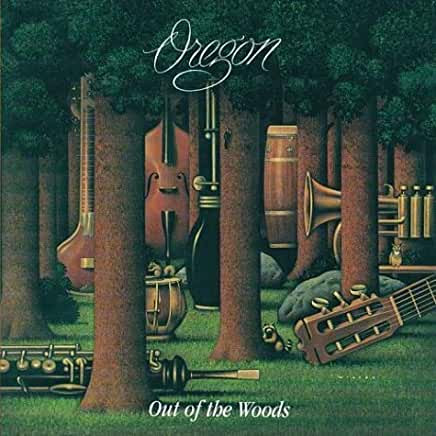
Long-time music fans may remember American guitarist Ralph Towner (b. 1940) from his long association with the band Oregon, a group that Towner co-founded back in 1970. Oregon went on to release a number of albums on the Vanguard, Elektra, ECM, and Intuition labels over the years. (The Oregon album Out of the Woods from 1978 is especially well worth seeking out; it is an acoustic and musical wonder.) In his liner notes for At First Light, a solo guitar outing, Towner writes about how unique it is to have most of his own life’s work represented on one record label. He’s been an ECM artist for more than fifty years, appearing in many different contexts, one of the most important being a run of solo recordings that began with Diary in 1973, and now, half a century later, At First Light is the newest addition to his series of solo guitar releases. “My solo recordings,” writes Towner, “have always included my own compositions, in which there are trace elements of the composers and musicians that have attracted me over the years. Musicians such as George Gershwin, John Coltrane, John Dowland, Bill Evans, to name a few. The blend of keyboard and guitar techniques is an important aspect of my playing and composition, and I feel that this album is a good example of shaping this expanse of influences into my personal music.”


Towner recounts that he studied classical music composition in college while also becoming interested in learning jazz piano, having been inspired by hearing the interplay of the Bill Evans Trio. Before graduating from the University of Oregon in 1963, he discovered the classical guitar. “I found that it a very pianistic instrument,” he writes, “capable of sophisticated polyphony and myriad tone colors. I was fascinated by it. I made a major decision to travel to Vienna to strictly study the classical guitar at the Academy of Music in Vienna. My studies there involved much renaissance and baroque music which was to play a great part in shaping my writing and performance techniques.”  A fellow guitarist, Scott Nygaard, has observed of Towner that “No one else plays guitar like Ralph Towner. And while his compositions often sound ‘classical’ (combining a fondness for baroque voice leading, Stravinskian harmonies, and odd time signatures with his own strong sense of melody) that’s primarily because each piece grows organically and gracefully from an initial idea.” Listeners can get additional insight into the both the guitarist and the music on the album from this video, in which Towner recounts some of the details of his musical education and how he approaches composition and recording, focusing briefly on the album’s title composition, At First Light.

From the opening track, his composition
 Flow, the majority of the music has the feeling of classical guitar music – not jazz (although jazz fans will hear a faint echo of John Coltrane's Naima in the opening measures of Strait), not blues, not folk, but music very much in the classical guitar vein. Yes, they're a couple popular tunes and a traditional favorite included in the set list, but Towner does not play these in an overtly popular style. Instead, he plays them in more of a restrained way so that although the familiar notes are there, they blend right in with his more thoughtful, classical approach. Guitarra Piccante and Fat Foot are the most energetic cuts on the album; they might even tempt some listeners to tap their toes or even dance around a little, but should not cause anyone to get arrested. The shortest cut on the CD (1:42), Argentinian Nights, is like a miniature sketch of an imagined memory somehow captured on guitar, brief but memorable. The album ends with the reflective sounds of Empty Stage, a piece that ends enigmatically, leaving the listener longing for more. Ralph Towner was 82 at the time he made this recording, bringing a lifetime of lived experience into the studio with him to record alongside his trusted producer of more than 50 years, Manfred Eicher. The two old friends have produced a gem. 


Apr 28, 2021

Soul of Spanish Guitar (CD review)

Pablo Sáinz-Villegas. Sony Classical 19439786732.

By Bill Heck

When confronted with an album like this, it can be tempting to say something like “Yeah, yeah, another guitar recital with some Spanish stuff, we’ve heard it all before….” In this case, while it’s true that we have here another guitar recital, that the works played are indeed all by Spanish composers (counting an “anonymous” traditional piece), and that you likely have heard many of the works before, at least if you listen to many classical guitar albums, this one is worth a listen and should be a plausible addition to your collection. 

First, the performer: Pablo Sáinz-Villegas, hardly a rookie, having some half dozen or so albums to his credit already. Judging from what I hear on this collection, he has not only the requisite technical ability but also, and just as importantly, the ability to translate technique into real music. In sampling performances by various other artists for comparisons, I was struck by how many – not all, of course, but enough – seemed just to run through the notes, concentrating on getting them out in order, but forgetting to bring the whole together, to add a sense of coherence, or even to make it sound like they cared. (I know that this last bit sounds over the top, but I must say that a fair number of number of performances seemed low on the emotion scale.) Secondly, the recording itself is excellent, with the sound of a small-bodied guitar, one built in the Spanish style, captured in a natural perspective. One would think that recording the guitar would be relatively easy, but apparently not: in sampling guitar recordings, one often hears tone that is off or excessive reverberation (even artificial reverb) or an eight-foot-wide instrument or excessive finger noise or sound that seems to be coming from another room or…you get the idea.

Despite these grumbles, there are plenty of other nice recitals with similar collections of music out there. But as I listened to alternatives, it became clear that the Villegas album combines music, musicianship, and sound engineering to deliver an enjoyable product.

To illustrate, let’s compare performances of two familiar works. In Albeniz’ Asturias (Leyenda), Villegas moves at a pace that we might call brisk but not rushed. One point of note is how well the strummed chords that punctuate the central section fit in without interrupting the musical flow. As a very low-level guitarist, I can appreciate that this is quite a trick to pull off. Villegas also uses subtle gradations of volume to bring life – may I say “sparkle”? – to the work, and his descent to pianissimo at the end of the bridging section is very well done indeed.

My first comparison was obligatory: to Segovia, the godfather of them all. His tempo is similar to Villegas, or rather we should say that Villegas’ tempo is similar to Segovia’s; indeed, the entire approach is similar. (There certainly is no shame in being compared to Segovia!) Villegas may be slightly ahead on technique; there is no doubt that the modern recording is significantly ahead of the older one. I made notes on other performances by the likes of Williams, Isbin, Li, and Grondona, but I’ll spare you all the details. Suffice it to say that Villegas’ account holds up nicely: indeed, I thought that Villegas was in some ways the most satisfactory of the bunch.

My second comparison work was Tarrega’s Recuerdes de la Alhambra (“Memories of the Alhambra” for those lacking a Spanish dictionary). Villegas’ account is quite slow; indeed, I think he would be better served by speeding up just a bit, as the tempo tends to emphasize the inevitable slight unevenness of the trilled notes as well as the shifting pitch as the melody notes are “bent”. Still, he exhibits wonderful phrasing and control, creating a mood of wistful longing, which surely fits the music. Moreover, he produces an actual dynamic range, not the easiest with this piece. And Villegas is hardly the slowest of quite a group: Pepe Romero and Sharon Isbin, for example, are even slower (Romero by a lot). Again, Villegas holds up well relative to these and my other comparisons (Yepes, Bream, Schulstad, Gueddes, and – of course – Segovia); in particular, a couple who shall remain unnamed just seem to be running through the notes, something that Villegas never does.

I mentioned those two works because they are particularly familiar: if you don’t remember them by title, you’ll know them when you hear them. But no need to revisit every track on the album: let’s just posit that this is a well-played and enjoyable collection.

As described above, the sound is first-rate, very clean and natural if perhaps seeming just a touch closeup on occasion. The liner notes include an essay about Spain, Spanish music, and the Spanish guitar that, if not particularly informative in regard to the music, nicely conveys Villegas’s love for his native country and its music.

BH

To listen to a brief excerpt from this album, click below:

Apr 28, 2019

Masterpiece II (XRCD24 review)

Touching folklore music. Mario Suzuki, guitar; Masao Okada, guitar; Miyuki Fujimoto, guitar; Susumu Nishizaki, piano. Master Music XRCD24-NT021.

First of all, I'm not sure why this 2017 album bears the title "Masterpiece II," unless it's because it follows an album guitarist Mario Suzuki made ten years earlier called "Masterpiece I." Certainly, there are no actual "masterpieces" or classics on the program unless the producers are engaging in a bit of hyperbole. Second, I'm not sure why the album bears the subtitle "Touching folklore music," since it appears Mr. Suzuki wrote all of the selections himself, thus negating the notion of folklore referring to traditional songs or stories handed down by people from generation to generation. I'm going to assume here that Mr. Suzuki is a folklorist the way Bob Dylan is a folk singer. None of which makes any difference in the least because this is a terrifically well recorded album of pleasantly performed guitar music that is sure to impress (and soothe) almost anyone.

Admittedly, I was not familiar with Mr. Suzuki before this album, so I looked up some information about him. According to Elusive Disc, "Mario Suzuki is a writer, composer and excellent guitar player! Suzuki is an extraordinary individual who you may not have heard of... but once you hear him play, he is hard to forget. Folklore guitarra is the traditional Spanish folk guitar music popular in the Spanish speaking countries in South America. It also includes contemporary guitar music which carries on much of the tradition of the folklore guitar music. It is of a completely different type either from American style modern folk music or pop folklore band music.

"Born in Tokyo, Japan in 1947 Mario Suzuki is a native of Japan. He has learned music composition and folklore guitar playing from Mr. Atsumasa Nakabayashi. He also learned folklore playing from both Jesusbenites (president of Mexican folklore guitarra association) and master folklore guitarist Eduardo Falu in Argentine. Mario has composed amazingly more than 500 pieces of folklore music."

On the present album, Mr. Suzuki plays either alone or with accompanists Masao Okada, guitar; Miyuki Fujimoto, guitar; and Susumu Nishizaki, piano. Here's a rundown of their program:

1. Journey
2. Whispering
3. Poem
4. In Breezing
5. Thinking of You
6. Cinema (New Snow Village) Theme
7. Memory Of Arashiyama
8. At Hotel La Mirador
9. Elapsed Waltz
10. Feelings
11. In Granada
12. Night Goes On
13. Remembering of You
14. Reminiscence
15. Monologue
16. Voice of Wave

Mario Suzuki
Because the booklet notes are mostly in Japanese and what aren't in Japanese are poorly translated into English, it was a little hard to get the full story on these melodies. Nevertheless, the music speaks for itself. It's quiet music, serene, tranquil, romantic, and appropriately sentimental. What's more, Suzuki plays with delicacy and finesse. The performances from all of the artists involved are fluid and graceful, caressing the music with subtlety and charm. One could hardly ask more from the performers.

While I'm still not persuaded that these tunes are quite "masterpieces," I cannot deny their peaceful beauty. Nor can I deny the audiophile quality of JVC's remastering for Master Music. I just wish the total time for the album, forty-three minutes, had been a little longer.

Producers Kazuo Kiuchi and Shizuo Nomiyama and engineer Yoshihiko Kannari recorded the music at Onkio Haus Studio (aka Onkyo House), Tokyo in November 2017. Tohru Kotetsu mastered the compact disc at JVC Mastering Center, Japan in January 2018 using XRCD24/K2 technology. A further note adds that "This album was directly recorded in half inch analog tape, 15ips. Mastered utilizing JVC 24bit AD converter with Digital K2, Rubidium clock."

That seems impressive, but does the album actually sound as good as what's written about the processing? Well, it sounds pretty good, that's for sure. Indeed, it's one of the finest-sounding guitar albums I've ever heard. The instruments have a warm, smooth, natural appearance, much like hearing them live in the room with you. Recorded on analog tape (and remastered digitally), the sound betrays no digital edge. The miking is somewhat close in order to capture a full fidelity dynamic range and transient impact, yet it's not objectionably close. The duets and trios are especially well spaced across the sound stage, and the room reflections are well judged. This is an audiophile disc, to be sure, and as such it probably sounds better in accordance with the quality of one's playback equipment.

You can find Master Music products at some of the best prices at Elusive Disc: http://www.elusivedisc.com/

JJP

To listen to a brief excerpt from this album, click below:

Jun 21, 2013

LAGQ: Latin (UltraHD CD review)

Carmen suite and others. Los Angeles Guitar Quartet. FIM LIM UHD 070 LE.

The Los Angeles Guitar Quartet (LAGQ) is probably the best guitar ensemble since the Romeros. Which isn’t hard to understand when you consider that in 1980 Pepe Romero oversaw their formation. Since then, the LAGQ have recorded a slew of albums, winning a Grammy in 2005 for Best Crossover CD, Guitar Heroes. They recorded the present album in 2001 for Telarc, and FIM remastered it to the best possible audiophile standards in 2012. If you like guitar music, you’ll like the LAGQ.

Although Matthew Greif replaced Andrew York in 2005, the group has remained pretty much the same for over thirty years, this Telarc/FIM disc featuring original quartet members John Dearman, William Kanengiser, Scott Tennant and Andrew York. The fellows generally play on guitars using nylon strings in order to reflect the sounds of numerous other instruments and effects. Indeed, on some occasions they appear to be imitating the sounds of an entire symphony orchestra.

On LAGQ: Latin the quartet performs seventeen tracks, starting with Sting’s Latin-inflected tune Fragile in an arrangement that includes Tim Timmerman on percussion. The LAGQ’s rendition is gracefully touching. Next is Eduardo Martin’s Hasta Alicia Baila (“Until Alicia Dances”), a sort of Cuban rumba with an infectious beat.

Then we get the centerpiece of the album, a suite of numbers from Bizet’s Carmen. It’s delightful and should please guitar fans as well as Bizet admirers. The opening Aragonaise shows true panache, the Habanera has a lovely lilt, Seguidilla displays a sweet gentleness, the Toreadors provides a thrilling energy, the Entr’acte is simply gorgeous, and the Gypsy Dance closes the suite in a colorfully spirited fashion.

Following the Carmen Suite, we find a whole series of Cuban, Spanish, Central, and South American numbers. One fascinating item is Leo Brouwer’s Cuban Landscape with Rain, containing--you guessed it--the sounds of rain from the guitars. There is also a delicious performance of Aaron Copland’s Paisaje Mexicano (“Mexican Landscape”) that is quite lyrical. And so it goes, each tune a little gem, each one beautifully, expertly executed by the LAGQ.

The program ends with a reimagining of the second movement from Joaquin Rodrigo’s Concierto de Aranjuez that floats softly, poetically, as on a light breeze.

Telarc Record’s producer Robert Woods and engineer Robert Friedrich made the recording at Studio A, O’Henry Studios, Burbank, California in 2001, and FIM producer Winston Ma and the recording’s original engineer Robert Friedrich remastered it in 2012 using the Ultra High Definition 32-bit mastering system and FIM’s PureFlection replication process.

The sound is, not surprisingly, sublime, one of the better guitar recordings I’ve heard. Not only is it ultra clear and ultraclean, it’s ultrasmooth as well. Each plucked or stroked note stands out transparently, with its own richness and warmth. As important, the dead-quiet spaces between the notes sets off each sound in sometimes startling contrast.

To listen to a brief excerpt from this album, click here:
JJP

Feb 15, 2010

Interchange: Concertos by Rodrigo and Assad (CD review)

Rodrigo: Concierto Andaluz; Assad: Interchange. Los Angeles Guitar Quartet; David Amado, Delaware Symphony Orchestra. Telarc TEL-31754-02.


This CD from Telarc is a "first" of several kinds: It's the first recording of a concerto by the Los Angeles Guitar Quartet; it includes the world-première recording of Sergio Assad's Interchange for Guitar Quartet and Orchestra; and it's the compact disc debut of the Delaware Symphony Orchestra. Oh, and there's also Joaquin Rodrigo's celebrated Concierto Andaluz at the center of things.  Not a bad deal.

The program begins with Rodrigo's Concierto Andaluz, a work the composer wrote in 1965 expressly for the Romeros, the first family of guitar virtuosos. Naturally, I used their old Mercury (1967) and Philips (1978) recordings of the Concierto as comparisons and did not find the LAGQ's version lacking. The LAGQ are, if anything, even more intense than the Romeros in the opening movement, marked Tempo de Bolero. Although the tempo seems at first a little too fast paced, it quickly grows on you. Then the LAGQ attend to the charming Adagio that follows, lovingly molding and caressing it in a way that would make any of their mentors among the Romeros proud. Finally, they launch into the closing Allegretto with enthusiastic vivacity, again taking the music at a healthy clip.

After Rodrigo's Concierto, we get Brazilian composer Sergio Assad's Interchange, which he wrote expressly for the LAGQ and whose content exactly matches the composition's title; namely, it's about the casual meeting of people on a four-level L.A. freeway interchange, the movements themselves referring to various roads and driving. The piece interweaves different musical styles from Brazilian to Spanish to Asian and Jewish, from Hollywood to jazz and blues, all of it tailored to the individual members of the Quartet.

Interchange gets off to a rousing start with "Sephardic Passage," a movement that reminds one of something by Rodrigo with a kind of Hebrew overlay. Frankly, I was afraid that the new work was going to be one of those contemporary, atonal, cacophonous, avant-garde things, but it isn't. It falls squarely into the traditional classical framework and should be highly accessible to most modern listeners.

I loved the flamenco and percussion elements of the second movement, "Gypsy Slopes," suggesting, perhaps, the ebb and flow of traffic. The quiet central movement, "Pacific Overlook," brings a note of tranquility to the proceedings with a pleasantly lilting melody; and that's followed by an even more leisurely jazz-inflected segment, "Forroblues Detour," that picks up steam as it goes along with an infectiously pulsating beat. Interchange concludes with a brief, colorful finale, "Crossings," that combines thematic threads from the four preceding movements.

As I say, the Los Angeles Guitar Quartet along with Maestro David Amado and his Delaware Symphony Orchestra play the music as affectionately as one could want, combining commitment with fluency, grace, and high good spirits. And Telarc's audio engineers do their part in bringing the affair to disc with sound that is at once warm and smooth yet rich and acceptably detailed. While the stereo spread unfolds widely between the speakers, the four guitars appear nicely integrated into the whole without being unduly forward or engulfed by the orchestra. Still, as sweet as the sonics are, I kept wishing the Telarc disc possessed the kind of transparency and air displayed by the old Mercury recording of the Romeros. Ah, well, we trade ultimate definition for a realistically ambient bloom. Fair enough.

JJP

Meet the Staff

Meet the Staff
John J. Puccio, Founder and Contributor

Understand, I'm just an everyday guy reacting to something I love. And I've been doing it for a very long time, my appreciation for classical music starting with the musical excerpts on the Big Jon and Sparkie radio show in the early Fifties and the purchase of my first recording, The 101 Strings Play the Classics, around 1956. In the late Sixties I began teaching high school English and Film Studies as well as becoming interested in hi-fi, my audio ambitions graduating me from a pair of AR-3 speakers to the Fulton J's recommended by The Stereophile's J. Gordon Holt. In the early Seventies, I began writing for a number of audio magazines, including Audio Excellence, Audio Forum, The Boston Audio Society Speaker, The American Record Guide, and from 1976 until 2008, The $ensible Sound, for which I served as Classical Music Editor.

Today, I'm retired from teaching and use a pair of bi-amped VMPS RM40s loudspeakers for my listening. In addition to writing for the Classical Candor blog, I served as the Movie Review Editor for the Web site Movie Metropolis (formerly DVDTown) from 1997-2013. Music and movies. Life couldn't be better.

Karl Nehring, Editor and Contributor

For nearly 30 years I was the editor of The $ensible Sound magazine and a regular contributor to both its equipment and recordings review pages. I would not presume to present myself as some sort of expert on music, but I have a deep love for and appreciation of many types of music, "classical" especially, and have listened to thousands of recordings over the years, many of which still line the walls of my listening room (and occasionally spill onto the furniture and floor, much to the chagrin of my long-suffering wife). I have always taken the approach as a reviewer that what I am trying to do is simply to point out to readers that I have come across a recording that I have found of interest, a recording that I think they might appreciate my having pointed out to them. I suppose that sounds a bit simple-minded, but I know I appreciate reading reviews by others that do the same for me — point out recordings that they think I might enjoy.

For readers who might be wondering about what kind of system I am using to do my listening, I should probably point out that I do a LOT of music listening and employ a variety of means to do so in a variety of environments, as I would imagine many music lovers also do. Starting at the more grandiose end of the scale, the system in which I do my most serious listening comprises Marantz CD 6007 and Onkyo CD 7030 CD players, NAD C 658 streaming preamp/DAC, Legacy Audio PowerBloc2 amplifier, and a pair of Legacy Audio Focus SE loudspeakers. I occasionally do some listening through pair of Sennheiser 560S headphones. I miss the excellent ELS Studio sound system in our 2016 Acura RDX (now my wife's daily driver) on which I had ripped more than a hundred favorite CDs to the hard drive, so now when driving my 2024 Honda CRV Sport L Hybrid, I stream music from my phone through its adequate but hardly outstanding factory system. For more casual listening at home when I am not in my listening room, I often stream music through a Roku Streambar Pro system (soundbar plus four surround speakers and a 10" sealed subwoofer) that has surprisingly nice sound for such a diminutive physical presence and reasonable price. Finally, at the least grandiose end of the scale, I have an Ultimate Ears Wonderboom II Bluetooth speaker and a pair of Google Pro Earbuds for those occasions where I am somewhere by myself without a sound system but in desperate need of a musical fix. I just can’t imagine life without music and I am humbly grateful for the technologies that enable us to enjoy it in so many wonderful ways.

William (Bill) Heck, Webmaster and Contributor

Among my early childhood memories are those of listening to my mother playing records (some even 78 rpm ones!) of both classical music and jazz tunes. I suppose that her love of music was transmitted genetically, and my interest was sustained by years of playing in rock bands – until I realized that this was no way to make a living. The interest in classical music was rekindled in grad school when the university FM station serving as background music for studying happened to play the Brahms First Symphony. As the work came to an end, it struck me forcibly that this was the most beautiful thing I had ever heard, and from that point on, I never looked back. This revelation was to the detriment of my studies, as I subsequently spent way too much time simply listening, but music has remained a significant part of my life. These days, although I still can tell a trumpet from a bassoon and a quarter note from a treble clef, I have to admit that I remain a nonexpert. But I do love music in general and classical music in particular, and I enjoy sharing both information and opinions about it.

The audiophile bug bit about the same time that I returned to classical music. I’ve gone through plenty of equipment, brands from Audio Research to Yamaha, and the best of it has opened new audio insights. Along the way, I reviewed components, and occasionally recordings, for The $ensible Sound magazine. Most recently I’ve moved to my “ultimate system” consisting of a BlueSound Node streamer, an ancient Toshiba multi-format disk player serving as a CD transport, Legacy Wavelet II DAC/preamp/crossover, dual Legacy PowerBloc2 amps, and Legacy Signature SE speakers (biamped), all connected with decently made, no-frills cables. With the arrival of CD and higher resolution streaming, that is now the source for most of my listening.

Ryan Ross, Contributor

I started listening to and studying classical music in earnest nearly three decades ago. This interest grew naturally out of my training as a pianist. I am now a musicologist by profession, specializing in British and other symphonic music of the 19th and 20th centuries. My scholarly work has been published in major music journals, as well as in other outlets. Current research focuses include twentieth-century symphonic historiography, and the music of Jean Sibelius, Ralph Vaughan Williams, and Malcolm Arnold.

I am honored to contribute writings to Classical Candor. In an age where the classical recording industry is being subjected to such profound pressures and changes, it is more important than ever for those of us steeped in this cultural tradition to continue to foster its love and exposure. I hope that my readers can find value, no matter how modest, in what I offer here.


Bryan Geyer, Technical Analyst

I initially embraced classical music in 1954 when I mistuned my car radio and heard the Heifetz recording of Mendelssohn's Violin Concerto. That inspired me to board the new "hi-fi" DIY bandwagon. In 1957 I joined one of the pioneer semiconductor makers and spent the next 32 years marketing transistors and microcircuits to military contractors. Home audio DIY projects remained a personal passion until 1989 when we created our own new photography equipment company. I later (2012) revived my interest in two channel audio when we "downsized" our life and determined that mini-monitors + paired subwoofers were a great way to mate fine music with the space constraints of condo living.

Visitors that view my technical papers on this site may wonder why they appear here, rather than on a site that features audio equipment reviews. My reason is that I tried the latter, and prefer to publish for people who actually want to listen to music; not to equipment. My focus is in describing what's technically beneficial to assure that the sound of the system will accurately replicate the source input signal (i. e. exhibit high accuracy) without inordinate cost and complexity. Conversely, most of the audiophiles of today strive to achieve sound that's euphonic, i.e. be personally satisfying. In essence, audiophiles seek sound that's consistent with their desire; the music is simply a test signal.

Mission Statement

It is the goal of Classical Candor to promote the enjoyment of classical music. Other forms of music come and go--minuets, waltzes, ragtime, blues, jazz, bebop, country-western, rock-'n'-roll, heavy metal, rap, and the rest--but classical music has been around for hundreds of years and will continue to be around for hundreds more. It's no accident that every major city in the world has one or more symphony orchestras.

When I was young, I heard it said that only intellectuals could appreciate classical music, that it required dedicated concentration to appreciate. Nonsense. I'm no intellectual, and I've always loved classical music. Anyone who's ever seen and enjoyed Disney's Fantasia or a Looney Tunes cartoon playing Rossini's William Tell Overture or Liszt's Hungarian Rhapsody No. 2 can attest to the power and joy of classical music, and that's just about everybody.

So, if Classical Candor can expand one's awareness of classical music and bring more joy to one's life, more power to it. It's done its job. --John J. Puccio

Contact Information

Readers with polite, courteous, helpful letters may send them to classicalcandor@gmail.com

Readers with impolite, discourteous, bitchy, whining, complaining, nasty, mean-spirited, unhelpful letters may send them to classicalcandor@recycle.bin.

"Their Master's Voice" by Michael Sowa

"Their Master's Voice" by Michael Sowa