May 31, 2023

Nielsen: The Symphonies (CD Review)

by Ryan Ross


Danish National Symphony Orchestra; Fabio Luisi, conductor. Deutsche Grammophon 486 3471 (3 CDs)


I had high hopes for this one. Being someone who believes that concert programming, and classical music history as it’s normally relayed, are too much in thrall to Late Romantic (especially German) aesthetics, I see renewed focus on composers like Carl Nielsen as a viable way out of the morass. His highly individual, appealing music is a breath of fresh air. It emphasizes rigor, energy, optimism, and (as musicologist Daniel Grimley puts it) life-affirmation. I keep hoping we’ll more fully admit Nielsen into the classical canon as the great symphonist he was, and that our current Mahler/Bruckner/etc. obsessions will subside enough to allow this. So yes, I was thrilled to see Fabio Luisi’s and the DNSO’s new recorded cycle appear on perhaps classical music’s most prestigious label. This had to be a wonderful tool for the cause, right?

Not so much. Oh, the DNSO’s playing is good, and the sound quality is fine. It’s Luisi’s vision of Nielsen’s music that makes the venture objectionable. To be blunt: he doesn’t feel it. He’s a relative newcomer to this repertoire – someone who’s used to conducting music we’re already well used to hearing. Well, these symphonies in his hands sound too much like music we’re already well used to hearing. The result is not just mostly poor Nielsen, but also a weary accompanying realization that Mahler and Bruckner have indeed seemed to permeate everywhere, ostensibly even performances of scores by the Great Dane. 


The biggest problem here is Luisi’s lack of energy. We’ll discuss two instances for the sake of example. In the score of the Second Symphony (subtitled “The Four Temperaments”), Nielsen clearly indicates a tempo marking of eighth equals 126 at the head of the opening movement. Luisi, however, comes in at about 106 to 108. This would be weird in any case, but in a movement entitled “Allegro collerico” (indicating the “choleric” temperament), a slow pulse simply doesn’t get the job done. Luisi himself may not be of such a disposition, but he’s obligated to use the orchestra to do his best impression if he’s conducting this music. Has he met anyone who is choleric? Those folks typically don’t saunter. Maybe worse is the finale of the Fifth Symphony. Again, Luisi proceeds noticeably under the composer’s tempo marking, and in a setting where doing so similarly saps the music of its character. The whole movement is one of epic struggle; from the roiling outer sections, to the terrifying cataclysm of the first fugue, to even the slower “rebirth” presented by the second fugue, this music requires spark and momentum. Instead, the dominant impression is one of lethargy. It comes across like somebody trying to run a marathon immediately after scoffing a huge plate of spaghetti. 

Related to tempo problems are Luisi’s dynamics and phrase shaping. They’re just too steeped in late Romanticism. Nielsen’s music at times shares something with Romanticism, but there is a rather stronger Classical streak present that greatly leavens this overlap and clashes with Luisi’s apparent instincts. A good example is how he conceives the finale of the Third Symphony, subtitled “Espansiva.” Evidently Luisi takes this term to mean “expansive” as in imitating exaggerated Romantic climaxes. Instead of the open-air hymn to hard work and common rural experience (which would be consistent with Nielsen’s own remarks on this section), the tune and its supporting materials become just another Mahlerian lied, with gushy strings and overwrought arrivals. Combine these things with another slow tempo (I cannot imagine why this movement needs to clock in at 10:59!), and we’re quite far from the spirit of the work. Similar interpretive miscues hamper nearly every performance here, from the odd dynamic spasms (heard right away in the First Symphony), to poorly accentuated subject lines in fugal sections, to excessive disruptions of tempo. 


Probably the best performance in this cycle is of the Sixth and final symphony, named the Sinfonia semplice. Still the least understood work of a too-little-known composer, it is singular and delightfully strange. For these reasons, it’s probably the best symphony of the bunch to withstand the kind of interpretive “license” that the conductor inflicts upon its brethren. For once Luisi’s tempi and shaping are solid; the finale is appreciatively humorous. This is not the best performance of the Sixth available, but it will serve. Would that it could be issued on a singleton release. 


But on the whole these recordings present a missed opportunity. Even if they do become influential in spurring more performances of Nielsen’s music in the concert hall, will those performances sound like these? That’s a dispiriting train of thought. Thus motivated, I’ll lend my tiny voice to suggesting Herbert Blomstedt’s fine cycle with the San Francisco Symphony on the London label as a preferred alternative. (Schonwandt/DNSO, Salonen/SRSO, and Kuchar/JPO are all good, too.) In terms of isolated performances, Leonard Bernstein’s renderings of the Third and Fifth with the New York Philharmonic on Sony are stupendous. If you don’t know Nielsen’s symphonies, start there. Leave Luisi and Company to the collectors. 

May 28, 2023

Ralph Towner: At First Light (CD Review)

by Karl Nehring

Towner: FlowStrait; Jule Styne, Betty Comden, Adolph Green: Make Someone Happy; Towner: Ubi SuntGuitarra PicanteAt First Light; (Traditional): Danny Boy; Towner: Fat FootArgentinian Nights; Stanley Adams, Hoagy Carmichael: Little Old Lady; Towner: Empty Stage. Ralph Towner, classical guitar. ECM 2758 486 1035 


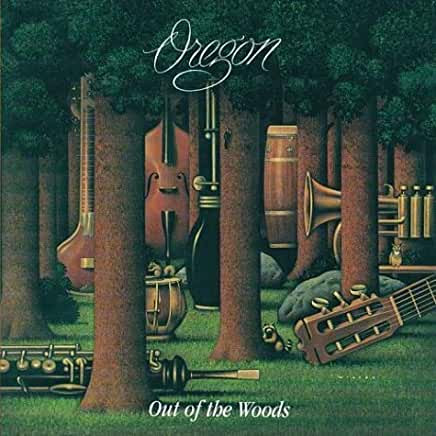
Long-time music fans may remember American guitarist Ralph Towner (b. 1940) from his long association with the band Oregon, a group that Towner co-founded back in 1970. Oregon went on to release a number of albums on the Vanguard, Elektra, ECM, and Intuition labels over the years. (The Oregon album Out of the Woods from 1978 is especially well worth seeking out; it is an acoustic and musical wonder.) In his liner notes for At First Light, a solo guitar outing, Towner writes about how unique it is to have most of his own life’s work represented on one record label. He’s been an ECM artist for more than fifty years, appearing in many different contexts, one of the most important being a run of solo recordings that began with Diary in 1973, and now, half a century later, At First Light is the newest addition to his series of solo guitar releases. “My solo recordings,” writes Towner, “have always included my own compositions, in which there are trace elements of the composers and musicians that have attracted me over the years. Musicians such as George Gershwin, John Coltrane, John Dowland, Bill Evans, to name a few. The blend of keyboard and guitar techniques is an important aspect of my playing and composition, and I feel that this album is a good example of shaping this expanse of influences into my personal music.”


Towner recounts that he studied classical music composition in college while also becoming interested in learning jazz piano, having been inspired by hearing the interplay of the Bill Evans Trio. Before graduating from the University of Oregon in 1963, he discovered the classical guitar. “I found that it a very pianistic instrument,” he writes, “capable of sophisticated polyphony and myriad tone colors. I was fascinated by it. I made a major decision to travel to Vienna to strictly study the classical guitar at the Academy of Music in Vienna. My studies there involved much renaissance and baroque music which was to play a great part in shaping my writing and performance techniques.”  A fellow guitarist, Scott Nygaard, has observed of Towner that “No one else plays guitar like Ralph Towner. And while his compositions often sound ‘classical’ (combining a fondness for baroque voice leading, Stravinskian harmonies, and odd time signatures with his own strong sense of melody) that’s primarily because each piece grows organically and gracefully from an initial idea.” Listeners can get additional insight into the both the guitarist and the music on the album from this video, in which Towner recounts some of the details of his musical education and how he approaches composition and recording, focusing briefly on the album’s title composition, At First Light.

From the opening track, his composition
 Flow, the majority of the music has the feeling of classical guitar music – not jazz (although jazz fans will hear a faint echo of John Coltrane's Naima in the opening measures of Strait), not blues, not folk, but music very much in the classical guitar vein. Yes, they're a couple popular tunes and a traditional favorite included in the set list, but Towner does not play these in an overtly popular style. Instead, he plays them in more of a restrained way so that although the familiar notes are there, they blend right in with his more thoughtful, classical approach. Guitarra Piccante and Fat Foot are the most energetic cuts on the album; they might even tempt some listeners to tap their toes or even dance around a little, but should not cause anyone to get arrested. The shortest cut on the CD (1:42), Argentinian Nights, is like a miniature sketch of an imagined memory somehow captured on guitar, brief but memorable. The album ends with the reflective sounds of Empty Stage, a piece that ends enigmatically, leaving the listener longing for more. Ralph Towner was 82 at the time he made this recording, bringing a lifetime of lived experience into the studio with him to record alongside his trusted producer of more than 50 years, Manfred Eicher. The two old friends have produced a gem. 


May 24, 2023

Recent Releases No. 53 (CD Reviews)

by Karl Nehring

Prism V. J.S. Bach: Choral prelude Vor deinen Thron tret ich hiermit, BWV 668; Beethoven: String Quartet No. 16 in F major, Op. 135; Webern: String Quartet (1905); Bach: Contrapuctus XIV from The Art of Fugue, BWV 1080. Danish String Quartet (Rune Tonsgaard Sørensen, violin; Frederik Øland, violin; Asbjørn Nørgaard, viola; Fredrik Schøyen Sjölin, cello). ECM New Series 2565 485 8469


With the release of Prism V, the Danish String Quartet has now reached the end point of the Prism series of releases, in which, as the note on the back of the CD cover explains, “Lines of connection are drawn in the Danish String Quartet’s five Prism volumes from a Bach fugue through one of the late Beethoven quartets to the music of a subsequent composer.”  In the previous release in the series, Prism IVwhich was reviewed here, that subsequent composer was Felix Mendelssohn (1809-1847); with Prism V, however, the Danes take a longer leap forward in time, this time connecting Beethoven’s music with the 20th-century music of the Austrian composer Anton Webern (1883-1945). Another passage of time marked by the release of this album is the time it took the group to record all five albums. From the CD booklet: “Almost eight years have passed since we first put our bows to the strings and started one of the longest journeys we have embarked upon as a quartet. The five Prism albums, our recording project on ECM anchored around the five last string quartets by Beethoven. We started the series with the resonant chords of  Beethoven’s quartet in E-flat major op. 127. This monumental opening forms the entry gate into the promised land of the late Beethoven quartets, but in this case it also became the exit door from our life as a young string quartet. The Prism albums became our string quartet rite of passage… The Prism albums were an important part of our final development into what one might call a fully-fledged string quartet, and the recording process has gone hand in hand with substantial changes in our personal lives. The first album was recorded by four relatively fresh young men, now we are father of babies, toddlers and school kids. If nothing else, this project proves that you don’t need much sleep to play a string instrument.”


Something else this project proves is that there is more than one way to enjoy and appreciate the late Beethoven quartets. As I mentioned in my review of Prism IV, my introduction to string quartets period was a dive into the deep end of the pool: I went from never listening to a string quartet in my life to purchasing a box set of the late Beethoven quartets on LP (Yale Quartet on Vanguard Cardinal) and listening to them over and over again. I still tend to gravitate toward sets (now on CD), possessing currently the Calidore (review pending), Emerson, Medici, Takacs, Tokyo, and Yale. Occasionally I will listen to all five of the quartets from one of the sets over a day or two, but to be honest, once I finally became aware of the Prism series (alas, not until Prism III), I have begun to think that the Danish group has really come up with a brilliant concept: Hearing Beethoven hearing Bach, then moving forward. In Prism V, the Danes close the loop. They start with Bach, then on to Beethoven’s final quartet, culminating in the question and answer: “Must it be? It must be!” And then it is on to the quartet of Webern, a spare, haunting work in one movement. Although it is not all that long (18:01), it is the longest work that Webern ever wrote. Then for the final piece on the program the four musicians of the Danish Quartet play a Bach fugue, the music at the heart of the Prism project. But for this album they have chosen to present not just any Bach fugue, but rather the final, uncompleted Contrapunctus XIV “Fuga a 3 Soggetti” – the fugue that marks the end of the great master’s The Art of Fugue. Thus on Prism V we are presented the finale of the Beethoven’s immortal quartet cycle and the finale of the Bach’s immortal fugue composition, the abrupt ending of which is always haunting to hear.

In addition to the booklet note by the quartet itself, there is a stimulating essay on the music by the British music critic and novelist Paul Griffiths. As music listeners have come to expect from ECM, the sound quality is first-rate. The recording, which was done in Copenhagen, was engineered by veteran ECM engineer Markus Heiland and produced by Mr. ECM himself, Manfred Eicher. My hope is that ECM will release the series as a boxed set, which would be a formidable contender in the late quartet sweepstakes. But for now, Prism V is a simply wonderful way to enjoy Beethoven’s final string quartet, perfectly paired and marvelously recorded.


Bartók: 4 Orchestral Pieces, SZ 51 ()p. 12); Concerto for Orchestra, SZ 116. Karina Canellakis, Netherlands Radio Philharmonic Orchestra. Pentatone PTC 5187 827


Karina Canellakis (b. 1981) is an American violinist and conductor who currently serves as  Chief Conductor of the Netherlands Radio Philharmonic Orchestra, the orchestra featured on this new release, and as Principal Guest Conductor for both the London Philharmonic Orchestra and the Rundfunk-Sinfonieorchester Berlin (Radio Symphony Orchestra Berlin). She clearly has a deep affection for these two works by the Hungarian composer Béla Bartók (1881-1945), as evidenced by her detailed and impassioned recounting of the story of how he came to write what would turn out to be his most famous work, his Concerto for Orchestra: “As Beethoven wrote his joyful Second Symphony in the midst of deep despair at the loss of his hearing, so did Bartók write his brilliant, often witty, atmospheric and riveting Concerto for Orchestra in a moment of profound desperation. An outspoken anti-fascist, he and his wife had reluctantly fled Europe in 1940 after he had made his anti-nazi sentiments clear in the midst of the increasingly terrifying political situation. His lack of comfort with New York life was worsened by financial strain and illness, although it wasn’t until 1944 that leukemia was diagnosed, too late, before his death in September 1945. It was during the summer of 1943 that he lay in a hospital bed, feverish and dizzy, where the famous conductor Sergei Koussevitzsky visited to offer him $1000 to write an orchestral work for the Boston Symphony. These five masterfully orchestrated movements then seemed to pour out of him. In the mere two months it took to complete, he managed to construct something both deeply personal and wildly entertaining. He would never have imagined the success it would achieve.” (Note that $1,000 in 1943 would have been equivalent to about $17,500 in 2023 terms.) She then goes on to offer a detailed analysis of both the Concerto and its companion piece that leads off this CD, the Four Pieces for Orchestra.


The affection that Canellakis feels for as well as the insight she has into these two compositions is evident from the outset, with the first few measures of the opening Preludio seeming to lead us into a mysterious, unknown world. As Canellakis writes: “Bookending the majority of Bartók’s creative output, we begin this album with his Four Pieces, originally written for two pianos

in 1912 and then orchestrated in 1921. Bewilderingly unknown even to experienced listeners and musicians, these four vignettes give a brilliant and enchanting look into his earlier mentality as a composer, reveal the immense influence of Debussy, and foreshadow many of the works he would write during the following three decades.” The Scherzo movement that follows exhibits more of the energy and dynamic contrast listeners have come to expect from Bartók, with some growling brass and swirling strings. The Intermezzo movement calms the waters to some degree, but then Bartók ends things with a Marcia funebre that is far from a Beethoven or Mahler funeral march, although it does sound like it could be music played at a funeral. 


In contrast to the Four Pieces, The Concerto for Orchestra is one of those pieces that has been recorded over and over again. Canellakis and her Netherlands forces offer a perfectly fine performance, although I felt she had a slight tendency to linger a bit in the beginning. Still, this is a very good performance, and the sound quality is excellent, full and robust. For the person new to classical music looking to pick up a recording of the Concerto for Orchestra, this new Pentatone would be a solid choice, with its combination of a good performance, excellent sound, and unbeatable booklet. For the more experienced listener, my top two choices for the Concerto both feature the Chicago Symphony Orchestra: Boulez on DG (also paired with the Four Pieces) and the classic Reiner on RCA (usually paired with Music for Strings, Percussion, and Celeste). But as a further nod toward this new release, if you are interested in the Four Pieces for Orchestra, then I strongly recommend that even if you already have the Boulez, you give this new Canellakis version a listen. The two performances are different, but both are truly excellent and well worth hearing.

Meet the Staff

Meet the Staff
John J. Puccio, Founder and Contributor

Understand, I'm just an everyday guy reacting to something I love. And I've been doing it for a very long time, my appreciation for classical music starting with the musical excerpts on the Big Jon and Sparkie radio show in the early Fifties and the purchase of my first recording, The 101 Strings Play the Classics, around 1956. In the late Sixties I began teaching high school English and Film Studies as well as becoming interested in hi-fi, my audio ambitions graduating me from a pair of AR-3 speakers to the Fulton J's recommended by The Stereophile's J. Gordon Holt. In the early Seventies, I began writing for a number of audio magazines, including Audio Excellence, Audio Forum, The Boston Audio Society Speaker, The American Record Guide, and from 1976 until 2008, The $ensible Sound, for which I served as Classical Music Editor.

Today, I'm retired from teaching and use a pair of bi-amped VMPS RM40s loudspeakers for my listening. In addition to writing for the Classical Candor blog, I served as the Movie Review Editor for the Web site Movie Metropolis (formerly DVDTown) from 1997-2013. Music and movies. Life couldn't be better.

Karl Nehring, Editor and Contributor

For nearly 30 years I was the editor of The $ensible Sound magazine and a regular contributor to both its equipment and recordings review pages. I would not presume to present myself as some sort of expert on music, but I have a deep love for and appreciation of many types of music, "classical" especially, and have listened to thousands of recordings over the years, many of which still line the walls of my listening room (and occasionally spill onto the furniture and floor, much to the chagrin of my long-suffering wife). I have always taken the approach as a reviewer that what I am trying to do is simply to point out to readers that I have come across a recording that I have found of interest, a recording that I think they might appreciate my having pointed out to them. I suppose that sounds a bit simple-minded, but I know I appreciate reading reviews by others that do the same for me — point out recordings that they think I might enjoy.

For readers who might be wondering about what kind of system I am using to do my listening, I should probably point out that I do a LOT of music listening and employ a variety of means to do so in a variety of environments, as I would imagine many music lovers also do. Starting at the more grandiose end of the scale, the system in which I do my most serious listening comprises Marantz CD 6007 and Onkyo CD 7030 CD players, NAD C 658 streaming preamp/DAC, Legacy Audio PowerBloc2 amplifier, and a pair of Legacy Audio Focus SE loudspeakers. I occasionally do some listening through pair of Sennheiser 560S headphones. I miss the excellent ELS Studio sound system in our 2016 Acura RDX (now my wife's daily driver) on which I had ripped more than a hundred favorite CDs to the hard drive, so now when driving my 2024 Honda CRV Sport L Hybrid, I stream music from my phone through its adequate but hardly outstanding factory system. For more casual listening at home when I am not in my listening room, I often stream music through a Roku Streambar Pro system (soundbar plus four surround speakers and a 10" sealed subwoofer) that has surprisingly nice sound for such a diminutive physical presence and reasonable price. Finally, at the least grandiose end of the scale, I have an Ultimate Ears Wonderboom II Bluetooth speaker and a pair of Google Pro Earbuds for those occasions where I am somewhere by myself without a sound system but in desperate need of a musical fix. I just can’t imagine life without music and I am humbly grateful for the technologies that enable us to enjoy it in so many wonderful ways.

William (Bill) Heck, Webmaster and Contributor

Among my early childhood memories are those of listening to my mother playing records (some even 78 rpm ones!) of both classical music and jazz tunes. I suppose that her love of music was transmitted genetically, and my interest was sustained by years of playing in rock bands – until I realized that this was no way to make a living. The interest in classical music was rekindled in grad school when the university FM station serving as background music for studying happened to play the Brahms First Symphony. As the work came to an end, it struck me forcibly that this was the most beautiful thing I had ever heard, and from that point on, I never looked back. This revelation was to the detriment of my studies, as I subsequently spent way too much time simply listening, but music has remained a significant part of my life. These days, although I still can tell a trumpet from a bassoon and a quarter note from a treble clef, I have to admit that I remain a nonexpert. But I do love music in general and classical music in particular, and I enjoy sharing both information and opinions about it.

The audiophile bug bit about the same time that I returned to classical music. I’ve gone through plenty of equipment, brands from Audio Research to Yamaha, and the best of it has opened new audio insights. Along the way, I reviewed components, and occasionally recordings, for The $ensible Sound magazine. Most recently I’ve moved to my “ultimate system” consisting of a BlueSound Node streamer, an ancient Toshiba multi-format disk player serving as a CD transport, Legacy Wavelet II DAC/preamp/crossover, dual Legacy PowerBloc2 amps, and Legacy Signature SE speakers (biamped), all connected with decently made, no-frills cables. With the arrival of CD and higher resolution streaming, that is now the source for most of my listening.

Ryan Ross, Contributor

I started listening to and studying classical music in earnest nearly three decades ago. This interest grew naturally out of my training as a pianist. I am now a musicologist by profession, specializing in British and other symphonic music of the 19th and 20th centuries. My scholarly work has been published in major music journals, as well as in other outlets. Current research focuses include twentieth-century symphonic historiography, and the music of Jean Sibelius, Ralph Vaughan Williams, and Malcolm Arnold.

I am honored to contribute writings to Classical Candor. In an age where the classical recording industry is being subjected to such profound pressures and changes, it is more important than ever for those of us steeped in this cultural tradition to continue to foster its love and exposure. I hope that my readers can find value, no matter how modest, in what I offer here.


Bryan Geyer, Technical Analyst

I initially embraced classical music in 1954 when I mistuned my car radio and heard the Heifetz recording of Mendelssohn's Violin Concerto. That inspired me to board the new "hi-fi" DIY bandwagon. In 1957 I joined one of the pioneer semiconductor makers and spent the next 32 years marketing transistors and microcircuits to military contractors. Home audio DIY projects remained a personal passion until 1989 when we created our own new photography equipment company. I later (2012) revived my interest in two channel audio when we "downsized" our life and determined that mini-monitors + paired subwoofers were a great way to mate fine music with the space constraints of condo living.

Visitors that view my technical papers on this site may wonder why they appear here, rather than on a site that features audio equipment reviews. My reason is that I tried the latter, and prefer to publish for people who actually want to listen to music; not to equipment. My focus is in describing what's technically beneficial to assure that the sound of the system will accurately replicate the source input signal (i. e. exhibit high accuracy) without inordinate cost and complexity. Conversely, most of the audiophiles of today strive to achieve sound that's euphonic, i.e. be personally satisfying. In essence, audiophiles seek sound that's consistent with their desire; the music is simply a test signal.

Mission Statement

It is the goal of Classical Candor to promote the enjoyment of classical music. Other forms of music come and go--minuets, waltzes, ragtime, blues, jazz, bebop, country-western, rock-'n'-roll, heavy metal, rap, and the rest--but classical music has been around for hundreds of years and will continue to be around for hundreds more. It's no accident that every major city in the world has one or more symphony orchestras.

When I was young, I heard it said that only intellectuals could appreciate classical music, that it required dedicated concentration to appreciate. Nonsense. I'm no intellectual, and I've always loved classical music. Anyone who's ever seen and enjoyed Disney's Fantasia or a Looney Tunes cartoon playing Rossini's William Tell Overture or Liszt's Hungarian Rhapsody No. 2 can attest to the power and joy of classical music, and that's just about everybody.

So, if Classical Candor can expand one's awareness of classical music and bring more joy to one's life, more power to it. It's done its job. --John J. Puccio

Contact Information

Readers with polite, courteous, helpful letters may send them to classicalcandor@gmail.com

Readers with impolite, discourteous, bitchy, whining, complaining, nasty, mean-spirited, unhelpful letters may send them to classicalcandor@recycle.bin.

"Their Master's Voice" by Michael Sowa

"Their Master's Voice" by Michael Sowa