Showing posts with label Vaughan Williams. Show all posts

Mar 21, 2026

Recent Releases No. 81 (CD/Streaming Reviews)

 by Karl Nehring

Pat Metheny: Side-eye III+. Metheny: In on ItDon’t Look DownMake a New WorldUrban and WesternSE-OOur Old StreetRisk and RewardSo Far So Good. Pat Metheny, guitars, sounds, synths; Joe Dyson; drums; Chris Fishman, keyboards, piano, organ; + Daryl Johns, bass; with Brandee Younger, harp; Luis Conte, percussion; Vincent Petrani, accordion; vocals – Mark Kibble, Natalie Litza, Kim Fleming, Kim Mont, San Franklin, Stephanie Hall, Joel Kivbble, Terry White, Armand Hutton; Leonard Patton (vocal on SE-O); James Francies (organ on Urban and Western). Green Hill GHD6626

Guitarist Pat Metheny (b.1954) has enjoyed a long and productive career that has taken him to venues large and small all around the globe. In addition to leading his own ensembles, he has played with a veritable who’s who of jazz musicians. He was turned on to jazz at an early age by his older brother Mike (who became a jazz trumpeter) when Mike brought home records by trumpeter Miles Davis and guitarist Wes Montgomery. He began practicing in earnest, honing his skills by sitting in at local venues in the Kansas City area. While still a teenager, Metheny was recruited by vibraphone master Gary Burton to join his group; in addition, at age 18 Metheny became the youngest guitar instructor ever at the University of Miami and then at 19 taught at Berklee. In 1975, with the encouragement of Burton, Metheny made his first recording as a leader, Bright Size Life, for the ECM label. He has made dozens of recordings over the years, both in group and solo settings, to date earning him an impressive 20 Grammy awards; moreover, he is the only artist ever to have won Grammys in 10 different categories.

In 1977, he formed the Pat Metheny Group, which began as a quartet built around the nucleus of Metheny on guitar and the prodigiously gifted keyboard player and composer Lyle Mays (1953-2020). By the time I took my young sons to their first-ever concert in the fall of 1981 to see the PMG, the original bassist and drummer had been replaced and the group was now a sextet. Over the ensuing decades, Metheny has made some memorable music, never resting on his laurels or being content to play his familiar compositions over and over again. He has always strived to create something new, pushing himself as a composer and arranger as well as a guitarist. From his earlier albums with his Pat Metheny Group (Still Life Talking and We Live Here are noteworthy examples highlighting his melodic gifts, along with those of his gifted keyboard companion, the late Lyle Mays) through his final album with the group, The Way Up, which is virtually a through-composed symphonic-style piece by Metheny that strains against the limitations of a small jazz ensemble, Metheny followers could sense that he was more than just a guitarist, he was a composer whose chosen instrument was the guitar. 


In 2020 he returned to the studio with a new group to release From This Place, a flowingly lyrical album that included some symphonic accompaniment. At 76 minutes, it was an impressive achievement, emphasizing once again Metheny’s gift for composition as well as his prowess on the guitar. Then in 2021, he released his first overtly classical recording, Road to the Sun, which finds Metheny stepping back as a performer and forward as a composer, penning a solo piece for classical guitarist Jason Vieaux and an ensemble piece for the Los Angeles Guitar Quartet. He does perform one composition, however, but not one of his own: Für Alina by the Estonian composer Arvo Pärt, which Metheny performs on his one-of-a kind custom-made 42-string “Pikasso” guitar (you can read our review of that album here).


On this new 2026 release, Metheny has returned to the group format. “Side-eye” refers to a concept where Metheny has searched out promising young musicians and when he has found those especially promising, has appeared with them in live shows and in some cases, as with this current configuration, Side-eye III, taken them on tour and made a recording. (I’ve got tickets for their live show in Cincinnati in April.) Side-eye III + finds Metheny expanding his musical palette by augmenting his basic guitar/keyboard/drums trio format not only with bass, but also with additional instruments – check out the organ grooves on Urban and Western and SE-O – and voices, the latter offering subtle texture and depth to several of Metheny’s tunes. Metheny is a master of melody, which seems to flow through him from on high through his mind to his fingers, whether picking or strumming. My only quibble is the mix of the drums, which is a bit too forward for my taste. Other than that, Side-eye III+ is both a musical and sonic knockout.


Sarah Kirkland Snider: Forward Into Light. Snider: Forward Into LightDrink the Wild AyreEye of MnemosyneSomething for the Dark. Metropolis Ensemble; Andrew Cyr, Artistic Director/Conductor. Nonesuch 075597893243


American composer Sarah Kirkland Snider (b. 1973) writes, “I love writing music for orchestra. I delight in having a large palette of colors and an oversized canvas on which to explore remote psychological interiors and discursive narrative journeys.” The title piece that opens the program on this CD certainly draws on a large palette of instrumental colors as she crafts what she describes as a “meditation on perseverance, bravery, and alliance, informed by the American women's suffrage movement… Rather than narrate history, the piece distills the inner weather of belief and doubt: what it means to endure isolation, harassment, incarceration, even force-feeding, in service of a larger ideal.” The piece is intricately crafted, contains some interesting sonorities, but its lack of meaningful melodic content holds it back from making a lasting impression. Much the same can be said for the final two pieces on the program, Eye of Mnemosyneand Something for the Dark. Both are well-crafted but on the abstract side; neither is likely to inspire much repeat listening. The highlight of the program is Drink the Wild Ayre, which is a reimagining of a piece that Snider originally composed for the Emerson String Quartet’s final season. The version here is for harp and strings; although not suffused with hummable melodies, Drink the Wild Ayre has a sense of flow and coherence that holds up to repeated listening and provides genuine musical enjoyment.


Streaming Summaries:


Huw Watkins: Fanfare for the HalléSymphony No. 2Concerto for Orchestra. Hallé Orchestra; Sir Mark Elder, conductor, Hallé CDHLL7569


British pianist and composer Huw Watkins (b.1976) first came to my attention as a chamber musician when I had seen on Twitter (now X), where I followed him, that he was doing some chamber recordings as a pianist. When I recently came across this new orchestral release, I was surprised, for I had no idea that he was a composer – and of symphonies, no less! This was a release that I definitely had to hear. Although I was not quite sure what to expect, what I had seen from Watkins on Twitter a few years ago led me to believe that what I was about to hear would not be discordant and jarring. Other than that, I wasn’t sure what to expect. To be honest, I hoped I wouldn’t find it dry, boring, and quickly forgettable. Although the brief (1:42) opening Fanfare for the Hallé might not be all that memorable, neither is it dry or boring – it’s a joyous little romp for 11 brass instruments, a fun way to open the program. Moreover, the musical mood established by the fanfare seems to carry over into the opening of movement of the symphony, making for a smooth transition, carrying listeners right along and inviting them to listen closely as the music unfolds. 

Symphony No. 2 (composed during the COVID lockdown) is in three movements, which broadly speaking are in the familiar fast-slow-fast pattern. To my ears, the ending seems abrupt – the music just seems to end, as though Watkins could not quite figure out what to do for the final bars – but please don’t take that as a major criticism, for other than that, the final movement is excellent. The music throughout the symphony is tonal, melodic, engaging – in short, it is a work that invites repeated listening. The same can be said for the Concerto for Orchestra, also in three movements, also well worth a listen – or several. It will be fascinating to see what the future holds in store for Huw Watkins.


Pekka Kuusisto: Willows. Vaughan Williams: The Lark Ascending; Caroline Shaw: Plan & Elevation – I. the Ellipse; II. The Cutting Garden; III. The Herbaceous Border; IV. The Orangery; V. The Beech Tree; Ellen Reid/Kuusisto: Desiderium; (Traditional): Weeping Mary (Arr. by Nico Muhly based on an arrangement by Thomas Bartlett); Kedron (Arr. by Nico Muhly) [Adapted for Chamber Orchestra by Bernard Rofe; Saro (Arr. by Nico Muhly) [Adapted for Chamber Orchestra by Bernard Rofe]; How Come That Blood (Arr. by Nico Muhly) [Adapted for Chamber Orchestra by Bernard Rofe); Way Go, Lily (Arr. by Nico Muhly) [Adapted for Chamber Orchestra by Bernard Rofe]; Wedding Dress (Arr. by Nico Muhly) [Adapted for Chamber Orchestra by Bernard Rofe]. Pekka Kuusisto, violinist and conductor; Norwegian Chamber Orchestra; Sam Amidon, guitar, banjo, vocals. Platoon PLAT29192


Back in 1995, the Finnish violinist Pekka Kuusisto (b. 1976) became the first musician from Finland to win the International Sibelius Violin Competition, where he was also awarded a medal for the best performance of the eminent Finnish master’s Violin Concerto. Although his name may not be immediately familiar to many readers, we have reviewed several of his previous appearances on various recordings: as soloist in a violin concerto by Icelandic composer Daniel Bjarnson (you can read that review here), as soloist in a violin concerto by Nico Muhly and a pair of works by American composer Philip Glass (that review may be found here), and together with violinist Colin Jacobsen, he shares the solo violin spotlight on the composition Prince of Clouds by the British composer (currently residing in New York) Anna Clyne (that review is here).

What Kuusisto has brought us here is an eclectic blend, a mixed bag, a strange brew. For those who might be interested, there is a YouTube video of an interview with Kuusisto in which he explains some of the background behind the making of Willows (you can find that video here), with an emphasis on The Lark Ascending, which opens the program. It’s an unusual performance of the familiar Ralph Vaughan Williams piece; interestingly, Kuusisto plays with an aura of rawness rather than sweetness. As you listen to this Lark, you can feel an undertone of raw emotion, stirring feelings of grief, loss, lament. However, these feelings are subtle, as Kuusisto’s playing is not mawkish or exaggerated. It’s a beautiful performance: different, but beautiful. No matter how many versions of RVW’s beloved masterpiece you have heard, I would urge you to give this one a serious audition. I’m not saying it’s the best, but it’s certainly one of the most moving and memorable.


It’s also the highlight of the release. Plan and Elevation by the Pulitzer Prize-winning American composer Caroline Shaw (b. 1982) unfolds over five relatively brief movements that are miniature sketches fore string orchestra. After the emotional intensity of The Lark Ascending, their more measured tone serves lighten the mood. Buth things get intense once again in Desiderium, by another Pulitzer Prize-winning composer, Ellen Reid (b. 1983). Desiderium is a Latin term that refers to an intense desire or longing, especially in terms of a feeling of loss or something or someone lost or gone. Arranged and performed here on solo violin by Kuusisto, it is certainly intense; probably easier to absorb if seen in concert rather than heard in recording. The program closes, oddly enough, with folk songs sung by Kuusisto’s friend Sam Amidon, an American-born singer who now resides in England. Perhaps one or maybe two songs followed by another instrumental composition might have made sense, but ending the album with a half-dozen just seems, well, strange. 


Overall, then, Willows is very much a mixed bag. Still, Kuusisto’s performance of The Lark Ascending is well worth giving a listen. 

Dec 8, 2025

Mendelssohn/Bruch Violin Concertos (CD Review)

by Ryan Ross

Mendelssohn: Violin Concerto in E Minor, Op. 64; Bruch: Violin Concerto No. 1 in G Minor, Op. 26. Johan Dalene, violin; Gemma New/Malin Broman, conductors; Swedish Radio Symphony Orchestra; Kaspars Putniņš, choral conductor; Swedish Radio Choir. BIS 2610

So often when I listen to a classical release, and check other reviewers’ takes, I’ll wonder if we actually heard the same thing. Even when my reactions aren’t that different, I’ll sometimes be amazed at how my counterparts choose to couch their remarks. Take this new Johan Dalene recording, for instance. Some reviewers apparently think these concerto performances are the best things since indoor plumbing. (We’ll deal with the Vaughan Williams-Drayton monstrosity in due course.) And you know what? They’re…okay. Good. Very good, even. But there are now hundreds of recordings of the Mendelssohn Op. 64 and Bruch Op. 26 each. What does this new offering add that’s noteworthy? I have to say that it adds very little. Which is perfectly fine, but to praise it to the skies like some are doing seems excessive. Don’t they know the classic (and much stronger) performances by Heiffetz? Oistrakh? Milstein? Etc.? Or are we just in the business now of being too nice to anything that’s new from anyone who happens to have a pulse?

Actually, I have nothing against Mr. Dalene. He’s an excellent violinist, and still very young.  It’s not his fault that his playing doesn’t have the character of the legends I just named. But after all, he’s putting himself out there, and I can’t see the point in not being honest. Most people will be well served by this Mendelssohn performance. Conductor/concertmaster Malin Broman and the Swedish Radio Symphony Orchestra all provide solid support for Dalene, even if at times they impose themselves slightly overmuch. And maybe it’s just my imagination, or Dalene’s interpretive style, but his tone sometimes sounds a tad huskier or scratchier than the rich ones in the best recordings. The finale tends to be where the cream rises to the top, and here I detect these minor imperfections rather more insistently. Again, it’s all  fine…but not in the S-tier, and certainly no better than dozens of other performances I’ve heard. It’ll all do, certainly. But not if you’re seeking “great” rather than just “excellent.”


Similar things could be said for the Bruch, although here I’m all the more needing a “presence” that Dalene doesn’t quite provide. He acquits himself very respectably, but there’s something extra missing. I’m afraid his supporting cast here doesn’t completely help him, as it’s even more invasive than in the Mendelssohn. Or maybe I notice it more because the Bruch is so much a “soloist’s” concerto, and the SRSO at times almost sounds like they’re covering, or even competing, with him in the character department. Conductor Gemma New and Company supply a fire that I wish Dalene matched. Will the casual listener care about any of this? Probably not. But I’d be interested to know how many other longtime fans of the concerto hear what I do.


I would have been happy to end this review right here with a “solid yet undistinguished” verdict, and to have begun my next Classical Candor project forthwith. But alas, there is one remaining item on this release: a 2019 arrangement by Paul Drayton of Ralph Vaughan Williams’s The Lark Ascending for violin and choir. I wish I could tell you that this is a version of the beloved work that you didn’t know you needed. But if you’re like me, you’ll listen to it and know that it was never needed. It might have been okay were it just a question of the choir taking the place of the orchestra. That’s harmless enough, right? But Drayton felt compelled to have the choir sing parts of the poetry by George Meredith that forms an epigraph to the work. The result sounds every bit as cheesy as you can imagine. It smacks of wanting to include a novelty that flatters Dalene’s artistry in a way his traditional performances here don’t quite achieve. It’s also a gimmick designed to cash in on The Lark’s popularity, and I’m sorry to say that it will probably work if for no other reason than its stoking of sheer curiosity. Still, I regret that one of a number of shorter, neglected works for violin and orchestra couldn’t have been included in its original form instead. There’s something to be said for blazing trails, an activity eminently suited to Dalene’s gifts. But he misses the opportunity, and so we’re left with a mildly frustrating mixture of unremarkable + remarkable in the wrong way.

Oct 28, 2025

Vaughan Williams: Symphony No. 5 in D; Symphony No. 9 in E Minor. (CD Review)

by Ryan Ross

Antonio Pappano, conductor; London Symphony Orchestra. LSO Live 0900

Ralph Vaughan Williams was such a complex figure that those with narrower outlooks (i.e. most of us) can have difficulty grasping the entirety of the man. It’s too easy to label him a conservative based upon his pastoral works, his interest in religious subjects, his patriotism, and his commitment to accessibility. On the other hand it’s almost equally easy to go too far in the opposite direction and, noting his links to some progressive causes and participation in the First World War, recklessly make him over as a “modernist.” A tradition-loving center-leftist (as I believe he came to be in his maturity) can seem like a cognitive dissonance in these divided times. When we consider his music, and even just the cycle of nine symphonies, we encounter a sheer expressive range to match his complex personality. Reflecting upon recordings of these works so far made, I would have to say that conductors often deftly embrace either his tranquil, visionary polarity or his dramatic, often dissonant opposite. But seldom do we get someone who is great at both. Excellent performances of single works are not uncommon, but I have yet to hear a whole cycle that is completely convincing all the way through.


Such were my thoughts as I listened to this recording. Truthfully, I was waiting for a more forceful conductor to give us a break in these symphonies from an overall British tendency toward tepidness. Antonio Pappano granted this wish but also made me see just what the likes of Adrian Boult and Andre Previn did so well. Pappano and the LSO give sharp, exciting accounts of the Fifth and Ninth Symphonies. On one level I would readily recommend them to anyone. But in my heart of hearts, I would still wish for that elusive numinous quality I had almost begun to take for granted. It isn’t even that Pappano does anything particularly “wrong”; he nearly always follows the scores with precision. Maybe sometimes too much precision at the expense of other stuff. Because in the very best interpretations of these two scores (which his aren’t), I can apprehend a little bit of what, in the words of the composer, “lies beyond sense and knowledge.”

I’ll start with the Ninth Symphony. Somewhat paradoxically, I consider this the better performance here and yet also the most difficult to explain in terms of why it holds me just a mite at arm’s length. There is perhaps some slight overplaying of dynamic markings in the first couple of movements (faintly reminiscent of Riccardo Chailly’s Beethoven, I thought), but not enough to matter overmuch. Otherwise, the music-making is a clinic in precision. What’s a bit underdone is a sense of sweep. The tragic middle theme in the second movement is absolutely heart-breaking at its climax. This music was originally intended for an opera treating Thomas Hardy’s Tess of the d'Urbervilles. Anyone who has read this novel knows how devastating it is emotionally. I need more of that devastation here. Likewise, in the outer sections of the movement (inspired by the Ghostly Drummer of Salisbury Plain) there could be more quiet menace. Sweep and menace are also somewhat under-supplied in the finale and third movement respectively. To be fair, I don’t know how Pappano is supposed to achieve them, but I know when they are present or not.


Pappano and Co. get off to a wonderful start in the Fifth Symphony: the first movement is extremely well conceived. I was excited after hearing it, and eager to see the direction the rest of the performance would take. But, as happens more often than I’d like, the remainder failed to live up to the beginning. The second movement is too rushed and “machine-like;” we lose the mystery of this quietly unsettling section. In the famous Romanza, Pappano overdoes some of the louder dynamics. Even when this movement reaches forte, there needs to be more gestural restraint, or we lose its visionary quality – the Pilgrim’s Progress-style reverence that hangs over the music. The finale repeats some of the problems in its two predecessors: Pappano just needs a calmer touch.


These are good performances, especially the Ninth. Pappano and the LSO bring a refreshing energy to the table, which served particularly well in this cycle’s first installment featuring the Fourth and Sixth Symphonies. (That Fourth is among the best available.) But Nos. 5 and 9 pose interpretive challenges that are unkind to a one- or even few-dimensional approach. Viewing this recording as part of the larger catalogue, it’s clear that breadth and depth come at a premium for these works.

Jun 19, 2024

Recent Releases No. 74 (CD Reviews)

by Karl Nehring

Cantabile: Anthems for Viola. Jonathan Harvey: Chant; Vaughan Williams: Romance; Bright Sheng: The Stream Flows; Bax: Sonata for Viola and Piano; Augusta Read Thomas: Song Without Words; Britten: Lachrymae: Reflections on a song of Dowland. Jordan Bak, viola; Richard Uttley, piano. Delphian DCD34317

The 29-year-old Jamaican-American violist Jordan Bak brings us music by composers both familiar and less well known on this new Delphian release. The opening selection, Chant, is a short (3:33) piece for solo viola written in 1992 by the British composer Jonathan Harvey (1939-2012). It has an edge to it but is never overly strident or harsh; if anything, it offers Bak an excellent way to grab our attention as he shows how his viola can speak – “chant” – with passion and expressive power. Then he brings us an unfamiliar piece from a familiar composer, the soothingly beautiful Romance by Vaughan Williams, for which he is joined by pianist Richard Uttley. This music is the serene, pastoral music for which Vaughan Williams is so beloved on both sides of the Atlantic, with both Bak and Uttley playing with conviction and warmth. More music for solo viola follows, with The Stream Flows by the Chinese-American composer Bright Sheng (b. 1955) seeming to flow naturally out from the RVW that precedes it, continuing along in a similar pastoral mood.

Pianist Uttley returns to join Bak for the remainder of the album, beginning with the next composition, the centerpiece of the program, Bax’s Sonata for Viola and Piano, which he began working on in 1920 and completed in 1922. The legendary violist Lionel Tertis gave the first performance, accompanied by the composer himself on piano. It is a substantial work in three movements, lasting about 28 minutes as performed here by Bak and Uttley. The first moment is lyrical and lovely, the second is more dramatic, and then the final movement is again lyrical, but with more of a somber feeling. It is a truly entertaining, engaging, and moving piece of music overall, with the rich tone of Bak’s viola being the perfect vehicle for Bax’s melodic gift. 

Next on the program is another work by a composer unfamiliar to me, Song without Words by the American composer Augusta Read Thomas (b. 1964). The work exists in several versions, this arrangement for viola and piano having been specifically created for Bak and Uttley. According to the CD booklet, “the work’s gestures and myriad expressive details are directly informed by the poem; ‘I have found what you are like’ by E.E. Cummings, with Read Thomas’s music responding to and projecting its deep layers of meaning without uttering a word.” It’s an enigmatic piece, with ruminative lines from the viola punctuated by stabbing, inquisitive little phrases from the piano. Both instruments seem representative of a mind deep in thought and reflection. The program then closes with Britten’s Lachrymae, a series of 11 short “Reflections on a song of Dowland” by Benjamin Britten. This is a rather severe work, the least tuneful on the program. Some listeners will enjoy some of its moments of musical intensity, while others may find it somewhat on the abstract and disjointed side.

On the plus side, the liner notes are excellent, as is the sound quality. With more than 67 minutes of interesting viola music, this new Delphian release should have great appeal to fans of quality chamber music.

Zartir. Georges I. Gurdjieff, Thomas de Hartmann: PythiaNo. 10Sayyid Chant and Dance No. 41Introduction and Funeral CeremonyOriental DanceKankaravor Enker (Friend of Talents); Ashugh Jivani: Dard Mi Ani (Do Not Fret); Sayat-Nova: Thirty Gestures; Gurdjieff, de Hartmann: Prayer and DespairSayyid Chant and Dance No. 42Ashkharhes Me Panjarae (The World Is a Window); Sayat-Nova: Trembling Dervish; Baghdasar Dpir: Zartir (Wake Up); Gurdjieff, de Hartmann: The Great Prayer. The Gurdjieff Ensemble (Vladimir Papikyan, voice, santur, burvar, tmbuk, singing bowls; Emmanuel Hovhannisyan: duduk, pku; Meri Vardanyan, kanon; Armen Ayvazyan, kamancha, cymbal; Gagik Hakobyan; duduk; Norayr Gapoyan, duduk, bass duduk, pku; Avag Margaryan; blul; Aram Nikoghosyan; Oud; Astghik Snetsunts, kanon; Davit Avagyan, tar; Mesrop Khalatyan, dap, tmbuk, bells, triangle; Orestis Moustidis, tombak; Levon Eskenian, Artistic Director; National Chamber Choir of Armenia, Robert Mlkeyan, director. ECM 2788

Quoting from Wikipedia, “George Ivanovich Gurdjieff (c. 1867 – 29 October 1949) was a philosopher, mystic, spiritual teacher, composer, and ‘dance teacher.’ Gurdjieff taught that people are not conscious of themselves and thus live their lives in a state of hypnotic ‘waking sleep,’ but that it is possible to awaken to a higher state of consciousness and serve our purpose as human beings.” As a composer, he sometimes collaborated with the Ukraine-born composer Thomas de Hartmann. On this album from the ECM label, the Lebanese-born Armenian musician Levon Eskenian, (b. 1978) who founded the Gurdjieff Ensemble in 2008, has arranged music by Gurdjieff and de Hartmann along with some tunes by Armenian bards and troubadours, including the title piece Zartir by Baghdasar Dpir (1683-1768). “Zartir” means “Wake up!” and its lyrics seem to echo Gurdjieff’s teaching that humanity is asleep and that people need to be roused from their unenlightened state.

The simplicity of the arrangements and the natural acoustic sounds of the folk instruments employed mean that although the language and instruments may be generally unfamiliar to Western ears, the music should have an immediate appeal. The CD booklet contains texts and background information that provides helpful context; in addition, the engineering is first-rate. For those willing to open their ears to some sounds from outside the mainstream, Zartir is well worth an audition.  

Dec 17, 2023

KN's Favorite Recordings of 2023

by Karl Nehring

In looking back over the releases that I reviewed during this past year, it strikes me that there were fewer of the symphonic works that I usually enjoy. I’m not sure whether that is the result of fewer symphony recordings being released or my lack of enthusiasm for reviewing yet another recording of Mahler or Bruckner (I dread 2024, Bruckner’s bicentennial year, which will no doubt herald no end of both rereleases and new recordings of his symphonies – of every edition and her sister by all manner of conductors and orchestras). Whatever the reason, my list of favorites strikes me as a bit unusual this year; however, there’s some darn good music to be found in this list of a dozen of my favorite recordings from 2023, which I present to you just in time for your last-minute holiday shopping. 

Beethoven: The Late Quartets. Calidore String Quartet. Signum Classics SIGCD733. It is certainly natural to be skeptical when encountering yet another boxed set of the late Beethoven quartets; however, this is a fine set indeed, one worthy in both musical and sonic terms to be a first choice for someone looking to acquire a set of these incomparable string quartets. Sonically, in fact, this may well be the finest set of all the many I have ever heard. The natural warmth of the recorded string tone combined with the realistic sense of space makes it especially easy to be drawn into the fascinating music. To be skeptical means to be inclined to look -- or in this case, listen -- quite closely. Those who listen closely to this set will be well rewarded both musically and sonically. 


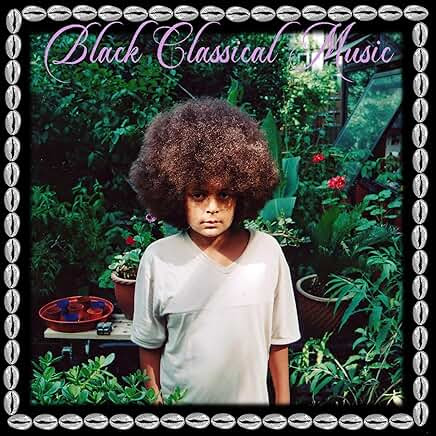
Yussef Dayes: Black Classical Music.  Ravenswood Recordings (UK) – Nonesuch (USA). As evidenced by the title of his new album, London-born drummer and composer Yussef Dayes (b. 1993) has a high regard for the history and heritage of jazz. "What is jazz?” asks the young drummer. “Birthed in New Orleans, born in the belly of the Mississippi River, rooted in the gumbo pot of the Caribbean, South American culture, and African rituals. Continuing a lineage of Miles Davis, Rahsaan Roland Kirk, Nina Simone, John Coltrane, Louis Armstrong -- music that is forever evolving limitless in its potential… Chasing the rhythm of drums that imitated one's heartbeat, the melodies for the mind and spirit, the bass for the core. A regal sound for this body of music." And that is what you hear throughout the 74 minutes of this eclectic, energetic, enthusiastic album. This is optimistic music that can’t help but lift your spirits. Even if you don’t consider yourself a jazz fan, you just might want to give Black Classical Music a listen.


Fauré: Nocturnes and Barcarolles. Marc-Andre Hamelin, piano. Hyperion CDA 68331/2. The French composer Gabriel Fauré (1845-1924) is a composer who, although relatively well known to most classical music lovers, nevertheless seems to be under-appreciated. Perhaps he needed to write some symphonies; whatever the reason, he certainly was a marvelous composer who created music of great beauty and refinement. The piano music of Fauré is certainly far less frequently recorded than that of Beethoven, Chopin, or some of the other usual suspects, so I think we can applaud Hamelin and Hyperion for bringing us such a fine collection. As we have come to expect from Hyperion, everything about this release is first class. The cover features some beautiful art by Monet, the booklet presents useful information about every individual track on the two CDs as well as some biographical information about the artists, and the engineering is excellent. For those who enjoy piano music, this new release is one that you really ought to hear, especially if you have not yet experienced the magical music of that underappreciated master, Gabriel Fauré.   


Nitai Hershkovits: Call on the Old Wise. Nitai Hershkovits, piano. ECM 2779 551 5448

The music on Call on the Old Wise has for the most part a low-key, almost conversational feel to it. There is no banging on the keys, no breakneck tempi, no dissonant tone clusters. That said, the improvisatory nature of much of the music is always evident, but comes across to the listener more as directed and creative, a balanced combination of preparation and inspiration. Hershkovits draws from influences, ranging from his work in jazz contexts to his background in classical music. From track to track, the music varies, but never loses its listenable, playful, charming, quality. Hershkovits credits inspirations as seemingly disparate as the late jazz piano jazz legend Chick Corea and Russian composers Rachmaninoff and Scriabin as prominent influences. With no liner notes but beautiful ECM sound, Call on the Old Wise is an unexpected jewel of a piano recording.


Stephan Micus: Thunder. ECM 2757. German-born Stephan Micus (b. 1953) is a unique musician and composer who has recorded nearly 30 albums, and on all but one of those recordings he played every instrument. He collects and studies instruments from all around the world. On Thunder, the sound is dominated by the four-meter-long Tibetan dung chen trumpet, an instrument he has recently learned and is using for the first time. It was the thunderous sound of this instrument that led to the album’s name and its nine tracks celebrating deities around the globe. The opening cut, A Song for Thor, evokes the thunderous power of a Norse god. As the album proceeds, it is fascinating to hear the sounds of the instruments – all played by Micus, through the miracle of overdubbing – instruments from Tibet, India, Burma, Borneo, Siberia, Japan, South America, Gambia, Namibia, Sweden, and Bavaria. Thunder sounds like powerful chamber music with a world music twist. Engineered to ECM’s usual high standard, it’s quite an impressive show as well.


Federico Mompou: Música callada (“Silent Music”): Book One [1959]; Book Two [1962]; Book Three [1962]; Book Four [1967]. Stephen Hough, piano. Hyperion CDA68362. In his fascinating collection of essays titled Rough Ideas (reviewed here), the British pianist Sir Stephen Hough wrote of the Spanish composer Federico Mompou (1893-1967): “The music of Federico Mompou is the music of evaporation. The printed page seems to have faded, as if the bar lines, time signatures, key signatures, and even the notes themselves have disappeared over a timeless number of years. There is no development of material, little counterpoint, no drama nor climaxes to speak of; and this simplicity of expression – elusive, evasive and shy – is strangely disarming. There is nowhere for the sophisticate to hide with Mompou. We are in a glasshouse, and the resulting transparency is unnerving, for it creates a reflection in which our face and soul can be seen.” Hough also observed that of his musical education, “I knew Mompou before I knew Mozart,” which perhaps give him something of a different perspective on the composer’s output. Some listeners will find the lack of hummable melodies a minus, while, others will find themselves entranced by the unique musical atmosphere evoked by Mompou’s writing and Hough’s performance, which has been captured in full, rich sound by the Hyperion engineering team. The customary top-quality liner notes and cover art that we have come to expect from Hyperion are the frosting on the cake.


Mozart: Piano Concerto No. 9 in E-flat major, “Jeunehomme,” K. 271Piano Concerto No. 24 in C minor K. 491. Lars Vogt, piano and conductor; Orchestre de Chambre de Paris. Ondine  ODE 1414-2. This is one of the final recordings made by the late German pianist Lars Vogt (1970-2022). The CD booklet includes an interview with the recording producer Christophe Franke, a good friend of Vogt’s who points out that at the time Vogt recorded this album, he was already undergoing chemotherapy. “He came to Paris with noticeably less hair, with grey skin, a pale complexion. And yet, or precisely for this reason, Lars absolutely wanted to record this album. For all the unshakable optimism that Lars radiated at all times, he knew that he probably had no chance. But he believed that a miracle perhaps would occur. This ambivalence was in the air the whole time: the hope in the impossible and at the same time the knowledge that it probably would be futile.” Is there any better capsule description of the music on this program? These two concertos manage to intermingle feelings of hope and hopelessness while expressing both with deft artistry, both in their composition (thanks to Mozart) and their performance (thanks to Vogt and the Chamber Orchestra of Paris). The engineers and producers also deserve special mention for the pleasing sound quality and touching liner notes, which combine to make this a remarkable release in every way. 


Arvo Pärt: Tractus.  Maria Listra, soprano; Estonian Philharmonic Chamber Choir; Tallinn Chamber Orchestra; Tönu Kaljuste, conductor. ECM New Series 2800 485 9166. Recorded in Tallinn’s Methodist Church last year, Tractus extends the line of Arvo Pärt albums on the ECM label that began with Tabula rasa in 1984, the recording which first brought Pärt’s music to widespread awareness.. This latest Pärt album features an emphasis on works for choir and chamber orchestra, although there are also compositions for the orchestra alone as well as one for soprano and orchestra. The texts are all based on scriptural, liturgical, or other traditional Christian texts. Although there are passages where the music exhibits some drama, it is for the most part reflective and inward-looking, very much in keeping with the spiritual focus of the texts. The sound quality is warm, spacious, and inviting. This is an album to treasure.


Bobo Stenson Trio: Sphere. ECM 2775 487 3808. The Swedish pianist Bobo Stenson (b. 1944) is probably unfamiliar to most classical music fans, but perhaps this latest album, which features a generous dollop of music by classical composers, will pique some interest, at least among classical fans who also have an interest in other forms of music – as I hope most who follow this blog do. On this new release, his trio open and close the album with a piece by the Swedish composer Per Nørgård (b. 1932) titled You Shall Plant a Tree. The trio’s bassist, Anders Jormin, contributes a couple of pieces, one of them (Unquestioned Answer – Charles Ives in Memoriam) inspired by Charles Ives, with a similar feeling of ambiguity; the other (Kingdom of Coldness) tending toward a more familiar jazz sound. Even more of a familiar type of jazz tune is Jung-Hee Woo’s The Red Flower, which swings gently along. Sven-Erik Bäck (1919-1994) was a Swedish classical composer. His Communion Psalm is an expressive piece that communicates a sense of reverence and ritual. From the late Norwegian pianist and composer Alfred Janson (1937-2019) comes Ky and Beautiful Madame Ky, restless and percussive. And then there is the Sibelius Valsette, his brief original piece for solo piano here stretched out by the trio more than five times its original length, improvised, given a whole new meaning and feeling. Beautiful recorded sound making this a highly recommendable release for both jazz and classical fans.


Veljo Tormis: Reminiscentiae.  Estonian Philharmonic Chamber Choir; Tallinn Chamber Orchestra; Tõnu Kaljuste, conductor. ECM New Series ECM 2783. Partly because the album covers such a long period of time, partly because Kaljuste has taken some music originally written for choir and arranged it for orchestra, and partly because Tormis wrote music of varying styles and moods, there is an impressive variety of music to be found in this collection. Kaljuste and his players have an intimate connection with Tormis’s sound world; in fact, the oldest composition on the album, the opening The Tower Bell in My Village, resulted from a 1978 commission from Kaljuste. “I went to his door holding in my hands the text by Fernando Pessoa and asked him to create a piece for a concert tour with my choir,” Kaljuste writes. “This album reflects upon our collaboration over the years. It is the first album that I have recorded since Veljo Tormis passed away.” This album is a labor of love, a lovingly performed and beautifully recorded labor of love.


Whitacre: Home. Voces8; Emma Denton, cello; Christopher Glenn, piano; Eric Whitacre, conductor. Decca 483 3970. The album begins with four brief pieces, beginning with Go, Lovely Rose, Whitacre’s first composition, followed by one of his most frequently performed pieces, The Seal Lullaby. The next song, Sing Gently, was composed during COVID-19 lockdown specially for Whitacre’s Virtual Choir, made up of more than 17,500 singers from 124 different countries. The fourth work on the album is Whitacre’s most recent composition, All Seems Beautiful to Me, based on a poem by Walt Whitman (from Song of the Open Road) celebrating the human spirit’s capacity for generosity and growth. It was commissioned by the United States Air Force Band and here receives its world premiere recording. We then arrive at the album’s main attraction, The Sacred Veil, which Whitacre composed along with his friend and frequent collaborator Charles Anthony Silvestri, who wrote most of the lyrics, which revolve around the death from cancer of his late wife, Julia Lawrence Silvestri (the remainder of the lyrics were written by Whitacre and Ms. Silvestri before her passing). As you might surmise from those circumstances, The Sacred Veil is an intensely personal, deeply moving composition. The Sacred Veil was originally conceived for a larger choir. In fact, the first recording of it, which Whitacre himself conducted (reviewed here), featured the larger forces of the Los Angeles Master Chorale. So what we have here in this Decca release is in essence a chamber version of the work. That is not to diminish its value, for VOCES8 does a beautiful job. In all honesty, I find The Sacred Veil to be one of the most moving musical works of the 21st century, and I highly recommend this new recording. 


Vaughan Williams: Symphony No. 7 (“Sinfonia Antartica”); Symphony No. 9 in E minor. Elizabeth Watts, soprano, BBC Symphony Chorus; BBC Symphony Orchestra, Martyn Brabbins, conductor. Hyperion CDA68405. Many classical music fans, or at least those conversant with the music of the composer Ralph Vaughan Williams, know that his Symphony No. 7 (“Sinfonia Antartica”) grew out of music that he had composed for the film Scott of the Antarctic, which portrayed the ill-fated South Pole expedition of Royal Navy officer Captain Robert Scott. Intrigued by the story, RVW decided to write a symphony based upon some of the themes from the music he had composed for the film. It is a grand and stirring composition full of spectacular sounds, featuring a large orchestra augmented by an organ, a wordless choir, a wordless soprano, gong, bells, glockenspiel, xylophone, piano, celesta, and if that’s not enough to test your stereo system, a wind machine (which on this recording is replaced by the recorded sounds of actual wind – a first in my experience). The engineering team on  this Hyperion release has met the challenge of capturing the power of the assembled forces. RVW’s Symphony No. 9 seems to be greatly underappreciated, which is a shame, for it is a marvelous work. Brabbins and his BBC forces make a strong case for this final symphony, in a performance that stands right up there with previous favorites such as Manze and Slatkin. If you are one of those casual RVW fans who might have overlooked his Symphony No. 9, this new Hyperion recording would be an excellent opportunity for you to make your acquaintance with something quite special indeed.

Mar 5, 2023

Recent Releases No. 45 (CD Reviews)

by Karl Nehring 

Vaughan Williams: Symphony No. 7 (“Sinfonia Antartica”); Symphony No. 9 in E minor. Elizabeth Watts, soprano, BBC Symphony Chorus; BBC Symphony Orchestra, Martyn Brabbins, conductor. Hyperion CDA68405


Many classical music fans, or at least those conversant with the music of the composer Ralph Vaughan Williams, know that his Symphony No. 7 (“Sinfonia Antartica”) grew out of music that he had composed for the film Scott of the Antarctic, which portrayed the ill-fated South Pole expedition of Royal Navy officer Captain Robert Scott. On their way back from the Pole in 1912, Scott and all four other members of his party met their frozen deaths. Intrigued by the story, RVW decided to write a symphony based upon some of the themes from the music he had composed for the film. It is a grand and stirring composition full of spectacular sounds, featuring a large orchestra augmented by an organ, a wordless choir, a wordless soprano, gong, bells, glockenspiel, xylophone, piano, celesta, and if that’s not enough to test your stereo system, a wind machine (which on this recording is replaced by the recorded sounds of actual wind – a first in my experience). In addition, literary quotations meant to be spoken aloud were attached to each of the five movements, although many recordings, including this one, omit them. Other recordings, taking advantage of the programmable possibilities of digital media such as the CD, include the spoken sections so listeners can decide whether to listen to them or not for any particular listening session. The Onyx recording led by Andrew Manze that I reviewed previously for Classical Candor of these same RVW symphonies (you can find that review here) put them at the beginning of each movement. 

The engineering team on  this Hyperion release has met the challenge of capturing the power of the assembled forces. From tinkling treble to rumbling bass, the sounds coming from your speakers will bring the cold chill and dark terror of the Antarctic into your listening space as the orchestral forces project a sense of grandeur and the voices and wind noises that come in later in the movement evoke feelings of isolation and fear. The organ rumblings attest to the sheer power and majesty of the bleak, frozen landscape. Brabbins’s interpretation seems at times just a bit smoother than that of Manze, but overall this is still a powerful and dramatic performance and recording of this work. Especially moving is the final movement. Although this recording does not include the spoken introduction, the performance captures the spirit: "I do not regret this journey; we took risks, we knew we took them, things have come out against us, therefore we have no cause for complaint." (from Captain Scott's Last Journal). The movement opens with a drum roll and brass fanfare, perhaps a final  of act of bravado in the face of defeat and death. As the movement continues, the wind and and wordless voices echo once more, the orchestra plays echoes of the symphony's opening theme, and then we hear the soprano, chorus, and wind sounds as the symphony – and Scott’s ill-fated quest – fade to the end. 


RVW’s Symphony No. 9 seems to be greatly underappreciated, which is a shame, for it is a marvelous work. The first recording I ever owned the Ninth was an Everest LP (remember Everest? 35mm tape technology subverted by mediocre pressings – not  to mention their often laughable cover art) with Sir Adrian Boult, a close friend of the composer, conducting the London Philharmonic Orchestra. This was in fact the very first recording of the work, and Vaughan Williams was to be on hand for this auspicious occasion. Sadly, he passed away just hours before the session began. As a result, the recording session began opened with Sir Adrian informing the orchestra of the composer's passing, and his words were captured on tape and included at the beginning of the Everest LP. Although the orchestral forces RVW specified for the Ninth are modest, especially in comparison to those employed in the Seventh, a sound that you do not often hear in symphonic music results from the trio of saxophones that the composer added to the orchestra. 

The opening movement reminds me somewhat of the Seventh, with some themes sounding similar in feeling. Not in terms of sonority, of course, the orchestration being much different, much less grandiose – RVW is making a much more intimate statement with this work. The second movement, which opens with a flugelhorn solo (this apparently caused some eyebrows to raise when the work was new), brings in an element of mystery, perhaps even a sense of danger, especially near the end. The third movement is more jaunty and bouncy, with the saxophones and percussion section getting a chance to have some fun, the movement ending with a drum roll on the snares. The final movement begins in the strings but then gives all sections of the orchestra time in the spotlight as it unfolds, with some tender phrases from the saxophones near the final measures. Overall, the music is complex but flowing, showing Vaughan Williams to be still at the height of his compositional powers even late in his long life (in fact, the liner notes point out that the composer had begun some preliminary sketches for two more symphonies before his death). Brabbins and his BBC forces make a strong case for this final symphony, in a performance that stands right up there with previous favorites such as Manze and Slatkin. If you are one of those casual RVW fans who might have overlooked his Symphony No. 9, this new Hyperion recording would be an excellent opportunity for you make your acquaintance with something special indeed.

Schubert: Piano Sonata in A minor D537; Piano Sonata in A major D959. Garrick Ohlsson, piano. Hyperion CDA68398


The veteran American pianist Garrick Ohlsson (b. 1948) has enjoyed a long and distinguished career. He won the International Chopin Piano Competition in 1970 and remains the only American pianist ever to have done so. He has recorded the complete works of Chopin (and has of course made many other recordings over the years), but here turns his attention to a pair of piano sonatas by Schubert, his first completed sonata (D537), and one of the three (D959) completed only two months before the composer’s death. Bill Heck and I recently had a conversation about Schubert’s piano music wherein we both agreed that there is truly something special about it, some element of sheer beauty that has never been surpassed. We both love the piano music of Beethoven, and those late piano pieces by Brahms – but my goodness, the way Schubert can just spin out the melodies that dance, sing, weep, cry, laugh, ponder, pray, prance… 

The sounds that Ohlsson coaxes from the keyboard do justice to the range of feelings that Schubert pours into his composing. The earlier work is lighter, with more of the feeling of the dance about it from the outset. Ohlsson shades dynamics and plays with a flexible tempo that brings out the galloping drama of the first movement and makes the second movement just flow along with a sprightly air about it, making it truly atmospheric and lovely. The relatively brief (5:06) finale abounds in dynamic contrasts as it races toward its conclusion. Then it is on to D959, one of the glories of the piano literature. Ohlsson brings his ability to shade dynamics and shift the tempo to this monumental work as well. In comparing his interpretation to that of Uchida, it seemed as though hers seemed to lean more to drama, while his leaned more to color. Or perhaps you could say that Uchida is a bit more percussive – but just a bit.  Perhaps some of the difference could also be attributed to the engineering, with Ohlsson being afforded a warm, slightly distant sound, Uchida having been recorded a tad closer. 

Once again, then, Hyperion has given us a recording with excellent sound, informative liner notes, and an artistic cover. Even if you already have some Schubert piano recordings in your collection, this one is worth an audition to hear what Ohlsson’s tender touch reveals from Schubert’s scores. And if you have not encountered the piano music of Schubert, this recording would make an excellent introduction.


As a final note, some classical music fans may have already heard, but for those who have not, the latest news is that Hyperion Records, long an independent UK-based recording label, was recently sold to the Universal Music Group (UMG), the giant corporation that owns the rights to familiar classical recording labels such as Deutsche Grammophon, Decca, and EMI, as well as jazz/popular labels such as Geffen, A&M, Motown, Island, Polydor, Def Jam, Interscope, Capitol – they even own Abbey Road Studios. Although there is always fear when a little fish gets swallowed up by a great big one, there are some potential benefits to classical music fans. If nothing else, the Hyperion catalog may become more accessible on streaming services, which would certainly be a plus. Meanwhile, there are more Hyperion releases in the pipeline, and we have already received some CDs for future review. At this juncture, the long-term future of the label is not crystal-clear, but if we all follow the advice of Hulk Hogan (say our prayers and take our vitamins), the music will continue to be served admirably well.

Feb 8, 2023

Music for Strings: Sinfonia of London/John Wilson (SACD Review)

by Karl Nehring

Vaughan Williams: Fantasia on a Theme by Thomas Tallis (for Double String Orchestra); Howells: Concerto for String Orchestra; Delius: Late Swallows (slow movement of String Quartet arranged 1962-63 for string orchestra by Eric Fenby); Elgar: Introduction and AllegroOp. 47 for Strings (Quartet and Orchestra).  John Mills, violin; Michael Trainor, violin; Andriy Viytovych, viola; Richard Harwood, cello; John Wilson, Sinfonia of London. Chandos CHSA 5291


The Sinfonia of London is not one of the established London orchestras such as the London Symphony, London Philharmonic, or the similarly-named London Sinfonietta. Rather, the Sinfonia of London is a pickup orchestra that assembles for specific recording or concert performances. It was originally assembled in the 1950s to record film scores (a lucrative source of income for orchestral musicians) and is now in its third incarnation, which was formed by the British conductor John Wilson (b. 1952) in 2018 to undertake recording projects. Its members include musicians from the more well-known London orchestras as well as some skilled chamber musicians and soloists. Wilson and the orchestra have thus far released several recordings for Chandos. This time around it is strings only for a recording of several compositions of quintessentially British music for string orchestra. We previously reviewed an excellent release by Wilson and players featuring music for strings by the four B’s of English music, a review that you can read here.
 

Two of the pieces on this latest offering, those by RVW and Elgar, are compositions that have been recorded many, many, times by many, many conductors – English, British, European, American, Russian… My guess would be that many, if not most classical music fans have several favorite recordings of both in their collections. These performances by Wilson and his players are top-drawer and could well elbow their way into many a favorites list. The Tallis Fantasia, no matter how many times it has been recorded, is an absolutely stunning piece of music that should never be taken for granted. Finding both the performance and the engineering on this new Chandos SACD to be truly excellent, I thought it would be useful to do a quick comparison with another, older recording. (Note: This SACD has been recorded in 24-bit/96 kHz 5.0-channel surround sound; however, I listened to the CD layer only). The CD I quickly pulled down from my shelf turned out to be quite a bit older: a 1985 Argo “ADRM” remastering of a 1972 recording by Neville Marriner and the Academy of St. Martin-in- the-Fields. To be honest, I was truly surprised at how well the 50-year-old recording held up. No doubt the newer recording is better in absolute terms, and for those with multichannel surround-sound audio systems and/or headphone/earbud setups (I see that on Amazon Music, for example, the album can be streamed in Dolby Atmos format, and would assume that Apple Music offers something similar), the opportunity for a potentially more immersive is offered by the SACD format (as well as some of the various higher-end streaming services for those so inclined). 


In terms of performance, both groups sounded excellent, and the total timing for the Tallis Fantasia was within five seconds: Wilson, 15:08; Marriner, 15:13. As I reflect back on my times spent listening to the Wilson/Sinfonia of London performance of this beloved piece, I am reminded of a remark I once read long ago that Toscanini was said to made – intended derisively – about the way Bruno Walter conducted the music of Mozart: “When he comes to something beautiful, he melts.” When I hear a beautiful performance of the Tallis Fantasia, I melt. And somehow, I have this notion – perhaps I am a sentimental, airheaded fool – that even though these fine string players, the cream of the London crop, gather together as a focused group to record this most beloved English composition, they cannot help but play their hearts out. This is an outstanding performance of a transcendent piece of music. 


I will definitely add the Wilson disc to add to my collection, but it won’t go on the shelf near the Marriner disc in the “V” section of my collection; instead, it will go in the “D” section, tucked in amongst my Delius CDs. But first, a word about the Howells Concerto for String Orchestra, which is the longest selection on the program at just over 28 minutes. Herbert Howells (1892-1983) was deeply impressed by both the Tallis Fantasia and Elgar’s Introduction and Allegro for Strings. Although he is known today more for his large-scale choral works, he also wrote for orchestra, organ, and had a long career as a teacher. He began work on his Concerto for String Orchestra in 1934 as a tribute to Elgar, who had recently died. In 1935, Howells suffered the tragic loss of his one-year-old son Michael; subsequently, the middle slow movement bore the dedication In Memoriam: E.E. (1934) and M.K.H. (1935). It is moving music, even anguished in some passages, sandwiched between two much more lively and energetic movements in the typical fast-slow-fast concerto format. 


Although Frederick Delius (1862-1934) first composed his String Quartet in 1916, giving the slow movement the title “Late Swallows,” kt was not until 1962, the centenary of the composer’s birth, that the conductor Sir John Barbirolli suggested that Late Swallows be arranged for string orchestra. This arrangement was completed by Delius’s associate and biographer Eric Fenby (1906-1997) in 1963. Like most of Delius’s music, it just seems to have a flow to it that sounds natural and unfettered. As you listen, you are not really aware of melody as such, but the music you hear is melodic and beautiful. By contrast, the Introduction and Allegro by Sir Edward Elgar (1887-1934) sounds quite structured, with various themes and musical ideas working themselves out as the piece progresses. But that is not to imply that the piece sounds at all stuffy or academic. Quite the opposite is the case -- it crackles with energy and gives the performers the opportunity to play with great gusto, which the Sinfonia of London players do, but with a disciplined gusto under Wilson’s baton. 


The booklet enclosed with the disc includes background notes in English, German, and French on the music, plus information about the orchestra and conductor in English only. For some strange reason, of the four composers whose music is presented on the program, only Howells rates a photo in the booklet (while Wilson gets three photos spanning four interior pages, plus the back cover page). Perhaps the fact that the inside back cover page states “Generously Supported by the Herbert Howells Trust” explains this apparent anomaly. But that’s a minor quibble indeed. This is a well-played, well-recorded collection of an interesting mix of familiar and less-familiar but nonetheless compelling music for strings.  


Meet the Staff

Meet the Staff
John J. Puccio, Founder and Contributor

Understand, I'm just an everyday guy reacting to something I love. And I've been doing it for a very long time, my appreciation for classical music starting with the musical excerpts on the Big Jon and Sparkie radio show in the early Fifties and the purchase of my first recording, The 101 Strings Play the Classics, around 1956. In the late Sixties I began teaching high school English and Film Studies as well as becoming interested in hi-fi, my audio ambitions graduating me from a pair of AR-3 speakers to the Fulton J's recommended by The Stereophile's J. Gordon Holt. In the early Seventies, I began writing for a number of audio magazines, including Audio Excellence, Audio Forum, The Boston Audio Society Speaker, The American Record Guide, and from 1976 until 2008, The $ensible Sound, for which I served as Classical Music Editor.

Today, I'm retired from teaching and use a pair of bi-amped VMPS RM40s loudspeakers for my listening. In addition to writing for the Classical Candor blog, I served as the Movie Review Editor for the Web site Movie Metropolis (formerly DVDTown) from 1997-2013. Music and movies. Life couldn't be better.

Karl Nehring, Editor and Contributor

For nearly 30 years I was the editor of The $ensible Sound magazine and a regular contributor to both its equipment and recordings review pages. I would not presume to present myself as some sort of expert on music, but I have a deep love for and appreciation of many types of music, "classical" especially, and have listened to thousands of recordings over the years, many of which still line the walls of my listening room (and occasionally spill onto the furniture and floor, much to the chagrin of my long-suffering wife). I have always taken the approach as a reviewer that what I am trying to do is simply to point out to readers that I have come across a recording that I have found of interest, a recording that I think they might appreciate my having pointed out to them. I suppose that sounds a bit simple-minded, but I know I appreciate reading reviews by others that do the same for me — point out recordings that they think I might enjoy.

For readers who might be wondering about what kind of system I am using to do my listening, I should probably point out that I do a LOT of music listening and employ a variety of means to do so in a variety of environments, as I would imagine many music lovers also do. Starting at the more grandiose end of the scale, the system in which I do my most serious listening comprises Marantz CD 6007 and Onkyo CD 7030 CD players, NAD C 658 streaming preamp/DAC, Legacy Audio PowerBloc2 amplifier, and a pair of Legacy Audio Focus SE loudspeakers. I occasionally do some listening through pair of Sennheiser 560S headphones. I miss the excellent ELS Studio sound system in our 2016 Acura RDX (now my wife's daily driver) on which I had ripped more than a hundred favorite CDs to the hard drive, so now when driving my 2024 Honda CRV Sport L Hybrid, I stream music from my phone through its adequate but hardly outstanding factory system. For more casual listening at home when I am not in my listening room, I often stream music through a Roku Streambar Pro system (soundbar plus four surround speakers and a 10" sealed subwoofer) that has surprisingly nice sound for such a diminutive physical presence and reasonable price. Finally, at the least grandiose end of the scale, I have an Ultimate Ears Wonderboom II Bluetooth speaker and a pair of Google Pro Earbuds for those occasions where I am somewhere by myself without a sound system but in desperate need of a musical fix. I just can’t imagine life without music and I am humbly grateful for the technologies that enable us to enjoy it in so many wonderful ways.

William (Bill) Heck, Webmaster and Contributor

Among my early childhood memories are those of listening to my mother playing records (some even 78 rpm ones!) of both classical music and jazz tunes. I suppose that her love of music was transmitted genetically, and my interest was sustained by years of playing in rock bands – until I realized that this was no way to make a living. The interest in classical music was rekindled in grad school when the university FM station serving as background music for studying happened to play the Brahms First Symphony. As the work came to an end, it struck me forcibly that this was the most beautiful thing I had ever heard, and from that point on, I never looked back. This revelation was to the detriment of my studies, as I subsequently spent way too much time simply listening, but music has remained a significant part of my life. These days, although I still can tell a trumpet from a bassoon and a quarter note from a treble clef, I have to admit that I remain a nonexpert. But I do love music in general and classical music in particular, and I enjoy sharing both information and opinions about it.

The audiophile bug bit about the same time that I returned to classical music. I’ve gone through plenty of equipment, brands from Audio Research to Yamaha, and the best of it has opened new audio insights. Along the way, I reviewed components, and occasionally recordings, for The $ensible Sound magazine. Most recently I’ve moved to my “ultimate system” consisting of a BlueSound Node streamer, an ancient Toshiba multi-format disk player serving as a CD transport, Legacy Wavelet II DAC/preamp/crossover, dual Legacy PowerBloc2 amps, and Legacy Signature SE speakers (biamped), all connected with decently made, no-frills cables. With the arrival of CD and higher resolution streaming, that is now the source for most of my listening.

Ryan Ross, Contributor

I started listening to and studying classical music in earnest nearly three decades ago. This interest grew naturally out of my training as a pianist. I am now a musicologist by profession, specializing in British and other symphonic music of the 19th and 20th centuries. My scholarly work has been published in major music journals, as well as in other outlets. Current research focuses include twentieth-century symphonic historiography, and the music of Jean Sibelius, Ralph Vaughan Williams, and Malcolm Arnold.

I am honored to contribute writings to Classical Candor. In an age where the classical recording industry is being subjected to such profound pressures and changes, it is more important than ever for those of us steeped in this cultural tradition to continue to foster its love and exposure. I hope that my readers can find value, no matter how modest, in what I offer here.


Bryan Geyer, Technical Analyst

I initially embraced classical music in 1954 when I mistuned my car radio and heard the Heifetz recording of Mendelssohn's Violin Concerto. That inspired me to board the new "hi-fi" DIY bandwagon. In 1957 I joined one of the pioneer semiconductor makers and spent the next 32 years marketing transistors and microcircuits to military contractors. Home audio DIY projects remained a personal passion until 1989 when we created our own new photography equipment company. I later (2012) revived my interest in two channel audio when we "downsized" our life and determined that mini-monitors + paired subwoofers were a great way to mate fine music with the space constraints of condo living.

Visitors that view my technical papers on this site may wonder why they appear here, rather than on a site that features audio equipment reviews. My reason is that I tried the latter, and prefer to publish for people who actually want to listen to music; not to equipment. My focus is in describing what's technically beneficial to assure that the sound of the system will accurately replicate the source input signal (i. e. exhibit high accuracy) without inordinate cost and complexity. Conversely, most of the audiophiles of today strive to achieve sound that's euphonic, i.e. be personally satisfying. In essence, audiophiles seek sound that's consistent with their desire; the music is simply a test signal.

Mission Statement

It is the goal of Classical Candor to promote the enjoyment of classical music. Other forms of music come and go--minuets, waltzes, ragtime, blues, jazz, bebop, country-western, rock-'n'-roll, heavy metal, rap, and the rest--but classical music has been around for hundreds of years and will continue to be around for hundreds more. It's no accident that every major city in the world has one or more symphony orchestras.

When I was young, I heard it said that only intellectuals could appreciate classical music, that it required dedicated concentration to appreciate. Nonsense. I'm no intellectual, and I've always loved classical music. Anyone who's ever seen and enjoyed Disney's Fantasia or a Looney Tunes cartoon playing Rossini's William Tell Overture or Liszt's Hungarian Rhapsody No. 2 can attest to the power and joy of classical music, and that's just about everybody.

So, if Classical Candor can expand one's awareness of classical music and bring more joy to one's life, more power to it. It's done its job. --John J. Puccio

Contact Information

Readers with polite, courteous, helpful letters may send them to classicalcandor@gmail.com

Readers with impolite, discourteous, bitchy, whining, complaining, nasty, mean-spirited, unhelpful letters may send them to classicalcandor@recycle.bin.

"Their Master's Voice" by Michael Sowa

"Their Master's Voice" by Michael Sowa