Mar 29, 2023

Recent Releases No.48 (CD Reviews)

 by Karl Nehring

Impromptus. Fauré: Impromptu No. 1 in E-Flat Major, Op. 25; Chopin: Impromptu No. 1 in A-Flat Major, Op. 29; Fauré: Impromptu No. 2 in F Minor, Op. 31; Chopin: Étude in F Minor, Op. 25; Fauré: Impromptu No. 3 in A-Flat Major, Op. 34; Chopin: Fantaisie-Impromptu in C-Sharp Minor, Op. 66; Fauré: Impromptu No. 4 in D-Flat Major, Op. 91; Chopin: Impromptu No. 2 in F-Sharp Minor, Op. 36; Fauré: Impromptu No. 5 in F-Sharp Minor, Op. 102: Chopin: Impromptu No. 3 in G-Flat Major, Op. 51; Fauré: Impromptu No. 6 in D-Flat Major, Op. 86; Chopin: Berceuse in D-Flat Major, Op. 57; Fauré: Improvisation in C-Sharp Minor, Op. 84; Ismaël Margain: Improvisation. Ismaël Margain, piano, naïve V7860


The French pianist Ismaël Margain (b. 1992) says in the liner booklet that the idea for this new recording first came about “when I chanced upon Fauré’s impromptus four years ago, when I was looking for a repertoire. It is astonishing to see how rarely this composer’s piano music is played in his own country, and the impromptus are, with the exception of the third, largely unknown. Compared to Debussy and Ravel, Fauré  is much less in the limelight. On reading the impromptus, I was immediately struck by their beauty, by a desire to play them, and by how close the first three were to the language of Chopin… So I looked again at Chopin’s impromptus with the idea of juxtaposing them with Fauré’s.” Chopin wrote a total of four impromptus, while Fauré wrote a total of six. Margain has organized his program around similar tonalities, and to further balance the program and ensure the strict alternation between the two composers, Margain also adds the Chopin Étude op.25 no.2 in F minorBerceuse op.57, and the Fantaisie-Impromptu

 My guess would be that many readers will also be less familiar with the piano music of Fauré (1845-1924) than they are with that of Chopin (1810-1849,). For those in that particular circumstance, this recording would serve as an excellent introduction to the charming, inviting work of the French master. Just listening to the first few bars of his Impromptu No. 1, which opens the program, should be enough to entice most listeners to want to hear more. With six impromptus by Fauré on the program, there is plenty more to hear, not to mention some excellent Chopin playing by the young Margain. The music of Chopin will no doubt sound familiar to many listeners, who will be pleased to discover that the Fauré pieces, although certainly different from the Chopin, do indeed blend seamlessly into the program, which is beautifully played by Margain and beautifully recorded by engineer/producer Alice Legros.
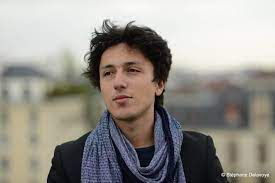
 

Margain closes out the program with an something out of the ordinary, an improvisation of his own – played as an encore as he might do in a concert performance. Margain says of this idea, “I wanted to do an improvisation if we had time at the end of the recording. After three days in the studio, with my head full of all of Chopin’s and Fauré’s music, I made a start, without really knowing how to approach it all. I didn’t want to make an exercise in style, nor did I want to include absolutely all the themes. In the end I began by taking up the theme of Chopin’s berceuse, which is just before this on the album, to play with it, transform it, and then mix it with other pieces of the program, sometimes merely hinted at, before gradually moving away from it.” It’s a delightful piece, by turns wistful and playful, clearly inspired by what has come before – especially Chopin – “I’m Always Chasing Rainbows” – but original and imaginative as well, adjectives that apply fittingly to this entire release.

Tomer Cohen: Not the Same RiverNot the Same RiverConnecting DotsHithadshut (Regeneration)Empty?;PasturesSunriseProbably More Than TwoFirst Laps. Tomer Cohen, guitar; Matt Penman, Bass; Obed Calvaire, drums. Hypnote Records HR028


The Israeli-raised New York-based guitarist-composer Tomer Cohen (b. 1996) makes his debut as a leader with Not the Same River, an album that serves as another example of how jazz can be viewed as a form of chamber music. Sometimes classical music folks have a misguided idea that jazz is mostly improvisation, played by people who really do not know much about music theory and are just kind of getting together and making it all up as they go along. This is most assuredly not the case; in fact, the majority of professional jazz musicians are well-versed in the nuances of music theory. Their ability to improvise grows out of their knowledge of chords, scales, modes, transpositions, key changes, meters, rhythms, and such – plus plenty of practice, practice, practice. And you’d be surprised at how many top jazz musicians are also fans of classical music. But I digress…

Although Cohen composed all of the selections on this recording, and his guitar takes the spotlight in term of melodic invention, Penman’s bass and Calvaire’s drums provide more than merely rhythmic support, as the three musicians listen to and play off each other with drive and intensity. Cohen plays his guitar with an unusual technique of playing single notes with a pick between his thumb and forefinger while simultaneously chording and playing counterpoint with his three remaining fingers, which allows him to play arpeggios and melody lines while comping for himself. This gives him a smooth, tuneful sound that has an easy, natural flow to it


There is a consistency of sound throughout the album, as Cohen does not strive for effects or far-out sounds from his guitar. He maintains a consistent guitar tone throughout. The overall mood of the tunes does not vary much, either. That is not to say they all sound the same; rather, that there is an overall feeling or mood to the album that seems to point to a point to a single vision. Cohen says of the album, “I used to play outside with my guitar, watching the fields and the blue sky. I believe some of that vibe is reflected in some of the tunes on this record.” For example, he points to the tune Pastures as an example of offering a sense of place. “I’m trying to get the listener to see the place where I wrote the song. Basically, I’m saying to the listener: ‘Close your eyes and imagine that you’re sitting on a high hill. You see the green fields and you can see the wind move them like the waves in the sea. Above you only cloudless blue skies. Far back you can see two rivers, one is a bit bigger than the other. On your right you see a green forest with some white birds flying above the trees.’ That’s the image I’m trying to convey in that piece. That’s exactly what I was trying to do on this record, trying to connect some stories, images and life philosophies that I have into one thing.” That’s an ambitious agenda, to be sure, but it certainly demonstrates a seriousness of purpose that belies the idea that jazz is just some guys just getting together and playing whatever happens to come into their heads. This is a fine album of well-crafted, tuneful, engaging music that should appeal to a wide-cross-section of jazz and classical fans alike.

Mar 26, 2023

Connecting Cultures: Four hand music from around the world (CD Review)

 by Karl Nehring

Dvořák: Slavonic Dance, Op 46No. 8Slavonic Dance, Op. 72 No. 2; Mozart: Andante and Five Variations in G major, K. 501; Wang Jianzhong: Colorful Clouds Chasing the Moon; Gong Huahua: Mountain Harvest: Manuel de Falla: Two Spanish Dances from “La Vida Breve”; Amy Marcy Cheney Beach: Summer Dreams, Op. 47; Florence Beatrice Price: Three Negro Spirituals – I Couldn’t Hear Nobody PrayLord I Want to Be a ChristianEv’ry Time I Feel the Spirit; Gershwin: Rhapsody in Blue (arranged by Henry Levine). Deborah Moriarty and Zhihua Tang, piano. Blue Griffin BGR633


This is one of those releases about which I just wasn’t quite sure what to expect. The program looked to be a mix of composers both familiar and unknown, the performers were both unknown to me, and I wondered what the arrangements for piano four hands would sound like – especially Rhapsody in Blue. For piano four hands? Really?? But no matter what questions or doubts I or any potential listener might have about this or any other recording, the music itself is what actually counts, so I just popped the disc into the player, settled into my listening chair, grabbed the remote, and pushed the PLAY button.

 The familiar melodies of the two Dvořák Slavonic Dances open the program with energy and enthusiasm from the four busy hands at the keyboard, with the sound matching the performance, lively and assertive – just right for this music. The following Andante and Five Variations by Mozart are in a more stately, buttoned-down style, but they still have an element of the dance about them, which the two pianists clearly communicate. Colorful Clouds Chasing the Moon by Wang Jianzhong (1933–2016), turns out to be as perfectly pleasant as its title implies, with a rhythmic pulse beneath and some fluttering melodies in the upper registers. Mountain Harvest by Gong Huahua (b. 1978) makes a different impression with its more serious, slightly dissonant sound. That said, it is not a forbidding piece; if anything, it has moments of playfulness and mystery. Overall, it is an intriguing work, one that invites repeated listening. 


It's then back to more familiar names, although not all of the music will be familiar to most listeners. From Manuel de Falla we get Two Spanish Dances from his opera La Vida Breve, which as you might expect, receive a splashy, extroverted performance from the two pianists, who are both on the faculty at the Michigan State University College of Music. The two women pianists next bring us music by two distinguished  American women composers. Amy Beach (1867-1944) was the first American female composer to have a symphony performed by a major orchestra (the Boston Symphony Orchestra premiered her “Gaelic” Symphony in 1896), while Florence Beatrice Price (1887-1953) was the first African-American woman to have a composition performed by a major orchestra (the Chicago Symphony performed her Symphony in E Minor in 1933).  Beach’s Summer Dreams comprises a half-dozen short musical sketches titled The BrowniesRobin RedbreastTwilightKaty-didsElfin Tarantelle, and Good Night. The first (which is the longest at 3:46) is dance-like, the next four (none of which is lasts more than two minutes) are generally playful, and then Good Night (longer again at 2:59) is, as you might expect, calmer in mood. Price’s Three Negro Spirituals are simply her brief arrangements of three spirituals: I Couldn’t Hear Nobody Pray (1:53), Lord I Want to Be a Christian(4:03), and Ev’ry Time I Feel the Spirit (1:32). Hearing the first of these immediately brought to mind the gospel stylings of Keith Jarrett in some of his solo improvisations, such as in parts of his Köln Concert recording on ECM. The longest of these, Lord I Want to Be a Christian, is slower, more intense, and quite moving in its own way. 


The two pianists end their program with a rousing rendition of Gershwin’s Rhapsody in Blue. This is a piece that has been played and recorded aa a concert piece for piano and full orchestra, as a more jazz-oriented piece for piano and jazz band – but who would have thought it would work so well as played on one piano by two pianists? These two artists did, and they were right. This is a marvelous performance of the work, exciting and involving from start to finish. With more than 74 minutes of well-recorded music from around the world including this revelatory performance of Gershwin’s showstopper, Connecting Cultures is an exciting new release.

Mar 22, 2023

Missy Mazzoli: Dark with Excessive Bright (SACD Review)

by Karl Nehring


Missy Mazzoli: Dark with Excessive Bright, Concerto for solo violin and string orchestra*; Sinfonia (for Orbiting Spheres)**These Worlds in Us**Orpheus Undone**Vespers for Violin (for solo violin with electronic soundtrack)Dark with Excessive Bright (arranged for solo violin and string quintet)***. Peter Herresthal, violin soloist; Bergen Philharmonic/James Gaffigan, conductor; **Arctic Philharmonic/Tim Weiss, conductor; ***Quintet from the Arctic Philharmonic (Oganes Girunyan, violin I; Øyvind Mehus, violin II; Natalya Girunyan, viola; Mary Auner, cello; Ingvild Maria Mehus, double bass);Tim Weiss, conductor. BIS-2572 SACD


The title composition of this release by American composer Missy Mazzoli (b. 1980), which opens and closes the program on this BIS SACD (I auditioned the CD layer only) exists in at least three versions. Mazzoli originally composed it as a concerto for double bass and string orchestra. As she explains about the two versions that appear on this recording, “in 2019, at the request of soloist Peter Herresthal, I transformed this piece into a concerto for violin and string orchestra, essentially flipping the original work upside-down… While loosely based in baroque idioms, this piece slips between string techniques from several centuries, all while twisting a pattern of repeated chords beyond recognition. ‘Dark with excessive bright,’ a phrase from Milton’s Paradise Lost, is a surreal and evocative description of God’s robes, written by a blind man. I love the impossibility of this phrase and how perfectly it describes the ghostly, heart-rending sound of strings. In 2019, again at the request of Peter Herresthal, I arranged this piece for soloist and string quintet.” Curiously, Mazzoli’s liner notes state that both arrangements were done in 2019, while the back cover gives the dates for both arrangements as 2021.  My guess is that both are half-correct: 2019 for the violin/string orchestra arrangement and 2021 for the violin/string quintet version. 


In any event, the arrangements for violin and string orchestra and violin and string quintet open and close the program, respectively. The former is intense, brooding, introspective, leaning more to the dark than the bright. The chamber-music scale of the latter arrangement somehow makes the piece much more inviting and involving. Both versions, however, are engrossing in their own way; moreover, having the two different arrangements on the same disc will afford the serious listener the opportunity to ponder the ways in which they differ in terms of both sonority and aesthetic/emotional appeal. Following the opening arrangement of Dark with Excessive Bright on the program comes Sinfonia (for Orbiting Spheres), which Mazzoli describes as “music in the shape of a solar system, a collection of rococo loops that twist around each other within a larger orbit.” That sounds rather imposing, but the music is not as ponderous as all that. Now with a full orchestra making music, we hear more contrasting sonorities, with brass and string sounds whirling and swirling. The next selection, These Worlds in Us, carries on with the whirling and swirling; if anything, even more exuberantly. The title may suggest introspection, but the sound is assertive and outgoing. Mazzoli writes, “this piece is dedicated to my father, who was a soldier during the Vietnam War. I  like the idea that music can reflect painful and blissful sentiments in a single note or gesture, and have sought to create a sound palette that I hope is at once completely new and strangely familiar to the listener.”


When I heard the woodblock at the beginning of the next composition, Orpheus Undone, I immediately flashed to Short Ride in a Fast Machine by John Adams (see an Adams review here), which opens in the same way. But Orpheus Undone is far different from the Adams work. Throughout its two movements it bristles with restless energy. As Mazzoli describes the effect of the piece, “then listener feels Orpheus’s sense of timelessness and alienation, for a moment joining him in what Nietzsche called the hourglass of existence, turning over and over’.”  Next up is the highlight of the album – for these ears at least – a truly captivating work for amplified violin and electronics titled Vespers for Violin. Mazzoli writes of this this work that it “began as a reimagining of my composition Vespers for a New Dark Age. I sampled keyboards, vintage organs, voices and strings from that composition, drenched them in delay and distortion, and reworked them into a piece that can be performed by a soloist.” Her reference to drenching sounds in delay and distortion might tend to scare some potential listeners off, but I hope not, for the end result sounds at times as though Herresthal is performing in a cathedral along with an organ and an ethereal wordless choir. It is an utterly spellbinding performance. 

The program closes as Herresthal’s violin takes the lead once more, this time in the chamber version of the title piece, Dark with Excessive Bright, which in this more intimate arrangement communicates with a captivating intensity throughout its nearly 14 minutes. As we have come to expect from BIS, the engineering is impeccable, which combined with insights from the composer herself about her richly imaginative music – not to mention the virtuosic performances by Herresthal and the his accompanying orchestral and chamber players – make this a highly recommendable release indeed. 

Meet the Staff

Meet the Staff
John J. Puccio, Founder and Contributor

Understand, I'm just an everyday guy reacting to something I love. And I've been doing it for a very long time, my appreciation for classical music starting with the musical excerpts on the Big Jon and Sparkie radio show in the early Fifties and the purchase of my first recording, The 101 Strings Play the Classics, around 1956. In the late Sixties I began teaching high school English and Film Studies as well as becoming interested in hi-fi, my audio ambitions graduating me from a pair of AR-3 speakers to the Fulton J's recommended by The Stereophile's J. Gordon Holt. In the early Seventies, I began writing for a number of audio magazines, including Audio Excellence, Audio Forum, The Boston Audio Society Speaker, The American Record Guide, and from 1976 until 2008, The $ensible Sound, for which I served as Classical Music Editor.

Today, I'm retired from teaching and use a pair of bi-amped VMPS RM40s loudspeakers for my listening. In addition to writing for the Classical Candor blog, I served as the Movie Review Editor for the Web site Movie Metropolis (formerly DVDTown) from 1997-2013. Music and movies. Life couldn't be better.

Karl Nehring, Editor and Contributor

For nearly 30 years I was the editor of The $ensible Sound magazine and a regular contributor to both its equipment and recordings review pages. I would not presume to present myself as some sort of expert on music, but I have a deep love for and appreciation of many types of music, "classical" especially, and have listened to thousands of recordings over the years, many of which still line the walls of my listening room (and occasionally spill onto the furniture and floor, much to the chagrin of my long-suffering wife). I have always taken the approach as a reviewer that what I am trying to do is simply to point out to readers that I have come across a recording that I have found of interest, a recording that I think they might appreciate my having pointed out to them. I suppose that sounds a bit simple-minded, but I know I appreciate reading reviews by others that do the same for me — point out recordings that they think I might enjoy.

For readers who might be wondering about what kind of system I am using to do my listening, I should probably point out that I do a LOT of music listening and employ a variety of means to do so in a variety of environments, as I would imagine many music lovers also do. Starting at the more grandiose end of the scale, the system in which I do my most serious listening comprises Marantz CD 6007 and Onkyo CD 7030 CD players, NAD C 658 streaming preamp/DAC, Legacy Audio PowerBloc2 amplifier, and a pair of Legacy Audio Focus SE loudspeakers. I occasionally do some listening through pair of Sennheiser 560S headphones. I miss the excellent ELS Studio sound system in our 2016 Acura RDX (now my wife's daily driver) on which I had ripped more than a hundred favorite CDs to the hard drive, so now when driving my 2024 Honda CRV Sport L Hybrid, I stream music from my phone through its adequate but hardly outstanding factory system. For more casual listening at home when I am not in my listening room, I often stream music through a Roku Streambar Pro system (soundbar plus four surround speakers and a 10" sealed subwoofer) that has surprisingly nice sound for such a diminutive physical presence and reasonable price. Finally, at the least grandiose end of the scale, I have an Ultimate Ears Wonderboom II Bluetooth speaker and a pair of Google Pro Earbuds for those occasions where I am somewhere by myself without a sound system but in desperate need of a musical fix. I just can’t imagine life without music and I am humbly grateful for the technologies that enable us to enjoy it in so many wonderful ways.

William (Bill) Heck, Webmaster and Contributor

Among my early childhood memories are those of listening to my mother playing records (some even 78 rpm ones!) of both classical music and jazz tunes. I suppose that her love of music was transmitted genetically, and my interest was sustained by years of playing in rock bands – until I realized that this was no way to make a living. The interest in classical music was rekindled in grad school when the university FM station serving as background music for studying happened to play the Brahms First Symphony. As the work came to an end, it struck me forcibly that this was the most beautiful thing I had ever heard, and from that point on, I never looked back. This revelation was to the detriment of my studies, as I subsequently spent way too much time simply listening, but music has remained a significant part of my life. These days, although I still can tell a trumpet from a bassoon and a quarter note from a treble clef, I have to admit that I remain a nonexpert. But I do love music in general and classical music in particular, and I enjoy sharing both information and opinions about it.

The audiophile bug bit about the same time that I returned to classical music. I’ve gone through plenty of equipment, brands from Audio Research to Yamaha, and the best of it has opened new audio insights. Along the way, I reviewed components, and occasionally recordings, for The $ensible Sound magazine. Most recently I’ve moved to my “ultimate system” consisting of a BlueSound Node streamer, an ancient Toshiba multi-format disk player serving as a CD transport, Legacy Wavelet II DAC/preamp/crossover, dual Legacy PowerBloc2 amps, and Legacy Signature SE speakers (biamped), all connected with decently made, no-frills cables. With the arrival of CD and higher resolution streaming, that is now the source for most of my listening.

Ryan Ross, Contributor

I started listening to and studying classical music in earnest nearly three decades ago. This interest grew naturally out of my training as a pianist. I am now a musicologist by profession, specializing in British and other symphonic music of the 19th and 20th centuries. My scholarly work has been published in major music journals, as well as in other outlets. Current research focuses include twentieth-century symphonic historiography, and the music of Jean Sibelius, Ralph Vaughan Williams, and Malcolm Arnold.

I am honored to contribute writings to Classical Candor. In an age where the classical recording industry is being subjected to such profound pressures and changes, it is more important than ever for those of us steeped in this cultural tradition to continue to foster its love and exposure. I hope that my readers can find value, no matter how modest, in what I offer here.


Bryan Geyer, Technical Analyst

I initially embraced classical music in 1954 when I mistuned my car radio and heard the Heifetz recording of Mendelssohn's Violin Concerto. That inspired me to board the new "hi-fi" DIY bandwagon. In 1957 I joined one of the pioneer semiconductor makers and spent the next 32 years marketing transistors and microcircuits to military contractors. Home audio DIY projects remained a personal passion until 1989 when we created our own new photography equipment company. I later (2012) revived my interest in two channel audio when we "downsized" our life and determined that mini-monitors + paired subwoofers were a great way to mate fine music with the space constraints of condo living.

Visitors that view my technical papers on this site may wonder why they appear here, rather than on a site that features audio equipment reviews. My reason is that I tried the latter, and prefer to publish for people who actually want to listen to music; not to equipment. My focus is in describing what's technically beneficial to assure that the sound of the system will accurately replicate the source input signal (i. e. exhibit high accuracy) without inordinate cost and complexity. Conversely, most of the audiophiles of today strive to achieve sound that's euphonic, i.e. be personally satisfying. In essence, audiophiles seek sound that's consistent with their desire; the music is simply a test signal.

Mission Statement

It is the goal of Classical Candor to promote the enjoyment of classical music. Other forms of music come and go--minuets, waltzes, ragtime, blues, jazz, bebop, country-western, rock-'n'-roll, heavy metal, rap, and the rest--but classical music has been around for hundreds of years and will continue to be around for hundreds more. It's no accident that every major city in the world has one or more symphony orchestras.

When I was young, I heard it said that only intellectuals could appreciate classical music, that it required dedicated concentration to appreciate. Nonsense. I'm no intellectual, and I've always loved classical music. Anyone who's ever seen and enjoyed Disney's Fantasia or a Looney Tunes cartoon playing Rossini's William Tell Overture or Liszt's Hungarian Rhapsody No. 2 can attest to the power and joy of classical music, and that's just about everybody.

So, if Classical Candor can expand one's awareness of classical music and bring more joy to one's life, more power to it. It's done its job. --John J. Puccio

Contact Information

Readers with polite, courteous, helpful letters may send them to classicalcandor@gmail.com

Readers with impolite, discourteous, bitchy, whining, complaining, nasty, mean-spirited, unhelpful letters may send them to classicalcandor@recycle.bin.

"Their Master's Voice" by Michael Sowa

"Their Master's Voice" by Michael Sowa